Waterproof Jacket for Alaska Cruise: What to Buy, What to Skip, and How to Save
This post may contain affiliate links. I may earn a small commission at no extra cost to you.
The quick answer
The best waterproof jacket for Alaska cruise weather is a hooded shell with taped seams that is sold as truly waterproof (not just “water-resistant”) and roomy enough to fit over a fleece. A rating around 10,000 mm is a common rule of thumb for steady rain, and it should stuff into your daypack. Skip the bulky parka. Layers under a good shell do the warm work, and in Ketchikan about half of all summer days have measurable rain, so you will actually wear it.
Here's the thing about Southeast Alaska. It's a temperate rainforest, and the weather doesn't care that you booked a balcony.
If you only get one gear decision right, make it the jacket. Hats and gloves are cheap fixes you can grab in port. A soaked torso on a glacier day is not.
Below you'll find rain numbers for Juneau and Ketchikan, the specs worth paying for, which jacket type fits which kind of cruiser, and how to spend less. I'll also tell you who can skip buying anything.
How much rain are we really talking about?
Travel Juneau says precipitation falls on about 230 days a year there, averaging 62.27 inches at the airport. Depending on location, the total ranges from 55 to 92 inches. Spring is the driest stretch, and September and October are the wettest. (Some of those 230 days are winter snow, so summer is a bit kinder than that sounds.)
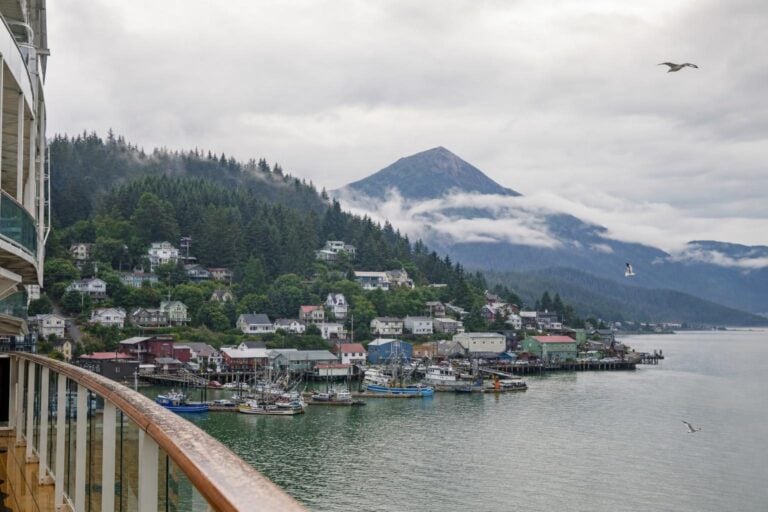
Here's the part most packing lists skip. The University of Alaska's climate report says downtown Juneau gets about 50% more liquid precipitation each year than the airport, only eight miles away. Ships tie up downtown, so the airport numbers in the table below are the gentle version of your port day. My Juneau port guide shows what you can do within a short walk of the ship.
Ketchikan is the wetter sibling. NOAA's 1991 to 2020 normals put it at roughly 150 inches of precipitation a year, one of the highest totals in the country.
The same UAF climate report describes Juneau's rain as frequent but usually light and manageable. That is exactly the problem. A jacket that only sheds a quick shower gets beaten by a full day of steady drizzle.
Here's how the main cruise months compare. These are NOAA 1991 to 2020 normals from the airport stations, so use the table to compare months, not to predict your day.
| Month | Juneau precipitation (in) | Juneau days with rain | Ketchikan precipitation (in) | Ketchikan % of days with rain |
|---|---|---|---|---|
| May | 3.5 | 16 | 8.83 | 51.9% |
| June | 3.8 | 17 | 6.91 | 54.6% |
| July | 5.1 | 19 | 7.23 | 51.6% |
| August | 6.4 | 19 | 11.40 | 54.2% |
| September | 9.2 | 22 | 14.43 | 64.8% |
Look at that last column. Even in the “dry” months, more than half of Ketchikan's days have measurable rain. Plan to wear the jacket, not just own it.
Temperature is the other half of the story. The National Park Service says summer temperatures at Glacier Bay average 50° to 60° F, and rain is the norm in Southeast Alaska. Cool and wet is how people get chilled fast, so your shell also has to block wind. If you're curious which ships actually get into the park, my Glacier Bay guide covers it.
Waterproof jacket for Alaska cruise: the specs that actually matter
Shopping pages throw a lot of jargon at you. Most of it boils down to a handful of things.
Waterproof, not water-resistant
A water-resistant jacket usually relies on a surface finish (often called DWR) that makes light rain bead and roll off. In steady rain, the fabric eventually soaks through. A truly waterproof jacket uses a coating or membrane and sealed seams. Holland America's packing guidance says the same thing: waterproof, not just water-resistant.
On a product page, look for the word “waterproof” and a mention of taped or sealed seams. If all you see is “water-resistant” or “water-repellent,” keep scrolling.
What the number on the tag means
Many brands list a waterproof rating in millimeters (hydrostatic head). Higher numbers mean the fabric holds back more water pressure. Around 10,000 mm is a common rule of thumb for sustained rain, but there is no single standard that every brand follows, so use the number to compare jackets, not as a guarantee.
The fabric is only part of it. Seams, zips, hood and cuffs decide whether you stay dry in real life. A great number on a jacket with untaped seams is a trap.
| Feature | What to look for | Worth paying more? |
|---|---|---|
| Waterproof claim | Called “waterproof,” with a listed rating (around 10,000 mm is a handy benchmark) | Yes, this is the main one |
| Seams | Fully taped or sealed | Yes |
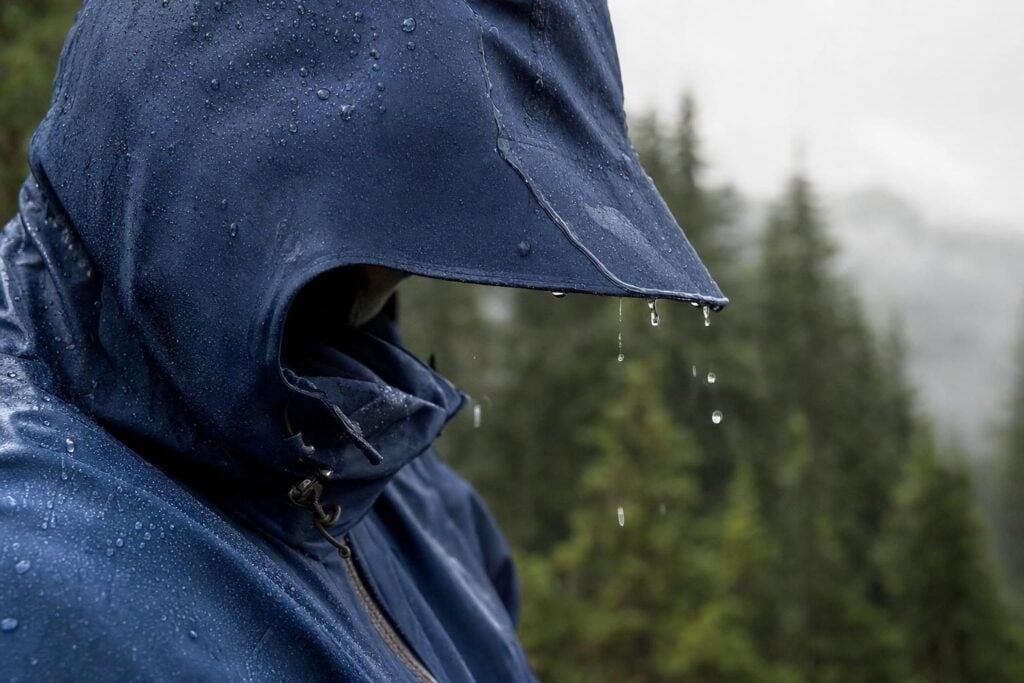
| Hood | Adjustable, ideally with a stiff brim | Yes, since a bad hood ruins a good jacket |
| Fit | Room for a fleece underneath, sleeves that still cover your wrists with arms raised | Fit beats features |
| Packability | Stuffs into its own pocket or fits flat in a daypack | Yes, if you'll carry it on excursions |
| Breathability | Underarm zips, vents or a listed breathability rating | Moderate, mainly if you run warm or walk uphill |
| Brand name or fancy membrane | Nice, not required | Usually no for ship-and-town cruisers |
Try the hood on over a beanie, because that's how you'll wear it. Then turn your head side to side. A hood that blocks your peripheral vision gets pushed back within ten minutes on deck, which defeats the point.
For fit, try the jacket on over the thickest layer you plan to wear. Then raise your arms as if you're holding binoculars or a camera. If the sleeves ride up past your wrists, rain runs straight down your forearms.
Melinda's tip
Breathability matters more than people expect. A shell that traps sweat leaves you as damp as the rain does. If you'll be walking uphill in port, pick the jacket with underarm zips or vents, and unzip them before you start climbing, not after.
Shell, 3-in-1, poncho or umbrella: which one fits you?
There's no single best waterproof jacket for Alaska cruise travelers, because cruisers come in different types. Here's how I'd sort it.
| Option | Best for | Downside | Skip it if |
|---|---|---|---|
| Lightweight hooded shell | Almost everyone, May to August | No warmth on its own | You hate layering |
| Heavier hardshell | September sailings, hikers, boat tours | Bulkier, warmer to wear | You only walk port towns |
| 3-in-1 (shell plus liner) | Cold-sensitive people, shoulder season | Heavy, takes suitcase space | You're sailing June to August |
| Poncho | Emergency backup, kids on a budget | Flaps in wind, no real warmth | You'll be on deck in wind |
| Umbrella | Short walks in town | Awkward in wind and on crowded decks | You plan to be outdoors much |
For summer, Holland America's packing guide suggests short sleeves and light pants by day, plus a packable rain jacket for pop-up showers. A light shell over a fleece beats one thick coat, because you can peel a layer off when the sun comes out.
Umbrellas get a lot of airtime on packing lists. Honestly, I'd skip them. A moving ship makes its own wind, and an umbrella on a crowded deck is a hazard to everyone's eyes. A brimmed hat under your hood solves most rain problems.
If you're torn between a ship excursion and exploring on your own, the right jacket changes a little. My breakdown of booking with the ship or on your own helps you decide how much of your trip will be outdoors.
Want me to price this out for you?
Before you spend on gear, let me price your Alaska sailing. Planning with me is free, and I add perks at no extra cost when you book with me.
Does the month you sail change the jacket you need?
Yes, but less than you'd think. The shell stays the same. What changes is what's under it.
May and June
The NPS says April, May and June are usually the driest months at Glacier Bay, and the Ketchikan numbers above back that up. They're also cooler. Ketchikan's average highs sit around 57° F in May and 61° F in June. I'd pair a light shell with a warm fleece, a hat and light gloves.
July and August
Warmer, but wetter. Ketchikan's average highs reach the mid-60s, and Juneau's July and August rainfall is noticeably higher than June's. A packable shell is plenty for most people, and rain pants start to look more attractive if you have a boat tour planned.
September
The wettest and coolest sailings. Holland America's fall advice is waterproof outerwear, rain pants and warmer sweaters, and it says a heavier jacket becomes most useful by September. This is the month to pick the sturdier hardshell, or to add a packable insulated layer underneath.
For a month-by-month clothing plan, my Alaska cruise packing list goes deeper. The best time to cruise to Alaska post helps you pick the month in the first place.
Watch out
Cold isn't only about the number on the thermometer. The NPS says long stretches of rainy, overcast, cool weather are normal in Southeast Alaska, and it lists a hat, gloves and rain gear as essential protection against hypothermia. Getting soaked and then standing on a windy deck for an hour is the real hazard.
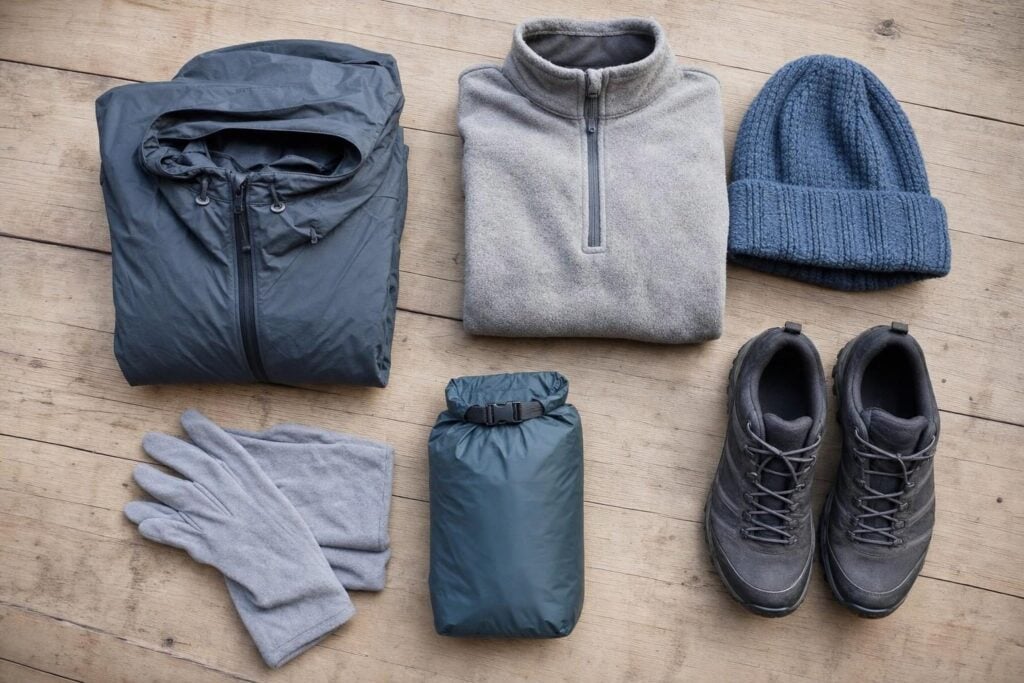
How to save money on Alaska rain gear
Rain gear is a place where people overspend out of panic. A few honest ways to avoid that.
Check what you already own first
If you have a hooded, truly waterproof shell, you may be done. Do the shower test: stand in the shower stall, or use a garden hose, and see whether water beads and nothing leaks through at the seams. If it passes, pack it and keep your money. Borrowing a shell from a friend or family member is a legit move too.
Buy early, not at the last minute
Early buying gives you time to test the fit over a fleece, return it if the hood is bad, and catch off-season sales. Check the return window before you order, because policies vary. Last-minute buying leaves you with whatever is still in stock.
Pay for the hood, seams and fit. Skip the rest.
For ship-and-town cruising, you don't need the top-of-the-line membrane or the name on the chest. A mid-range jacket with a clear waterproof claim, taped seams and a good hood does the job. If you want to browse, I'd search for a women's packable waterproof jacket with a hood or a men's version, then filter for “taped seams” and a listed waterproof rating. Read the specs yourself, since listings vary a lot.
Skip rain pants unless your plans call for them
If you're strolling downtown Juneau and Ketchikan, rain pants are optional. They earn their space if you're booking kayaking, a small-boat wildlife tour or a fishing trip. If you do want a pair, a packable waterproof rain pants search is where I'd start.
Don't double-buy for excursions
Operators often loan waterproof gear for wet activities such as kayaking, and the tour page usually says so under inclusions. Loaner gear covers the activity, not the rest of your day in port, so I'd still bring my own shell. But read the inclusions list before you buy specialized gear for a single day.
Timing tricks
Shoulder-season sailings, especially in May, are often priced lower than July and August, but you trade price for weather. May is cooler and drier. September is wetter, so a cheaper sailing means a sturdier jacket. I cover typical price ranges in my Alaskan cruise cost guide and my post on Alaska cruise deals.
Melinda's tip
Wear your bulkiest layers (and the shell itself) onto the plane. A big jacket in your suitcase eats space, and that matters if you're flying carry-on only. Pack a small 20 liter dry bag to keep your phone and spare layers dry in the daypack, but don't splurge on a fancy one for a ship-and-town cruise.
Keeping your jacket waterproof (and dry in a tiny cabin)
An older jacket that stopped beading water is often just dirty, not dead. Dirt and body oils can dull the water-repellent finish, and a good cleaning can bring much of it back.
Follow the care label first. Many makers recommend washing with a technical cleaner, because regular detergent can leave a residue that works against water repellency. A technical fabric wash is a small purchase compared with a new jacket. If the label allows it, a short tumble on low heat can help reactivate the finish.
Test it before you go. Sprinkle water on the shoulders and cuffs. If it beads and rolls off, you're good. If it soaks in, clean and reproof it, or retire the jacket.
On the ship, hang your wet jacket on a bathroom hook or the balcony door handle overnight, not in a closed closet. Wet gear shoved in a drawer smells by Day 3. Walls on many ships are metal, so a couple of magnetic hooks can add drying space. Test one with a magnet and check your cruise line's rules first.
Rain jackets for kids and teens
Kids outgrow gear, so this is where I'd spend the least. Hand-me-downs, borrowed jackets and secondhand finds are all fair game, as long as the hood fits and the jacket really is waterproof. Run the same shower test you'd use on yours.
If you need to buy, a search for a kids' waterproof rain jacket with a hood is a good start. Pick a bright color so you can spot them on a crowded dock. Teens are the wild card. Many will refuse a jacket until the wind picks up, so pack one for them anyway. My family cruise to Alaska guide covers more of the kid-friendly planning.
One more gear note. If you'll be spotting whales and glaciers from the rail, a decent pair of binoculars is a better upgrade than a pricier jacket. I wrote up who should buy them and who can skip. And since Ketchikan is one of the rainiest ports on most itineraries, my Ketchikan port guide is worth a read before you plan your port day.
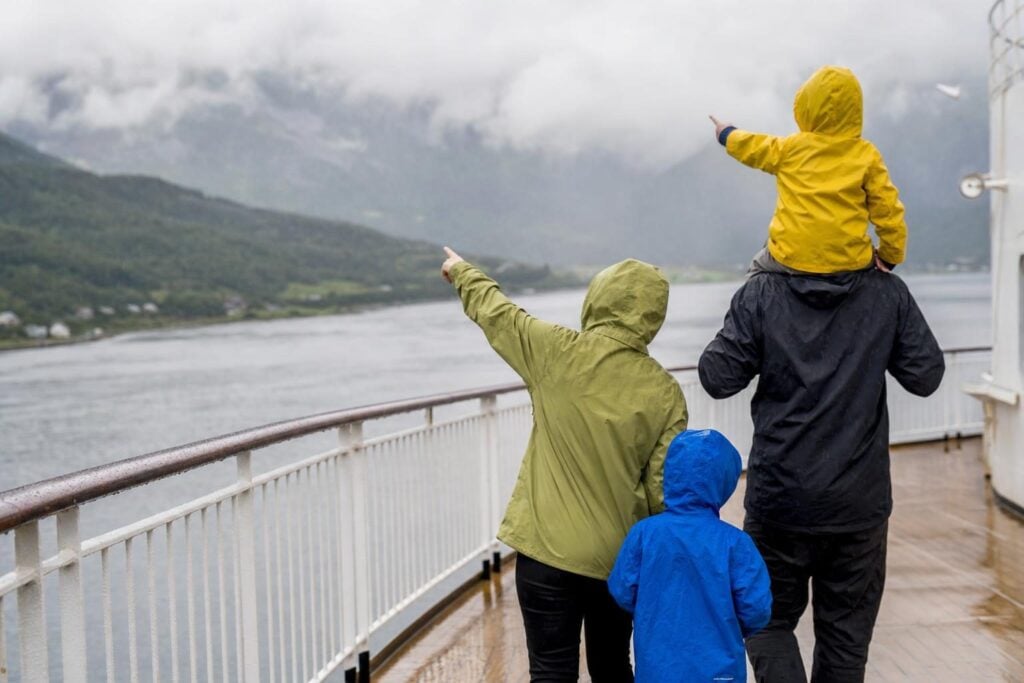
Your questions, answered
Is a water-resistant jacket enough for an Alaska cruise?
For a sailing with mostly ship time and short port walks, maybe. For a rainy Ketchikan day or a long excursion, no. Water-resistant jackets rely on a surface finish that eventually soaks through in steady rain. Holland America's own packing advice is to bring a waterproof jacket, not just a water-resistant one.
Do I need rain pants for an Alaska cruise?
Most people don't need them for ship days or walkable port towns. They earn their suitcase space if you're booking kayaking, a small-boat tour or a fishing trip, or sailing in September when rain increases. Check the excursion page first, because some operators supply rain gear.
Can I just bring a poncho or an umbrella instead of a jacket?
A poncho makes a fine backup, especially for kids. But wind on deck turns umbrellas and ponchos into a hassle, and neither gives you the warmth and wind block of a real shell. I'd pack a jacket and treat a poncho as the spare.
Will my shore excursion provide rain gear?
Some do, especially kayaking, fishing and other wet-adventure tours, and the tour page usually lists it under inclusions. Loaner gear covers the activity, not the rest of your day in port, so it doesn't replace your own jacket. Check the operator's page before you buy anything extra.
Do I need a heavy winter coat as well as a rain jacket?
Usually not in summer. Holland America's packing guide says you can leave heavy-duty winter coats and snowshoes at home and rely on easily removable layers. May and September run cooler than midsummer, so a packable insulated layer under your shell is smarter than a bulky parka.
One last thing before you hit “buy”
If I had to boil this down to one sentence: buy a shell you'll actually enjoy wearing, and put your money into the hood, seams and fit. Everything else is a nice-to-have.
Then go look at the rain. Mist hanging on a Southeast Alaska mountainside is half the reason people come, and you'll enjoy it more dry. If you want help picking the sailing, the month or the ship, my Alaska cruises page is the place to start.
Ready to pick your Alaska sailing?
Tell me your dates, budget and who's coming, and I'll send options with the weather and gear in mind. Planning with me is free, and I add perks when you book through me.
Sources I checked
- Glacier Bay National Park & Preserve: Basic Information (NPS)
- Glacier Bay National Park & Preserve: Weather (NPS)
- Glacier Bay National Park & Preserve: Safety (NPS)
- Juneau Fast Facts (Travel Juneau)
- Juneau Climate Report (Alaska Climate Research Center, University of Alaska Fairbanks)
- Monthly Climate Normals 1991-2020 (NOAA NCEI)
- Alaska Cruise Packing List (Holland America Line)
Free printable
A free 2027 cruise calendar for your wall
A real cruise destination for every month, plus a Ports of Call photo book. Print them at home.
Send me the free calendar
Alaska Shore Excursions & Tours
Planning your shore days?
Book highly-rated shore excursions and port tours before the best ones sell out.
Find shore excursions on Viator →As a Viator affiliate, I earn a small commission from qualifying bookings — at no extra cost to you.
Cruise Packing Essentials
The little things that make cruising smoother — the gear I recommend to every traveler before they sail.
As an Amazon Associate, I earn from qualifying purchases — at no extra cost to you.