Cruise Ship Horn Kids: A Calm Plan for the Loudest Moment on Board
This post may contain affiliate links. I may earn a small commission at no extra cost to you.
The quick answer
Yes, your family can cruise, even with the ship horn. It is very loud up close, but it usually comes at predictable moments, including sail away, fog, the safety drill and some special ship moments. You can plan for it with kid-size earmuffs, a simple picture story, a quiet spot away from the bow and a backup place to go.
Yes, your family can cruise. I know the question that keeps you up at night: what if the ship horn is too much for my child? I get it.
I'm a mom of three boys with their own special needs and sensory needs. So I don't treat the horn as a small detail. It's one of the first things I plan around.
Here's the good news. The horn is not random. It has a few known moments, and each one has a pattern you can prepare for. With a little prep, the trip can feel calm and fun.
In this guide I'll cover how loud a cruise ship horn is, when kids may hear it, and a simple plan for your worries about the cruise ship horn and kids. I'll also cover ear protection that actually works, calmer places to stand, cabin choices and the questions to ask your cruise line.
How loud is a cruise ship horn for kids?
Loud. I won't dress that up. Ships don't publish one standard number for their horns, and I couldn't find an official one, so I'm not going to hand you a decibel figure I can't stand behind.
What I can tell you is how to think about it. Where you stand matters a lot. The horn is mounted up high near the bridge, so the closer you are, the harder it hits.
For comparison, the CDC lists a siren at 120 decibels as something that can cause damage after about a minute of exposure. A rock concert is listed at 110. A ship horn is a short blast, not a minute, but standing right under one is not where I want little ears.
So I plan for the horn two ways. One is comfort, since sudden loud sound can feel like too much for kids who are sensitive to noise. The other is plain ear safety.
| Everyday sound | Level (CDC) | Time before damage can start |
|---|---|---|
| Washing machine | 70 dB | Not a concern |
| Traffic inside a car | 80 dB | Not a concern for short periods |
| Leaf blower | 90 dB | About 2 hours |
| Sporting event | 100 dB | About 14 minutes |
| Rock concert | 110 dB | About 2 minutes |
| Siren | 120 dB | About 1 minute |
Those are general reference levels from the CDC, not measurements from your ship. Use them to get a feel for the scale, then plan to keep kids away from the horn and protect their ears if you can't.
When will you actually hear it?
This is the part that takes the fear down a notch. Most horn moments are predictable.
Leaving port (the sail away horn)
Ships commonly sound the horn as they leave the dock. Under the maritime rules, a prolonged blast generally lasts four to six seconds. It is a long sound, not a string of beeps.
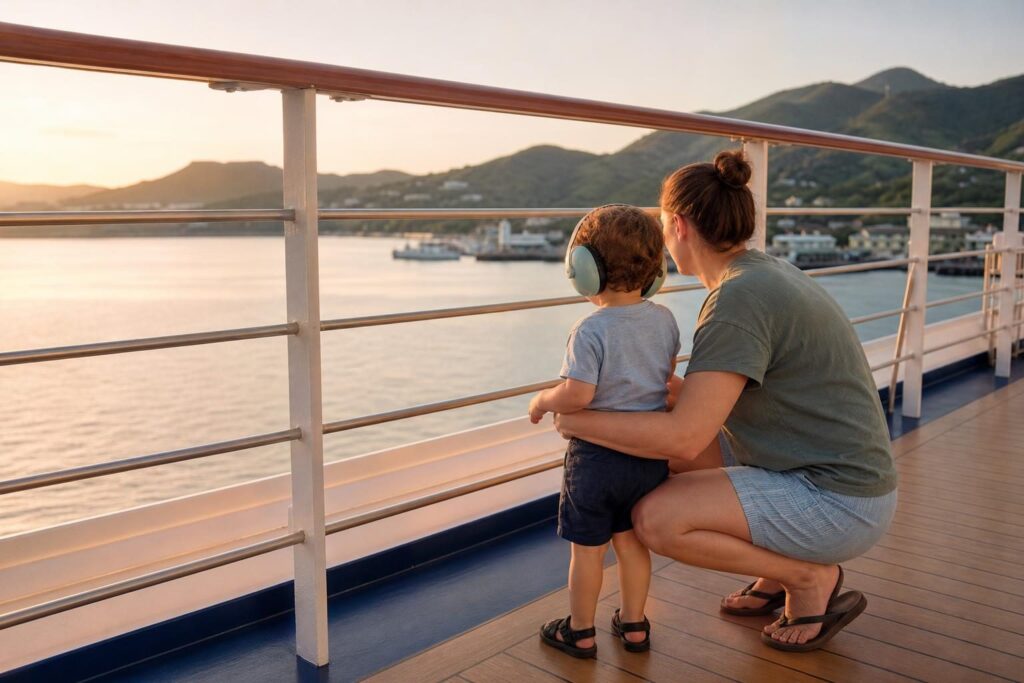
Sail away horn noise is the one most families worry about, and it's the easiest to plan around. You know roughly when you're departing, so you can be somewhere calm with earmuffs already on. Not every ship does it the same way, so ask.
The safety drill on boarding day
Every passenger goes through a safety briefing before the ship leaves. The general emergency signal is seven or more short blasts followed by one long blast, and it's demonstrated at the start of your cruise so nobody hears it cold the first time.
Some lines sound it on the horn, and some use only the internal alarm. Drills also run differently now, so ask which version your ship does. I walk through the whole day in my guide to boarding day and the muster drill with kids who have sensory needs.
Fog and other moments
Fog is the wild card. Ships sound horns in low visibility, and that can happen at any hour, including early morning. It's more likely on foggy stretches of the Pacific coast and in Alaska. A cabin near the front is the most likely place to hear it.
A few ships also use the horn for special moments. If any of that matters to your family, ask ahead.
Melinda's tip
Ask your cruise line how your specific ship handles the muster drill signal and sail away. Policies and ships vary, and an answer from the line beats a guess from a blog (including mine). Ask before you pay a deposit, not on boarding day.
Ear protection on a cruise for kids: what works
Here's where I'd spend a little money. Good ear protection is cheap compared with the cruise, and it's the most concrete comfort you can bring for the horn.
What counts as real hearing protection
Cotton in the ears is not real hearing protection. Winter ear warmers and regular headphones are not enough either. Skip the cotton balls and the everyday earbuds.
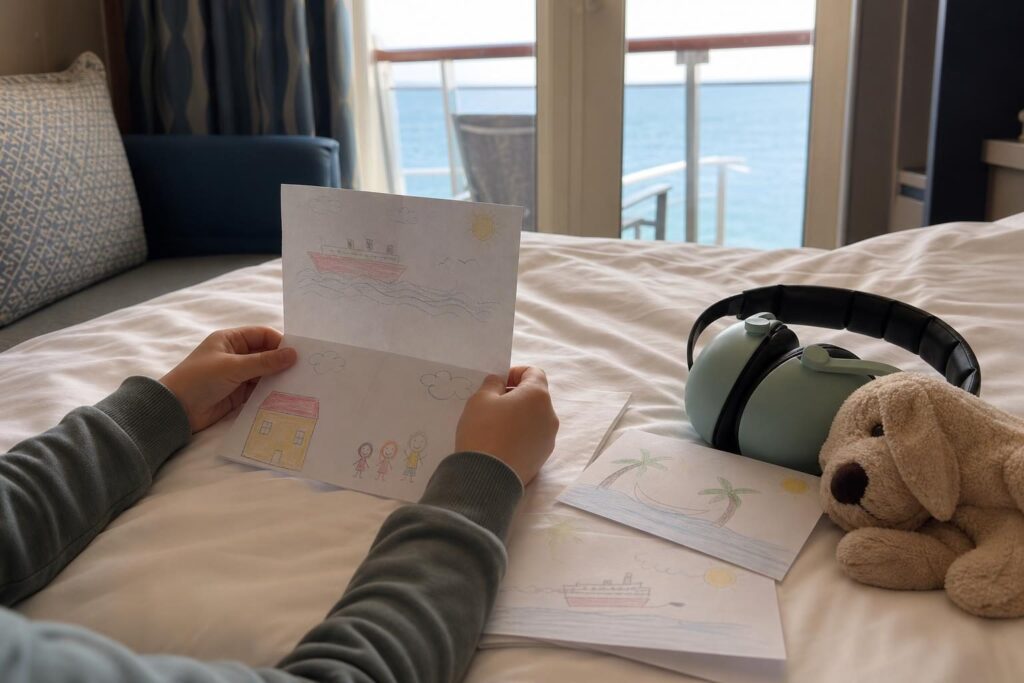
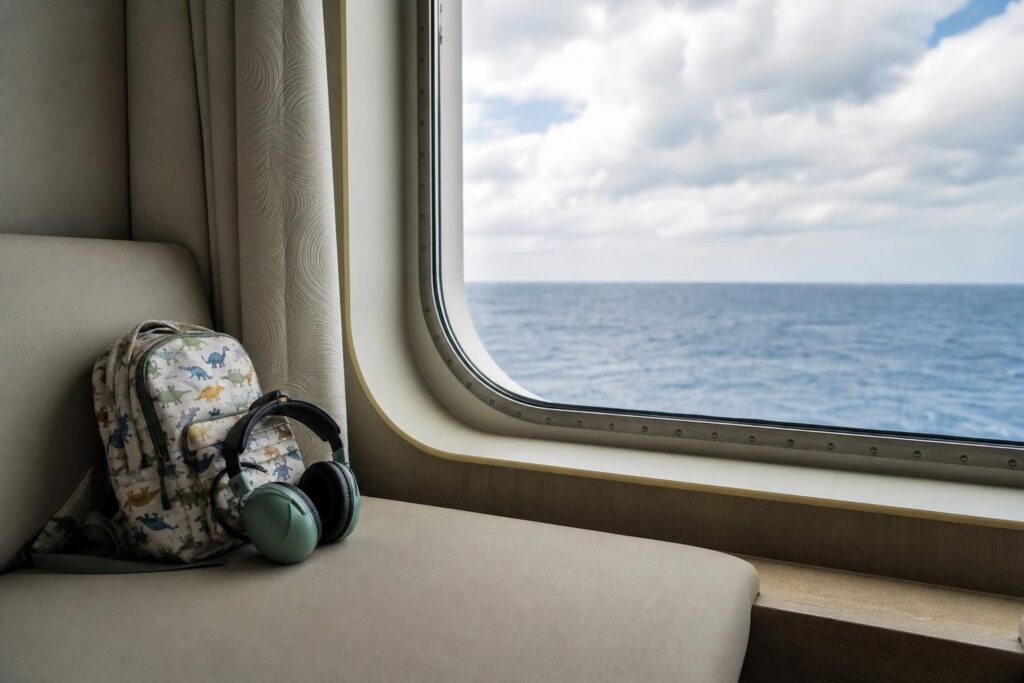
Look for earmuffs that sit fully over both ears and fit snugly. For kids, a snug fit matters more than almost anything, so choose a size made for children rather than stretching an adult pair. Check the package for a noise reduction rating, and don't worry about finding the highest number. A comfortable pair your child will actually wear beats a perfect pair that stays in the bag.
If you want to browse, try a search for kids hearing protection earmuffs with a noise reduction rating. A padded headband and an adjustable fit are good things to look for. I'm not naming a brand, because the right one depends on your child's head and comfort.
Noise-canceling headphones are a different tool
Noise-canceling headphones can take the edge off the steady hum of crowds and dining rooms. They reduce what you perceive, but they're not the same as rated hearing protection for a sudden, very loud blast. I think of earmuffs for the horn and soft noise-canceling headphones for the everyday buzz.
Carnival lends free sensory bags. Its own page says each bag holds comfortable noise-canceling headphones, fidget tools, a visual feeling thermometer and a KultureCity VIP lanyard. They're checked out on a complimentary, first-come, first-served basis at Guest Services or a youth program, so ask early.
Watch out
Don't introduce earmuffs on boarding day. Kids who get overwhelmed by new things often say no at the worst moment. Let them wear the earmuffs at home for a few minutes at a time over a couple of weeks, with a snack or a favorite show, so they feel like a normal part of the trip.
A calm plan for sail away horn noise
This is the part I'd tape to the fridge. It's simple on purpose.
- Before you go: Make a short picture story with real photos or simple drawings. Show the ship, the horn as a big, long sound, and then smiling faces and a snack.
- A few weeks out: Practice with earmuffs. Play a low horn sound at a quiet volume, then build up slowly, always letting your child stop when they want.
- On the ship: Tell Guest Services your family's plan. Ask about a quiet spot and, where offered, a private safety briefing.
- Sail away day: Pick your spot ahead of time (see the next section), put earmuffs on early, and give your child a job like counting seagulls or holding a favorite toy.
- After the horn: Name it. “That was the big ship horn. You did it.” Then go do something calm.
Notice what's not on this list: standing at the front rail hoping for the best. We'll skip that.
Want me to price this out for you?
I can match your family with a ship, a cabin and a boarding plan that fits your child's needs. My help is always free to you. The cruise lines pay me, so you never do. No cost. No pressure.
Plan my cruise for freeWhere to be (and not be) when it sounds
Location changes everything. The horn sits up high, toward the front of the ship, so a front cabin or the top decks will usually hear it louder.
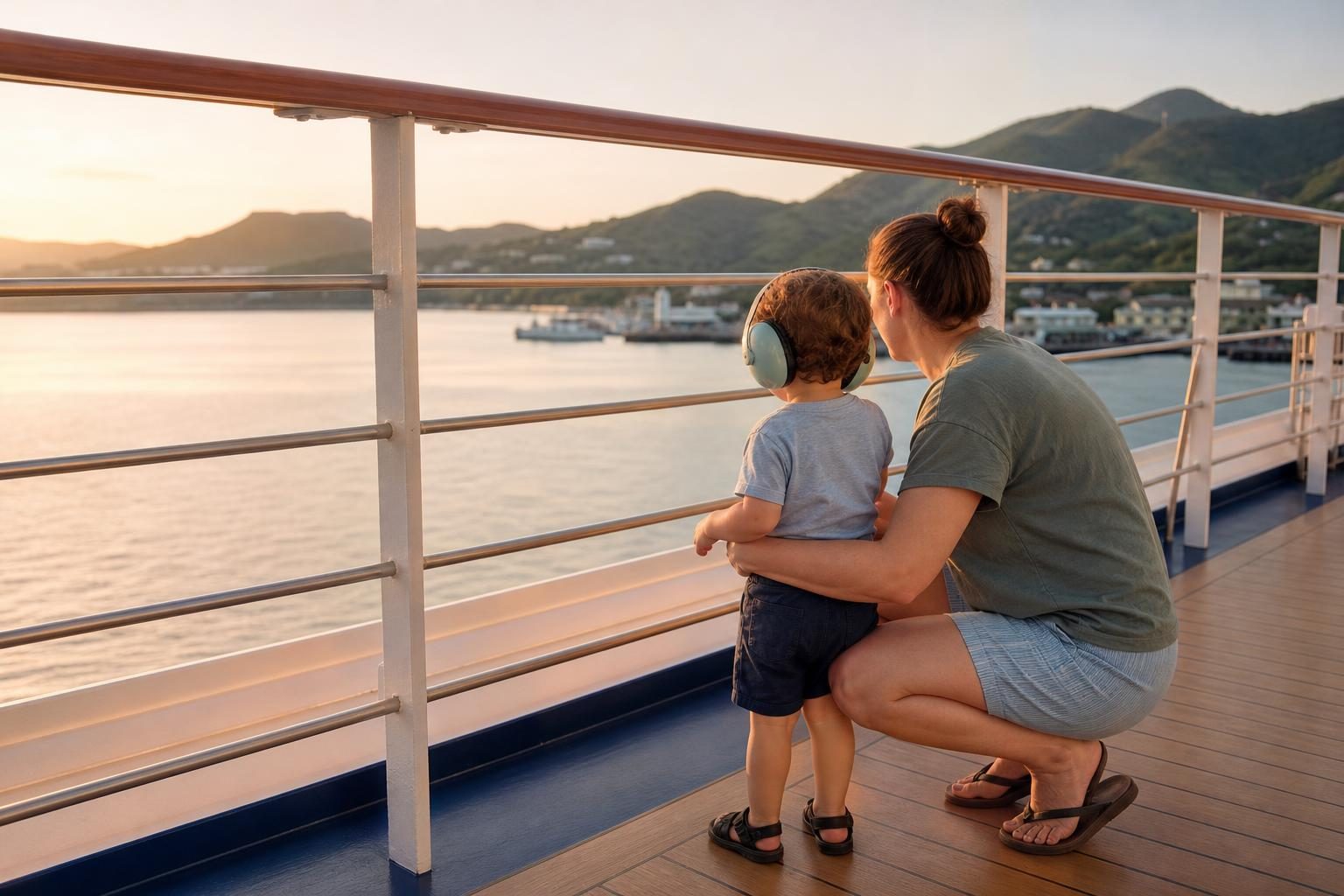
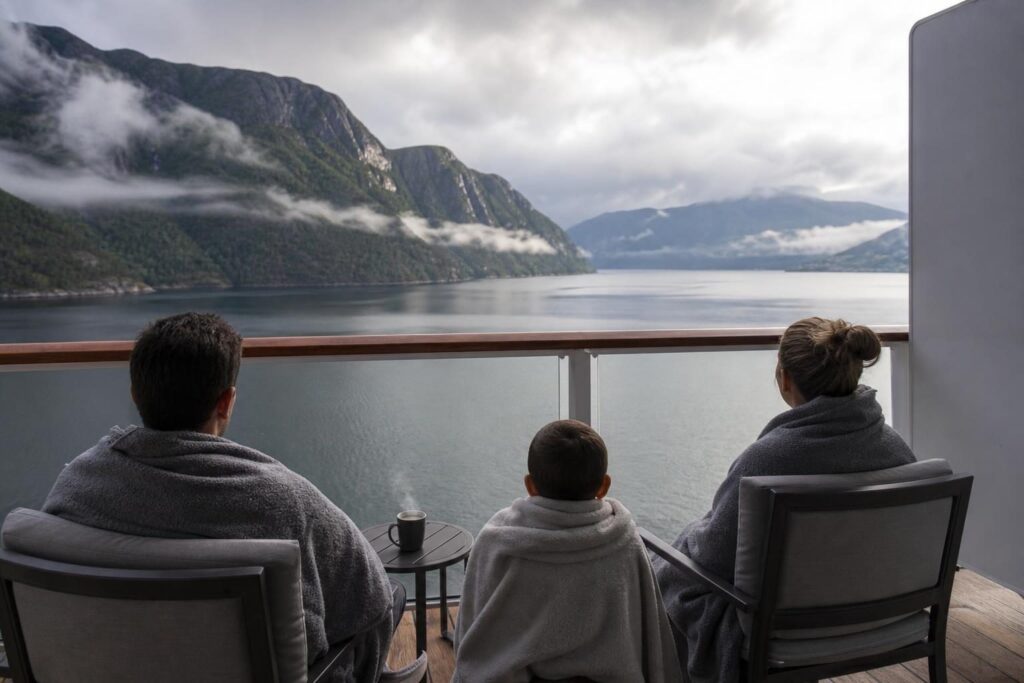
On sail away day, I steer families away from the bow and the top decks. A midship spot, a lower deck or an interior lounge is usually much calmer. A private balcony can also work well, because you have a door to close and your own space.
| Spot | Horn risk | Good for |
|---|---|---|
| Front top decks | Highest | Skip for kids with noise worries |
| Open pool deck party | High (music plus horn) | Skip during sail away |
| Midship balcony | Medium | Private, door closes, earmuffs on |
| Interior lounge or library | Lower | Quiet retreat, watch from windows |
| Cabin toward the back, lower down | Lower | Often the calmest option |
Treat that as a general guide, not a promise. Every ship is laid out a little differently. For the full picture of choosing a calmer place to sleep, read my guide to the quietest cabin on a cruise ship.
Melinda's tip
Walk the ship on boarding afternoon and find two quiet spots: one near your cabin and one near where you'll watch sail away. Layouts and open areas differ, so confirm what's available once you're aboard. Then everyone knows where to go if it all feels like too much.
What to ask your cruise line before you book
Different lines have different tools. I'd rather you know that now than on boarding day.
Carnival says it was the first cruise line certified “sensory inclusive” by KultureCity. It suggests that families meet with Guest Services once on board to talk through accommodations, including a private safety briefing. It's also upfront that it cannot guarantee every request, though it says it makes every reasonable effort.
Royal Caribbean has a Guest Special Needs Form. Its own page says to submit it at booking, and no later than 30 days before sailing. If you want a line-by-line comparison, I put one together in my guide to the best cruise lines for special needs and sensory needs.
Here are the questions I'd ask any line. Programs change, so confirm them directly as of November 2026.
- How does my ship do the safety drill, and is the horn used?
- Can we do a private safety briefing?
- Where do you suggest we watch sail away that is quieter?
- Do you lend sensory bags or similar items, and how do we reserve one?
- Which forms do I fill out, and how early?
- Can I get a cabin away from the bow and the top decks?
That's a lot to remember, which is exactly why I do it with families. My sensory-friendly cruises page has a free Sensory Cruise Prep Pack that walks you through it step by step.
If you're sailing from the West Coast, a shorter itinerary can be a gentle first try. A sensory friendly Alaska cruise from Seattle means no airport, which is one less loud, crowded place to manage. And if you're still on the fence about the whole idea, start with your first cruise with a child with sensory needs.
Your questions, answered
How loud is a cruise ship horn?
Very loud, and there is no official number to quote. Ships don't publish one standard level, and what you hear depends on how close you are to the horn, which sits up high near the bridge. For comparison, the CDC lists a 120 decibel siren as something that can cause damage in about a minute of exposure, so I treat the horn as a sound that needs real ear protection up close.
When does a cruise ship blow its horn?
Common times include leaving port, heavy fog, the muster drill on boarding day and some ship maneuvers. A few ships also use it for special moments like a holiday. Your cruise line may do it differently, so ask Guest Services or your planner what to expect on your sailing.
Can you hear the cruise ship horn in the cabin?
Sometimes, yes. Cabins near the front of the ship and on the upper decks are more likely to pick it up, while cabins farther back and lower down tend to be quieter. Nobody can promise silence, so plan for it either way.
Do kids need ear protection on a cruise?
It's a smart, low-cost thing to bring, especially for kids who get overwhelmed by sudden loud sounds. Cotton, winter ear warmers and ordinary headphones are not real hearing protection. Look for earmuffs made to reduce sound, sized for kids, and let your child practice wearing them at home first.
Does the muster drill use the loud horn?
The drill includes the general emergency signal, which is seven or more short blasts followed by one long blast. Some lines sound it on the horn and the internal alarm, and some only use the internal alarm. Ask your cruise line how your ship handles it, and ask about a private safety briefing.
Do cruise lines offer anything for kids with sensory needs?
Several do. Carnival lends free sensory bags on a first come, first served basis. Its listed items include noise-canceling headphones, fidget tools, a feelings thermometer and a KultureCity VIP lanyard. Royal Caribbean asks families to submit its Guest Special Needs Form at booking, and no later than 30 days before sailing. No line can guarantee every request, so I always help families ask early.
One last thing from me
The ship horn is loud, and your worry about it is fair. But it's also one of the most predictable things on a cruise, which makes it one of the most plannable.
Earmuffs, a picture story, a quiet spot and a cabin away from the bow cover most of it. Then you get to enjoy the part you came for, which is your family together somewhere new. If you'd like a hand building that plan, I'm happy to help.
Ready for a calm, simple plan?
Tell me a little about your family and I'll help you find a ship, a cabin location and a boarding day plan that fits. My help is always free to you. The cruise lines pay me, so you never do. No cost. No pressure.
Plan my cruise for freePlanning a cruise with a kid who gets overwhelmed?
I made a free Sensory Cruise Prep Pack for families with special needs and sensory needs. It has a picture story about the ship and a visual schedule you can print at home, so day one feels a little more familiar.
Free printable
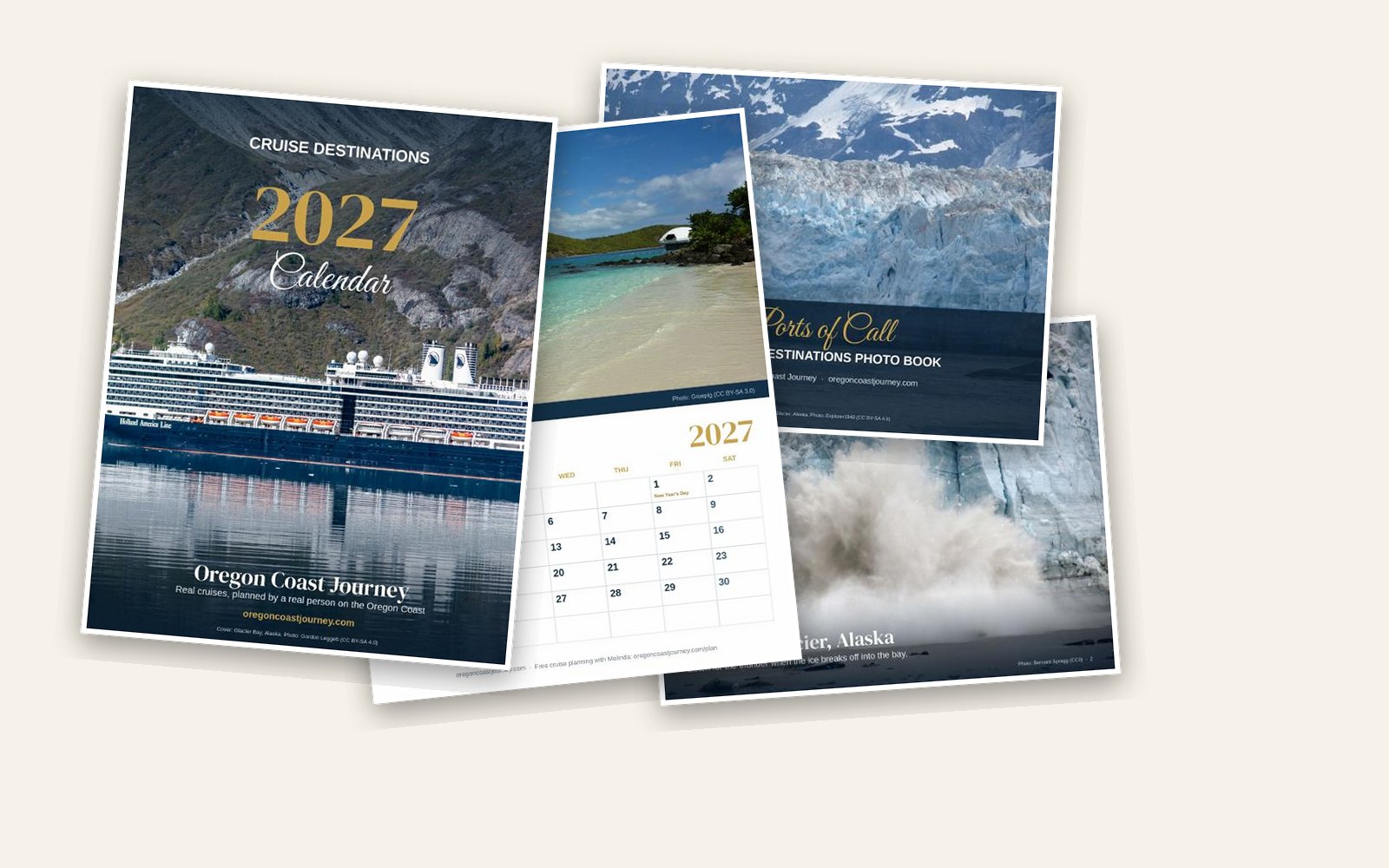
A free 2027 cruise calendar for your wall
A real cruise destination for every month, plus a Ports of Call photo book. Print them at home.
Send me the free calendarPlanning your shore days?
Book highly-rated shore excursions and port tours before the best ones sell out.
Find shore excursions on Viator →As a Viator affiliate, I earn a small commission from qualifying bookings, at no extra cost to you.
Cruise Packing Essentials
The little things that make cruising smoother: the gear I recommend to every traveler before they sail.
As an Amazon Associate, I earn from qualifying purchases, at no extra cost to you.