Best Binoculars for Alaska Cruise: What to Buy (and Who Can Skip Them)
This post may contain affiliate links. I may earn a small commission at no extra cost to you.
The quick answer
For most people, the best binoculars for Alaska cruise trips are a waterproof, fogproof 8×42 pair with a close focus around 10 feet or less. Plan on roughly $130 to $250 for a solid pair. That range comes from Cornell Lab's 2022 list-price tiers, so check current prices. Go 10×42 only if your hands are steady, and look at a compact or image-stabilized pair if weight or deck motion bothers you.
Most “best binoculars” pages are really product carousels. You get ten models, ten buy buttons, and no idea what you'll be looking at from a moving ship.
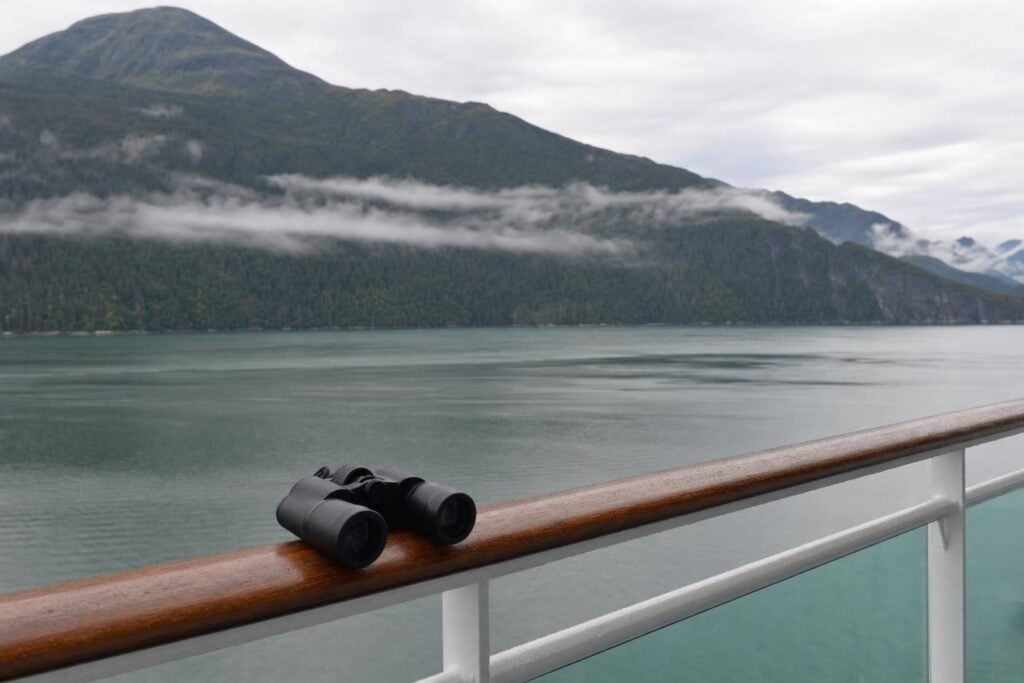
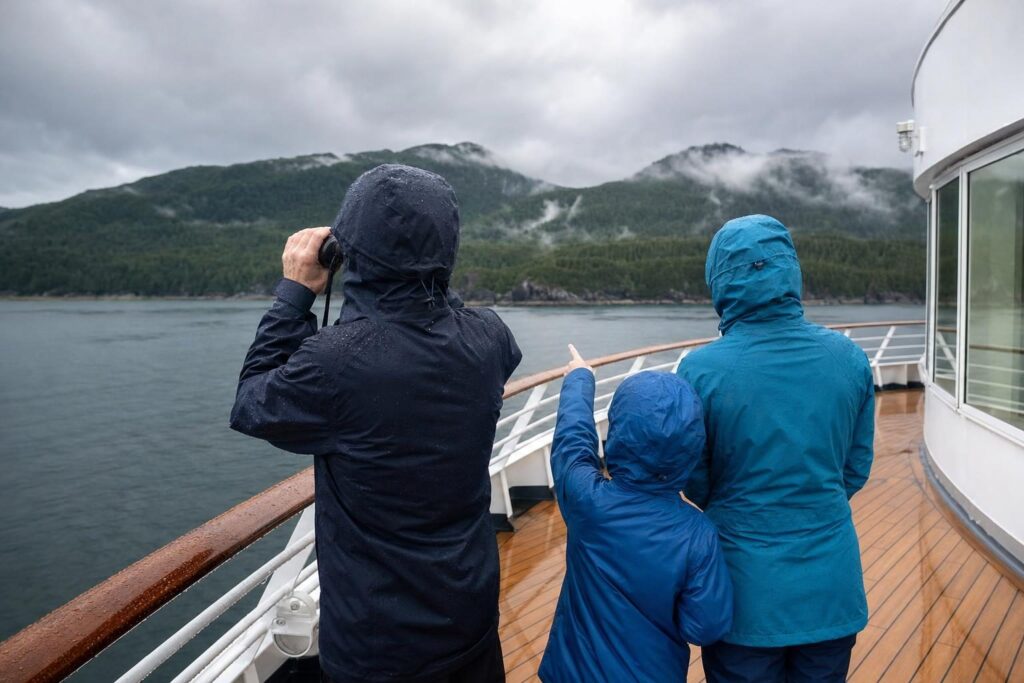
So picture the scene. You're on deck in grey light, the ship is moving, someone yells “whale!”, and you have about ten seconds. The right pair is the one you can aim fast, hold steady, and not worry about getting wet.
Below: the magnification question settled, the features that matter (and the ones that don't), honest budget ranges, and who can skip buying a pair. I'm an independent cruise planner, so this is the planning angle, not a lab test.
Best binoculars for Alaska cruise: why 8×42 is the default
Binoculars carry two numbers. Audubon explains that in 8×42, the first is magnification and the second is the diameter of the front lens in millimeters.
So 8×42 makes things look eight times closer, with big front lenses that gather plenty of light. Audubon also says objectives larger than 42 mm are too big and heavy for most people to carry around all day.
On a ship, this size wins for two reasons. The deck moves, and Southeast Alaska skies are often flat and grey.
Motion first. Higher power magnifies every little twitch of your hands, and a shaky image tires you out. Audubon also says 10-power and higher models slash the field of view and aren't as bright as 7x or 8x. Try finding a surfacing whale through a narrow window while the ship keeps moving. It's maddening.
Then the light. Wide front lenses help when the sky is the color of dishwater, and that's most mornings in the Inside Passage.
Melinda's tip
Do the exit pupil math when you compare specs. Divide the front lens size by the magnification. An 8×42 gives 5.25 mm, a 10×42 gives 4.2 mm, and an 8×32 gives 4 mm. A bigger number generally means a brighter view in dim light, which is why a 42 holds up better than a tiny compact at dawn.
8×42, 10×42, compact or stabilized: which fits you?
Here's the quick sort.
| Type | Best for | Trade-off | Carry feel |
|---|---|---|---|
| 8×42 | Most cruisers, first-timers, families | Not pocketable | Noticeable after an hour at the rail |
| 10×42 | Steady hands, or bracing on a rail | Narrower view, more visible shake | Similar to 8×42 |
| 8×32 | Smaller hands, lighter neck load | Gives up a little detail in poor light | Lighter than a 42 |
| Compact 8×25 or 10×25 | Day trips, kids, carry-on only | Dim at dawn, dusk and on dark days | Fits a jacket pocket |
| Image-stabilized | Shaky hands, long scanning sessions | Batteries, cost, check the waterproofing | Usually heavier than a standard pair |
| 7×50 marine | Bridge-style viewing | Bulky, overkill for a passenger | Heavy |
On compacts, Audubon says objectives under 30 mm are light and easy to carry but not bright enough for all the detail you want in poor light. They look lovely at noon. At 5 a.m. under cloud, not so much.
If you're torn between 8x and 10x, pick 8x. It's easier to find the animal, and finding it is most of the battle.
What features matter on a wet, windy deck?
Waterproof and fogproof (non-negotiable)
Rain and spray are common here, and you'll walk from a warm cabin into cold air. A sealed body keeps moisture from fogging the inside. Plenty of budget models have it now, so don't overpay for it, but don't skip it.
Eye relief and twist-up eyecups (if you wear glasses)
Eye relief is how far your eye can sit behind the eyepiece and still see the whole image. Glasses push your eyes back, so you want generous eye relief (about 15 mm or more is the usual advice) and eyecups that twist down. Try them with your glasses on before you commit.
Close focus around 10 feet or less
Cornell Lab notes that many binoculars made for birding now focus down to 10 feet or less. Honestly, most of your targets will be far away, so this is a nice-to-have. It earns its keep when a bird lands on the rail or you want a look at something your kid found on deck.
Weight and strap
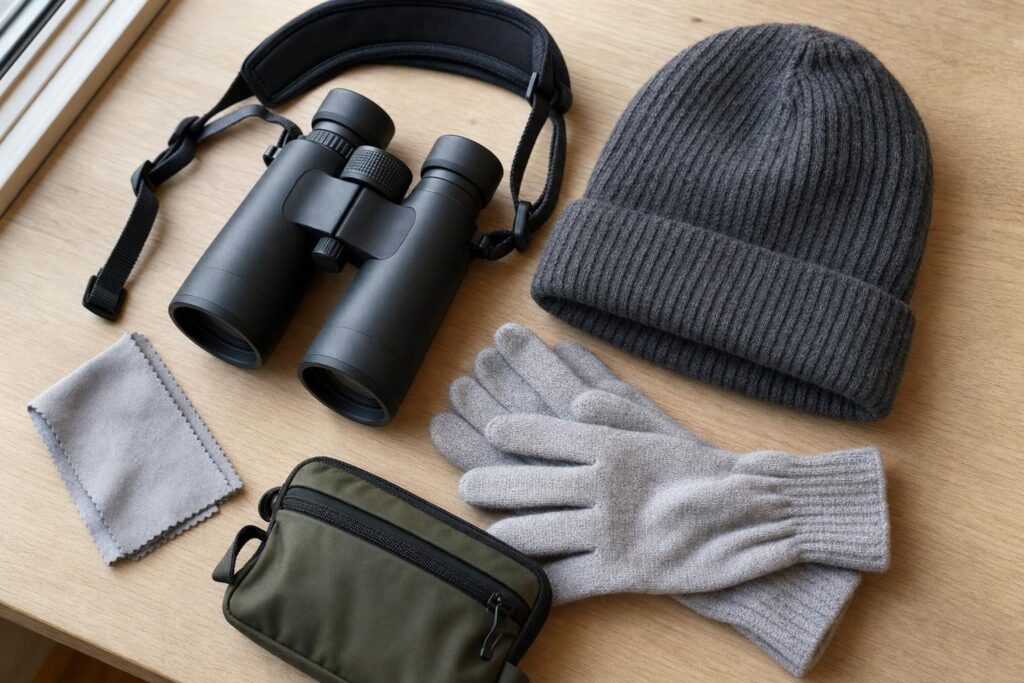
You'll hold these for long stretches while scanning a shoreline. A pair that feels fine in a store can feel heavy after an hour at the rail. A wide, padded strap or a harness that spreads the weight is a cheap fix. Here's a search for binocular harness straps.
What you can ignore
Big zoom ranges, built-in cameras and “50x” claims. Fixed power is easier on a moving deck, because zoom models add weight and complexity and the image often suffers.
Want me to price this out for you?
Binoculars pay off most when your route passes wildlife-rich water, and routes differ a lot between lines. Planning with me is free. Tell me your dates and I'll find an Alaska sailing that fits.
Are image-stabilized binoculars worth it on a cruise ship?
They can be great. Stabilized models use sensors and moving optics to cancel small shakes, so you can hold higher magnification by hand than you otherwise could. They suit people with hand tremor, or anyone planning long scanning sessions.
The catches are real, though. They usually cost more and weigh more, and they need batteries. Some aren't fully waterproof either, so read the spec sheet before you trust one in the rain.
They also have limits. Stabilization smooths small shakes, but it won't fix a ship that's rolling in a swell. Much of an Inside Passage sailing is in sheltered water, so this matters less there than on open-ocean days.
My take: if you already struggle with shaky views, or you're buying one pair for years of boating and travel, a stabilized pair is a smart splurge. For an occasional cruiser, a good 8×42 is plenty.
Still choosing a route? My Inside Passage cruise guide covers the ports and what you'll see.
Do cruise ships provide binoculars, and who can skip buying a pair?
It varies, and the brochure rarely tells you. Some small-ship lines put binoculars in the cabins. Some big ships supply them only in certain suites or cabin categories, and quality is hit or miss.
Even when your ship does supply a pair, a pair that stays in your cabin won't help when a whale shows up on the other side of the deck. Ask your line or your planner what's included before you decide.
Thinking about a smaller vessel? My small ship Alaska cruise guide explains who it suits and which lines to compare.
Who can skip buying binoculars
- Your small-ship line confirms binoculars are provided for every guest, and you're fine with a loaner.
- You know you'd leave them in the cabin, because you hate carrying gear.
- You plan to spend most of your time on tours ashore and very little on deck.
One thing that doesn't replace binoculars is your camera zoom. You have to spot the animal first.
Watch out
Don't buy a pair the week before you sail and skip the practice. Set the diopter, the small ring that balances your two eyes, at home. You only do it once, and you don't want to be doing it with a whale off the starboard side. Practice with your gloves on, too, because focus wheels feel different with them.
How much should you spend?
Cornell Lab's review of affordable full-size 8×42 binoculars split its picks into a Budget tier of $130 to $240 and a Mid-Range tier of $240 to $650. Those are list prices as of December 2022, so today's street prices will differ. Use the table as a range, not a quote.
| Budget (approximate) | What to expect | Good for |
|---|---|---|
| Under about $130 | Fine in daylight. Quality varies a lot, so check waterproofing and read reviews | A one-time cruise, or a second pair for kids |
| About $130 to $240 | Cornell's Budget tier for 8×42: a solid, usable pair | Most Alaska cruisers |
| About $240 to $650 | Cornell's Mid-Range tier for 8×42: generally brighter, with nicer handling | Frequent wildlife travelers |
| Above about $650 | Premium optics, and stabilized models often land here or higher | Serious users, shaky hands, many future trips |
For a one-time sailing, my pick for the best binoculars for Alaska cruise value is a waterproof 8×42 in the $130 to $250 band. Then put the savings toward a whale-watching excursion. Here's a search for waterproof 8×42 binoculars so you can compare current options. Filter for waterproof, fogproof, twist-up eyecups and close focus around 10 feet.
Melinda's tip
Traveling as a family? Buy one good 8×42 for the adults and a lighter compact pair for the kids. Kids give up fast on heavy binoculars that are hard to aim. Here's a search for compact waterproof binoculars for a second pair. My family Alaska cruise guide covers what keeps kids busy between sightings.
How to actually use them on deck
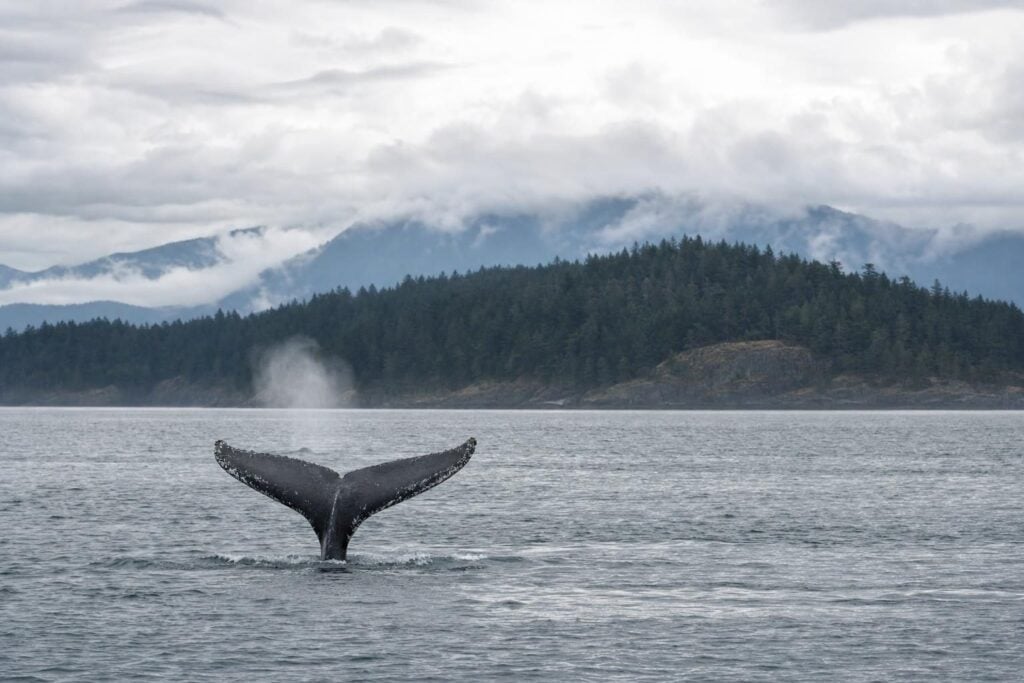
Binoculars only help if you know where to point them. Travel Alaska's wildlife tips say to check the water first for movement or contrast, then watch the shoreline where forest meets water. They also say kelp beds often signal sea otters or feeding activity below the surface.
Here's how I'd work it:
- Scan with your eyes first. Look for a blow, a ripple, a patch of birds, or a shape that doesn't match the waves.
- Keep your eyes on the spot as you raise the binoculars. If you look down at them first, you'll lose the target.
- Brace your elbows against your body or the rail. Engine vibration can travel through some rails, so try both.
- Call sightings like a clock. Treat the bow as 12 o'clock and say “whale at 2 o'clock.” Your travel partner will find it much faster than if you just point.
- Let them adjust to the air. Carry them out of the cabin a few minutes before you need them, so a fresh temperature change doesn't fog the outside of the lenses.
- Listen for the crew. Travel Alaska suggests listening for announcements from the crew or captain, since they're watching for animals too.
- Go early. Early mornings are often a good time for wildlife, and the decks are quieter.
Also set your expectations. NOAA's Alaska guidelines say to remain at least 100 yards from marine mammals, and for humpback whales it's a regulation. That means a lot of your whale views will be from a distance, which is the whole case for bringing binoculars.
Glacier Bay deserves its own plan. Only some ships get in, and your time there is precious, so my Glacier Bay cruise guide explains how to book one that does.
Melinda's tip
On the West Coast? Get a free dress rehearsal before you sail. A morning of whale watching at Depoe Bay is good practice for finding a distant blow, and you'll learn right away whether your pair is comfortable. My Depoe Bay whale watching guide has the details.
Pack a lens cloth too. Salt spray and fingerprints ruin more views than cheap glass does. Here's a search for optics lens cloths. For the rest of your gear, my Alaska cruise packing list by month covers layers and rain gear.
Your questions, answered
What magnification binoculars are best for an Alaska cruise?
8x is the safest pick for most people. It gives you a wider, steadier view on a moving ship, which makes it easier to find a whale blow or a bear on the shoreline. 10x brings things closer but narrows the view and magnifies hand shake, so it works best if you have steady hands or can brace on a railing.
Are 10×42 binoculars too strong for a cruise ship?
Not too strong, just less forgiving. Audubon notes that 10-power and higher models cut the field of view and are not as bright as 7x or 8x models, and higher power also magnifies every small movement. If you already own a pair of 10x42s and they work for you, bring them.
Do cruise ships provide binoculars in Alaska?
It depends on the line, the ship and sometimes the cabin category. Some small-ship lines put binoculars in the cabins, and some big ships supply them only in certain suites or cabin types. Quality varies, and the brochure rarely says, so ask your cruise line or your planner before you decide.
Do binoculars for an Alaska cruise need to be waterproof?
Yes, I'd treat it as a requirement. Rain and spray are common in Southeast Alaska, and sealed, fogproof binoculars handle damp decks and cold mornings without clouding up inside. Plenty of affordable models have this now, so you shouldn't have to pay extra for it.
Can I wear glasses with cruise binoculars?
Yes, but check the eye relief and the eyecups. Eye relief is how far your eye can sit behind the eyepiece and still see the full image, and glasses push your eyes farther back. Look for twist-up eyecups and generous eye relief (about 15 mm or more is the usual advice), and test them with your glasses on if you can.
Do I need one pair of binoculars per person?
For couples and families, two pairs make the trip better because the best sightings are short. Passing one pair back and forth means someone always misses the bear. A cheaper compact pair for the second person is a fine compromise.
One last thing before you buy
Don't let gear shopping become the whole project. Binoculars help, but where your ship sails and when you go matter more. The best time to cruise to Alaska changes what you're likely to see, and a route through wildlife-rich water will beat any lens upgrade.
If you're still choosing a trip, start with my main Alaska cruises guide. And if you'd like a second opinion on ships, ports and timing, send me your dates and I'll do the legwork.
Ready to see Alaska with the right gear and the right sailing?
Tell me when you want to go and who's coming, and I'll compare real sailings and look for the best deal. Planning with me is free.
Sources I checked
Free printable
A free 2027 cruise calendar for your wall
A real cruise destination for every month, plus a Ports of Call photo book. Print them at home.
Send me the free calendar
Alaska Shore Excursions & Tours
Planning your shore days?
Book highly-rated shore excursions and port tours before the best ones sell out.
Find shore excursions on Viator →As a Viator affiliate, I earn a small commission from qualifying bookings — at no extra cost to you.
Cruise Packing Essentials
The little things that make cruising smoother — the gear I recommend to every traveler before they sail.
As an Amazon Associate, I earn from qualifying purchases — at no extra cost to you.