Alaska Cruise Inside Passage Vs Outside Passage: Key Differences Explained
This post may contain affiliate links. I may earn a small commission at no extra cost to you.
An Alaska cruise can follow the sheltered Inside Passage, cross the open Gulf of Alaska, or combine both routes. The Inside Passage generally suits travelers who prefer calmer waters, frequent port visits, and scenic coastal cruising, while a Gulf of Alaska itinerary offers longer sea days and access to destinations such as Anchorage, Seward, or Whittier.
The best choice depends on each traveler’s priorities, including scenery, wildlife, shore excursions, cruise length, and tolerance for open-ocean travel. Comparing the routes, ports, seasonal conditions, cruise lines, and itinerary patterns helps each traveler choose an Alaska cruise that matches their travel style.
The Core Route Differences
An Inside Passage cruise stays close to British Columbia and Southeast Alaska, while an outside route crosses more exposed water in the Gulf of Alaska. The sailing direction also affects scenery, sea conditions, port choices, trip length, and transportation planning.
Protected Inside Passage Waters
The Inside Passage follows a network of channels, fjords, and sheltered waterways along the British Columbia and Southeast Alaska coasts. Most ships travel near land, which usually produces calmer seas than an open-water crossing. Passengers often spend more time viewing forested islands, steep coastal mountains, glaciers, and small communities from the deck.
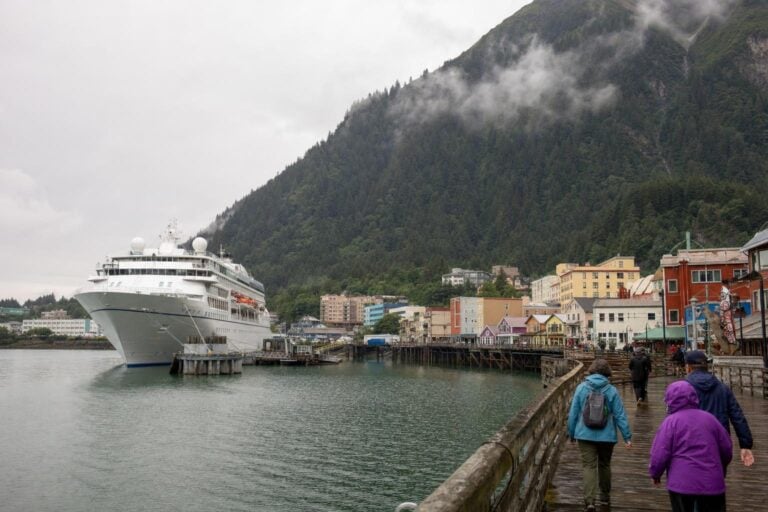
An inside passage cruise commonly visits ports such as Ketchikan, Juneau, and Skagway, although the exact itinerary varies by ship and departure port. Routes from Seattle or Vancouver may include Canadian waters before entering Alaska. The protected route can reduce motion for travelers concerned about seasickness, but wind, tides, and weather can still create rough conditions.
Open-Water Gulf Crossings
A Gulf of Alaska cruise crosses exposed water between the Pacific Northwest and southern Alaska. The ship may spend one or two full days at sea, depending on the itinerary, and passengers can experience larger swells than on most Inside Passage cruises. Weather conditions influence the crossing, so travelers prone to seasickness may benefit from medication, wristbands, or a cabin near the ship’s center and lower decks.
A cross Gulf cruise often connects Southeast Alaska with ports such as Seward or Whittier. These routes can provide access to Denali, Anchorage, or inland rail and land tours, but they usually include fewer Southeast Alaska port calls. The Gulf route also offers chances to see open-ocean wildlife and distant mountain ranges, though visibility can change quickly.
Round-Trip Versus One-Way Logistics
Round-trip cruises usually depart from and return to the same port, such as Seattle or Vancouver. This arrangement simplifies flights, parking, and pre- or post-cruise hotel plans. It also typically emphasizes the Inside Passage and Southeast Alaska, with ports selected to fit the ship’s return schedule.
A one-way cruise begins in one port and ends in another, often Vancouver, Seward, or Whittier. It may include a Gulf of Alaska crossing and creates more room for inland travel after disembarkation. Travelers must arrange transportation between airports, cruise terminals, and land destinations, and they should compare flight costs before booking. One-way itineraries can suit passengers planning an Alaska land tour, while round-trip routes often require less logistical coordination.
What You Will See On Each Route
Inside Passage routes emphasize narrow fjords, protected coastal scenery, and frequent wildlife sightings near Southeast Alaska. Outside Passage itineraries add open-ocean views, larger glacier systems, and destinations around Prince William Sound and the Gulf of Alaska.
Inside Passage Fjords And Glacier Viewing
Inside Passage ships commonly visit Glacier Bay National Park, where rangers may narrate views of tidewater glaciers such as Margerie Glacier. The route can also include Tracy Arm Fjord or Endicott Arm, where steep granite walls, waterfalls, floating ice, harbor seals, and Sawyer Glacier create the main attractions.
Tracy Arm often requires a slow approach through narrow channels, and heavy ice can prevent a ship from reaching Sawyer Glacier. Glacier Bay provides a broader landscape of snow-covered mountains, active glaciers, and sheltered waters. These routes also pass near Juneau, Skagway, and Ketchikan, giving travelers access to forests, waterfalls, and viewpoints beyond the ship.
Gulf Coast Glaciers And Prince William Sound
Outside Passage cruises typically cross more exposed water before reaching Yakutat Bay, Hubbard Glacier, Prince William Sound, or College Fjord. Hubbard Glacier stands out for its large ice face and frequent calving, while College Fjord contains numerous named glaciers surrounded by steep mountains.
Prince William Sound offers protected cruising among islands, fjords, and tidewater glaciers. Some itineraries continue toward Kenai Fjords National Park, where coastal mountains meet deep ocean channels. Weather can produce rougher conditions across the Gulf of Alaska, but the route provides access to larger glacier landscapes and less-developed shorelines than many Inside Passage schedules.
Wildlife From Deck And Shore
Both routes offer strong opportunities for whale watching. Humpback whales commonly feed in Southeast Alaska and Prince William Sound, while orcas, porpoises, and sea otters may appear near sheltered channels. Steller sea lions gather around rocky haul-outs, and harbor seals rest on ice near glacier fronts.
Bald eagles occur throughout coastal Alaska. Shore excursions near forests and fjords can reveal brown bears, mountain goats, and, less commonly, moose. Wildlife sightings remain unpredictable, so passengers often watch from open decks with binoculars, while naturalists identify animals and explain their feeding and seasonal patterns.
Ports And Itinerary Patterns
Round-trip cruises from Seattle or Vancouver usually emphasize Southeast Alaska ports, while one-way routes between Vancouver and Seward or Whittier add Gulf of Alaska sailing and inland access near Anchorage. Port order, sailing direction, and optional stops such as Sitka, Haines, or Valdez can significantly change the trip.

Classic Southeast Alaska Port Calls
A typical inside passage itinerary visits Ketchikan, Juneau, and Skagway, with scenic cruising near the Tongass Narrows, Tracy Arm, or another fjord. Ketchikan offers access to Creek Street, Indigenous cultural sites, and excursions toward Misty Fiords National Monument. Juneau combines city activities with the Mendenhall Glacier, whale watching, and glacier tours.
Skagway focuses on Klondike Gold Rush history and the White Pass & Yukon Route railway. Some ships substitute or add Sitka, which provides Russian and Tlingit history, forest trails, and wildlife excursions. Icy Strait Point emphasizes cultural programming and shore activities, while Haines generally offers a smaller port setting and access to hiking, kayaking, and local museums.
Scenic sailing may include Frederick Sound, especially on routes designed for wildlife viewing, or Chatham Strait near Sitka. These waters can appear on an itinerary as a scenic passage rather than a scheduled port, so passengers should check whether the ship plans a stop or only cruises past the area.
Gulf Of Alaska Endpoints And Added Stops
One-way cruises commonly travel between Vancouver and Seward or Whittier, rather than returning to the original departure port. These routes often include Ketchikan, Juneau, and Skagway before crossing the Gulf of Alaska, then reaching a port near Anchorage. The sailing can feel more open and may involve rougher conditions than protected Southeast Alaska waters.
Seward provides access to Kenai Fjords National Park and road or rail connections toward Anchorage. Whittier offers a shorter connection to Anchorage and access to Prince William Sound. Some itineraries add Valdez, known for glacier viewing, waterfalls, and marine excursions, although that stop is less common than the main Southeast Alaska ports.
| Route pattern | Common endpoints | Typical added value |
|---|---|---|
| Round trip | Seattle or Vancouver | Protected waters and established Southeast Alaska ports |
| Northbound | Vancouver to Seward or Whittier | Gulf crossing and inland connections |
| Southbound | Seward or Whittier to Vancouver | Glacier scenery earlier in the trip |
How To Read An Inside Passage Itinerary
An inside passage itinerary does not guarantee identical scenery or port calls. Passengers should identify the departure and arrival ports first, then check the number of full days in Ketchikan, Juneau, Skagway, Sitka, Haines, or Icy Strait Point. A longer port stay can matter more than an additional destination because excursions often require several hours.
The itinerary should distinguish between port calls, tender stops, and scenic cruising. “Scenic cruising” near a glacier, Misty Fiords, Frederick Sound, or Chatham Strait means the ship may not provide shore access. Passengers should also check arrival and departure times, since early departures can limit independent activities.
For one-way cruises, passengers should allow time for travel between Seward or Whittier and Anchorage. A cruise ending in Whittier does not place travelers directly in central Anchorage, while Seward sits farther from the airport and usually requires a longer transfer.
Choosing The Right Cruise For Your Travel Style
Inside Passage cruises suit travelers who value sheltered waters, coastal scenery, and convenient port visits. Outside Passage itineraries appeal to travelers who prioritize open-ocean routes, fewer port stops, and direct access to broader wilderness areas.
Best Choice For First-Time Cruisers
First-time cruisers often find the Inside Passage easier to navigate. The route typically includes protected waters, frequent scenery, and ports such as Juneau, Skagway, and Ketchikan. Shorter sailing distances allow more time for shore excursions, including glacier visits, cultural tours, and guided walks through Tongass National Forest.
Travelers should compare port schedules rather than relying only on the route name. An Inside Passage itinerary may still include open-water sections, while an Outside Passage cruise can offer scenic sailing and selected Alaska ports. They should also check whether the ship visits Glacier Bay, Hubbard Glacier, or another major viewing area.
Best Choice For Land And Wilderness Experiences
Travelers who want interior Alaska should consider a cruise-tour package or Alaska Land+Sea Journey rather than a cruise alone. These itineraries commonly connect the coast with Denali National Park, Denali, and Fairbanks, using rail or motorcoach transportation between destinations.
The Outside Passage may suit travelers who want more time along Alaska’s less developed coastline, while an Inside Passage cruise provides convenient access to coastal excursions. A longer land extension can include flightseeing, wildlife viewing, river trips, or salmon fishing. Travelers interested in the Kenai Peninsula should verify that the itinerary includes Seward, Anchorage, or a separate land segment.
Best Choice For Comfort And Budget
The Inside Passage generally offers calmer sailing conditions than routes exposed to the Gulf of Alaska, which can matter to travelers sensitive to motion. Ships also tend to offer more frequent port calls, giving passengers several opportunities to leave the vessel and choose excursions at different price levels.
Budget comparisons should include more than the advertised fare. Travelers should review airfare, hotel nights, transportation, shore excursions, and meals during land extensions. An Outside Passage cruise may provide a simpler itinerary with fewer port expenses, while a cruise-tour to Denali and Fairbanks usually costs more because it adds lodging, transportation, and guided experiences.
Culture, History, And Shore Excursions
Southeast Alaska combines living Indigenous cultures, Gold Rush landmarks, and wildlife-focused activities. The best choices depend on whether travelers prefer cultural interpretation, historic trails, salmon fishing, flightseeing, or bear viewing.
Indigenous Heritage In Southeast Alaska
Tlingit and Haida communities have lived in Southeast Alaska for thousands of years. Visitors can learn about clan traditions, oral histories, carving, weaving, and relationships with salmon, forests, and coastal waters through cultural centers, guided tours, and public art.

In Juneau, the Sealaska Heritage Institute presents Tlingit, Haida, and Tsimshian history, art, and contemporary life. Ketchikan offers opportunities to see totem poles and visit sites connected with Tlingit and Haida communities, including the Totem Heritage Center and Saxman Native Village. Tour operators vary in quality, so travelers should choose excursions led by local cultural organizations or knowledgeable Indigenous guides.
Inside Passage itineraries usually provide more time in these Southeast Alaska communities. Outside Passage routes may emphasize open-water scenery and spend less time at ports where cultural programs operate.
Gold Rush History And Scenic Rail
The Klondike Gold Rush shaped Skagway after prospectors arrived in 1897 and 1898 on their way to Canada’s Yukon. The town preserves restored buildings, museums, trails, and stories about the difficult journey over the Chilkoot Trail and White Pass.
The White Pass & Yukon Route Railway offers a popular excursion from Skagway through steep valleys, waterfalls, and mountain passes. It reaches historic White Pass but does not follow the entire Chilkoot Trail, which requires a separate hiking itinerary and border documentation. The National Park Service’s Klondike Gold Rush National Historical Park provides additional context through ranger programs and exhibits.
Travelers with limited time should reserve rail tickets early. Independent hikers should assess distance, weather, transportation, and trail conditions before choosing the Chilkoot route.
Excursions Worth Prioritizing
Juneau: Mendenhall Glacier visits combine a short walk with glacier views, while whale-watching tours often search for humpback whales in nearby waters. Flightseeing offers broader views of icefields, but weather can cancel flights.
Ketchikan: Salmon fishing suits travelers who want an active excursion, and bear-viewing trips may visit habitats near streams during salmon runs. Wildlife sightings remain unpredictable, and bear tours require strict safety procedures.
Skagway: The White Pass railway provides strong historical and scenic value with limited physical effort. Travelers seeking more activity can choose hiking, a Yukon tour, or a small-group excursion along former Gold Rush routes.
Inside Passage cruises generally make these port-based excursions easier to access. Outside Passage sailings may offer fewer cultural and historic stops but can provide more uninterrupted coastal scenery from the ship.
Timing, Cruise Lines, And Booking Considerations
The Alaska cruise season, sailing route, ship style, and travel logistics all affect the experience. Travelers should compare Seattle and Vancouver departures, review cabin locations, and allow extra time for flights when visiting ports such as Anchorage.
Selecting The Alaska Cruise Season
The Alaska cruise season generally runs from May through September. May and September often bring lower fares and fewer passengers, while June through August provide longer daylight hours and more frequent departures. July typically offers warmer conditions, but weather remains changeable throughout the season.
Travelers choosing the Inside Passage may find more sheltered sailing and scenic coastal views during any month. Outside Passage itineraries can expose passengers to more open water, making a stable ship and motion-sensitive cabin location more important.
Seattle departures often simplify flights for U.S. travelers, while Vancouver may offer convenient access to Canadian ports and one-way itineraries. Passengers booking a one-way cruise should check whether the itinerary ends in Anchorage or another Alaskan port and arrange separate transportation.
Comparing Ships And Cruise Lines
Cruise lines differ in ship size, onboard atmosphere, itinerary length, and port schedules. Princess Cruises and Holland America Line offer strong Alaska programs, with frequent Inside Passage routes, regional excursions, and Alaska-focused programming. Holland America often appeals to travelers seeking a quieter, traditional cruise experience.
Norwegian Cruise Line generally provides flexible dining and a more casual onboard style. Celebrity Cruises emphasizes modern design and dining, while Cunard suits passengers who prefer formal traditions and a more structured atmosphere.
Travelers should compare the number of scenic cruising days, glacier-viewing stops, and time in ports rather than relying only on the cruise line’s name. They should also check whether a ship uses a retractable roof, heated outdoor viewing areas, or naturalist presentations, since these features matter during cool or rainy sailings.
Flights, Cabin Location, And Sea-Day Planning
Passengers should schedule flights with a substantial buffer before embarkation, particularly when departing from Seattle or Vancouver. A hotel night before the cruise reduces the risk of missing the ship because of delays, and one-way itineraries may require separate flights from Anchorage after disembarkation.

Cabin location affects comfort on open-water routes. Midship cabins on lower or middle decks usually experience less movement than cabins at the bow, stern, or highest decks. Balcony cabins provide private viewing space, but passengers should also use public outdoor decks because glaciers and wildlife may appear on either side of the ship.
Travelers should reserve popular excursions early, including helicopter tours, rail trips, and glacier outings. They should keep sea-day plans flexible, pack waterproof layers, and bring binoculars for scenic cruising through both sheltered and exposed waters.
Frequently Asked Questions
The Inside Passage generally provides sheltered waters, forested coastlines, glaciers, and port visits. The Outside Passage uses more exposed Pacific routes, which can offer open-ocean views and access to destinations such as Sitka or Kodiak, depending on the itinerary.
What is the difference between Alaska’s Inside Passage and Outside Passage cruise routes?
The Inside Passage follows protected waterways between British Columbia, Southeast Alaska, and the mainland. Common ports include Juneau, Skagway, Ketchikan, and sometimes Sitka or Icy Strait Point.
The Outside Passage travels farther into the Pacific Ocean, often along the outer coast of Vancouver Island, the Gulf of Alaska, or the Alaska Peninsula. These itineraries may include more open water, longer sea days, and ports that lie outside the main sheltered channels.
Which Alaska cruise route offers the best scenery and wildlife viewing?
The Inside Passage offers consistent scenery, including temperate rainforest, narrow fjords, waterfalls, tidewater glaciers, and steep coastal mountains. Its sheltered waters also give passengers more time to watch for humpback whales, orcas, bald eagles, black bears, and mountain goats.
Outside Passage itineraries can provide broader ocean views and access to less-visited habitats. Wildlife sightings depend on the route, season, weather, and time spent near shore, so neither route guarantees specific animals.
Is the Inside Passage calmer than the Outside Passage for cruising?
Yes, the Inside Passage is usually calmer because islands and mainland coastlines protect many routes from Pacific swells. Some sections can still experience wind, currents, or rough water.
The Outside Passage exposes ships to more open-ocean conditions. Travelers who experience motion sickness may prefer an Inside Passage itinerary or should discuss preventive medication with a healthcare professional before sailing.
Which ports are typically included on an Inside Passage Alaska cruise?
Typical ports include Juneau, Skagway, and Ketchikan. Many itineraries also visit Sitka, Icy Strait Point, or Haines, while some include Victoria, British Columbia, on the return trip.
Cruises may also schedule scenic cruising near Glacier Bay, College Fjord, Tracy Arm, Endicott Arm, or Hubbard Glacier. Port combinations vary by cruise line, departure city, ship size, and sailing length.
What is the best time of year to cruise Alaska’s Inside Passage?
The main season runs from May through September. May often brings fewer visitors and lower fares, while June and July provide long daylight hours and generally favorable conditions for sightseeing.
August can offer good wildlife-viewing opportunities but may bring more rain in Southeast Alaska. September usually has fewer crowds and the possibility of early northern lights, although some businesses reduce their hours late in the season.
Is an Inside Passage cruise worth it for first-time Alaska visitors?
An Inside Passage cruise can suit first-time visitors because it combines coastal scenery, glacier viewing, and access to major Southeast Alaska ports within one itinerary. The ship also provides transportation and lodging between destinations.
Travelers should compare shore excursions carefully. Whale-watching tours, glacier visits, flightseeing, wildlife excursions, and cultural experiences can add substantial cost but help passengers explore beyond the ship.
Free printable
A free 2027 cruise calendar for your wall
A real cruise destination for every month, plus a Ports of Call photo book. Print them at home.
Send me the free calendar
Alaska Shore Excursions & Tours
Planning your shore days?
Book highly-rated shore excursions and port tours before the best ones sell out.
Find shore excursions on Viator →As a Viator affiliate, I earn a small commission from qualifying bookings — at no extra cost to you.
Cruise Packing Essentials
The little things that make cruising smoother — the gear I recommend to every traveler before they sail.
As an Amazon Associate, I earn from qualifying purchases — at no extra cost to you.