
Pacific Coast Cruises: Scenic Routes and Unforgettable Destinations
This post may contain affiliate links. I may earn a small commission at no extra cost to you.
Pacific Coast cruises connect cities, ports, and landscapes along a varied shoreline, giving travelers access to coastal views, historic neighborhoods, local cuisine, and outdoor excursions. A Pacific coastal cruise can suit travelers seeking a short getaway, a repositioning voyage, or a longer itinerary between California, Oregon, Washington, and British Columbia.
Travelers can choose the right Pacific Coast cruise by comparing the itinerary, departure port, sailing season, ship experience, and available shore excursions. The following guide covers notable ports, weather, packing requirements, documents, and practical planning details to help match each voyage with individual interests and expectations.
Choosing the Right Itinerary and Departure Port
Cruise length, direction, and port location shape the travel experience. Travelers should compare sea days, coastal stops, flight connections, and whether they prefer a roundtrip journey or a one-way sailing.
Short Getaways and Repositioning Voyages
Short Pacific Coast cruises usually last two to five nights. They often sail between Vancouver, B.C., Seattle, San Francisco, Los Angeles, or San Diego, making them suitable for travelers with limited vacation time. Common stops include Victoria, Astoria, and California ports, although schedules vary by ship and season.
Repositioning voyages occur when cruise lines move ships between Alaska, the Pacific Northwest, California, and Mexico. These cruises may offer lower fares and several sea days, but they generally operate only on selected dates in spring or fall.
Travelers should check the port schedule carefully. A three-night sailing may include only one full day in port, while a longer repositioning itinerary may spend most of its time at sea. Travelers who prefer shore excursions should choose a route with multiple coastal calls rather than a schedule focused primarily on transit.
Roundtrip and One-Way Sailing Options
Roundtrip cruises return passengers to the original port, which simplifies transportation and reduces the need to coordinate separate arrival and departure flights. A roundtrip from San Francisco or Los Angeles may include California coast stops, while a sailing from Vancouver or Seattle may visit ports in the Pacific Northwest.
One-way cruises allow travelers to combine a cruise with an independent land trip. For example, a passenger could sail from Vancouver to San Diego, then continue through California, or travel from Los Angeles toward Mexico before flying home. These itineraries often provide broader geographic coverage than roundtrip routes.
One-way bookings require more planning. Travelers should compare separate airfare, hotel nights, airport transfers, and luggage costs. They should also confirm passport and identification requirements when the itinerary crosses the Canada–United States border or includes Mexico.
Departure Ports From Vancouver to San Diego
Vancouver, B.C. provides convenient access to Pacific Northwest itineraries and Alaska repositioning cruises. Its cruise terminal sits near downtown hotels, restaurants, and public transportation. Seattle offers another strong option, with frequent service and good air connections, although travelers should allow time for border procedures when combining Canadian and U.S. travel.
San Francisco works well for cruises focused on the California coast, with easy access to attractions before or after sailing. Los Angeles and San Diego serve a wider range of itineraries, including routes to Mexico and longer repositioning voyages.
| Departure port | Best suited to |
|---|---|
| Vancouver | Pacific Northwest and Alaska-related routes |
| Seattle | Short coastal cruises and repositioning voyages |
| San Francisco | California coast itineraries |
| Los Angeles | California and Mexico sailings |
| San Diego | Southern California and Mexico routes |
Travelers should compare airport distance, hotel prices, transfer times, and the port’s location before booking.

Signature Ports and Shore Experiences
Pacific Coast cruises combine major cities, historic sites, wine regions, beaches, forests, and mountain scenery. Port schedules vary, so travelers should check transfer times and excursion availability before choosing activities.
San Francisco Landmarks and Wine Country
San Francisco shore excursions often begin near the waterfront, with visits to the Golden Gate Bridge, Fisherman’s Wharf, and Alcatraz. Alcatraz tickets frequently sell out, making advance reservations important. A city tour can also include Chinatown, cable cars, and viewpoints such as Twin Peaks.
Travelers with a full day may choose Muir Woods, where boardwalks pass through old-growth coast redwoods, or continue into Northern California’s Napa Valley. Napa excursions usually combine winery visits with scenic drives, though the round trip can take several hours. Guests should confirm whether tastings, meals, and transportation from the ship are included.
Central and Southern California Stops
Monterey offers access to Cannery Row, the Monterey Bay Aquarium, and the scenic 17-Mile Drive. Santa Barbara features Spanish-style architecture, a walkable waterfront, and tasting rooms connected to the nearby Santa Ynez Valley. Both ports suit travelers who prefer compact sightseeing areas and shorter transfers.
Cruises calling at Los Angeles may offer excursions to the Hollywood Walk of Fame, Griffith Observatory, or studio districts. Catalina Island provides walking tours, glass-bottom boat trips, and coastal views from Avalon. Farther south, San Diego combines beaches, museums, and Balboa Park; the San Diego Zoo requires enough port time for transportation and a full visit.
Oregon and Pacific Northwest Nature
Oregon ports emphasize coastal scenery and small-town access. From Seaside, travelers can walk the promenade, visit the historic Turnaround, or drive to Cannon Beach to view Haystack Rock. Excursions along the Oregon Coast may also stop at viewpoints, lighthouses, and forest trails, but weather can change quickly.
Cruises reaching Seattle often include Pike Place Market, the Space Needle, and waterfront neighborhoods. Longer excursions may travel toward Mount Rainier, where trails and viewpoints depend on road conditions and seasonal access. Travelers seeking quieter scenery can choose routes through evergreen forests and redwoods farther south, while nature-focused tours should allow extra time for traffic and changing conditions.
When to Sail and What Weather to Expect
Pacific Coast cruises face the most predictable conditions from late spring through early fall, although temperatures and rainfall vary sharply between Southern California, Northern California, the Pacific Northwest, and Vancouver. Travelers should expect cool evenings, wind on open water, and occasional itinerary changes during rough weather.
Spring and Fall Shoulder Seasons
April to May and September to October offer fewer crowds and, in some cases, lower fares. Southern California often has mild days, with temperatures commonly ranging from 60°F to 75°F, but marine layers can keep mornings cloudy along the California coast.
Northern California and the Pacific Northwest become cooler and wetter. Rain remains possible in ports such as San Francisco, Astoria, Seattle, and Vancouver, while ocean swells may produce rougher conditions near exposed sections of the Pacific Coast.
Travelers should pack waterproof layers, warm clothing, and shoes with good traction. Fall sailings may provide clearer skies than spring in some areas, but daylight decreases quickly by October. Whale sightings can remain strong during both seasons, depending on the route and local migration patterns.
Summer Sailing Conditions
June through August generally provides the most favorable sailing schedule. Southern California often stays dry and comfortable, with daytime temperatures near 70°F to 80°F, while coastal fog may affect San Francisco and parts of Northern California.

The Pacific Northwest usually experiences its driest weather during summer. Seattle, Victoria, and Vancouver can see pleasant daytime temperatures from 65°F to 75°F, though evenings on deck often feel cold. Inland temperatures may rise higher than conditions at sea.
Wind can increase in the afternoon, particularly near headlands and open channels. Travelers should bring a light jacket, sunglasses, sunscreen, and a compact rain shell. Early-season Alaska-bound cruises from Vancouver may still encounter snow near higher elevations, even when ports feel mild.
Regional Climate From California to British Columbia
Southern California has the warmest climate along the route, with limited summer rainfall and relatively mild winters. Northern California stays cooler because of coastal fog and cold ocean currents, especially around San Francisco and Monterey.
The Pacific Northwest receives more rain, particularly from October through March. Portland, Astoria, Seattle, Victoria, and Vancouver often have changeable conditions, so passengers should expect clouds, drizzle, and brief sunny periods within the same day.
British Columbia has cool coastal temperatures and frequent precipitation outside summer. Vancouver commonly ranges from the mid-40s°F to the low 70s°F across the year, while exposed waters can feel colder because of wind. Layered clothing gives passengers practical flexibility between sheltered ports and open decks.
Finding the Best Cruise Line and Ship Experience
The right Pacific coast cruise depends on itinerary, ship size, service level, and included amenities. Travelers should compare port schedules, cabin categories, dining costs, and wellness facilities before choosing a sailing.
Mainstream Cruise Line Options
Mainstream lines offer varied schedules, broad entertainment, and multiple cabin types. Princess Cruises often appeals to travelers seeking Alaska connections, coastal scenery, traditional dining, and organized enrichment. Holland America typically emphasizes quieter spaces, regional food, live music, and attentive service, making it suitable for couples and mature travelers.
Royal Caribbean provides larger ships with more active features, such as waterslides, sports areas, family activities, and extensive entertainment. NCL uses a flexible dining model and casual atmosphere, which can suit travelers who prefer open scheduling over fixed meal times.
Travelers should check whether a Pacific coast cruises itinerary includes overnight calls, scenic cruising, or only short port visits. They should also compare beverage packages, specialty dining fees, Wi-Fi prices, and departure ports such as Vancouver, Seattle, Los Angeles, or San Francisco.
Premium and Luxury Sailings
Premium and luxury lines provide fewer passengers, higher crew-to-guest ratios, and more personalized service. Seabourn focuses on small-ship cruising, refined dining, spacious suites, and attentive staff. Its ships may reach smaller ports or offer a more relaxed onboard setting than large mainstream vessels.
Travelers should examine what the fare includes. Luxury pricing may cover specialty restaurants, select beverages, Wi-Fi, gratuities, or shore excursions, while premium fares often charge separately for some of these services. Suite size, included transfers, and butler service can also differ by ship and itinerary.
A smaller ship may offer quieter public areas but fewer activities and entertainment venues. Travelers who value privacy, flexible service, and destination-focused programming should compare the ship’s passenger capacity with the number of sea days and port calls.

Onboard Dining, Pools, and Wellness
Dining choices vary from main restaurants and buffets to specialty venues serving steak, seafood, sushi, or regional dishes. Travelers with dietary requirements should review each line’s advance-request policy and confirm whether alternative meals require additional fees.
Pool areas can differ sharply by ship. Large vessels may provide family pools, adults-only areas, splash zones, and multiple hot tubs, while smaller ships often offer a single pool with fewer loungers. Travelers should check whether the itinerary includes enough warm-weather days to make pool facilities useful.
Wellness facilities may include fitness centers, thermal suites, treatment rooms, and The Spa. Spa treatments usually cost extra, and access to thermal areas may require a pass. Travelers should compare operating hours, treatment prices, and fitness classes before selecting a ship.
Excursions for Nature, Food, and Culture
Pacific Coast cruise excursions connect marine life viewing with coastal hikes, regional food, and historic communities. Ports such as Vancouver, Monterey, Santa Barbara, Catalina Island, and San Diego offer distinct landscapes and local experiences, while Pacific Northwest routes add forests, islands, and cooler-climate scenery.
Wildlife and Marine Life Viewing
Travelers can look for whales, dolphins, sea lions, harbor seals, and seabirds along the Pacific coast. Monterey offers some of the strongest wildlife-viewing opportunities, particularly near Monterey Bay, where seasonal whale activity and large marine populations attract visitors throughout the year. Tour operators typically provide binoculars and explain local species and migration patterns.
Catalina Island excursions may include glass-bottom boat rides, snorkeling, or coastal cruises that reveal kelp forests and colorful fish. In Vancouver, harbor cruises and excursions near Stanley Park provide views of shoreline habitats, while San Diego tours often focus on dolphins, sea lions, and migrating gray whales during winter.
Hiking and Coastal Outdoors
Coastal walks provide direct access to cliffs, beaches, forests, and wide ocean views. Stanley Park features paved seawall paths and wooded trails near Vancouver, making it suitable for travelers who want an active excursion without leaving the city. Pacific Northwest ports also offer routes through temperate rainforest, rocky shorelines, and protected coves.
Santa Barbara combines accessible trails with views of the Channel Islands and the Santa Ynez Mountains. Catalina Island offers steeper terrain, inland trails, and guided walks through dry coastal landscapes. Visitors should check trail length, elevation, footwear requirements, and return times before booking, since cruise excursions must match the ship’s departure schedule.
Wine, Seafood, and Local Flavors
Food excursions reflect the climate and agriculture of each port. Santa Barbara tours may pair local seafood with wines from the Santa Ynez Valley, while Monterey excursions often feature Dungeness crab, oysters, clam chowder, and other products from nearby waters. San Diego adds fish tacos, craft beer, and Mexican-influenced dishes.
Some itineraries travel inland to Napa Valley, although the distance from San Francisco-area ports makes travel time an important consideration. Tastings may include Chardonnay, Cabernet Sauvignon, or sparkling wine, with reservations commonly required. Vancouver combines Pacific Northwest seafood with Asian culinary influences, and market visits can introduce travelers to salmon, shellfish, seasonal produce, and regional specialties.
Packing, Documents, and Practical Planning
Pacific Coast cruises can include cool, windy decks, mild port cities, and warmer stops in Mexico. Travelers need flexible layers, valid identification, suitable footwear, and enough time for airport transfers before and after the sailing.

What to Pack for Changing Coastal Conditions
Travelers should pack layers for changing temperatures between Vancouver, B.C., San Francisco, and Los Angeles. A light sweater or fleece works under a packable windbreaker, while breathable shirts suit warmer afternoons. Evenings on deck can feel cold because of wind, regardless of the port’s daytime temperature.
Comfortable, closed-toe footwear supports long walks on piers and city streets. Travelers planning hiking excursions should bring supportive trail shoes, moisture-wicking socks, and a small daypack. Swimwear, sun protection, a hat, and sunglasses remain useful for pools, beaches, and warmer Mexican ports.
A small umbrella, refillable water bottle, motion-sickness medication, and prescribed medicines can improve daily comfort. Travelers should keep medications, travel documents, electronics, and one change of clothes in their carry-on rather than placing them in checked luggage.
Passport Requirements and Border Crossings
A valid passport provides the simplest option for cruises that begin or end in Canada, visit Mexico, or include international flights. Travelers should check the cruise line’s rules and each country’s entry requirements before departure; some itineraries require a passport valid for several months beyond the trip.
U.S. citizens on eligible closed-loop cruises may sometimes use a passport card or other approved proof of citizenship, but those documents may not work for international air travel. A passport book offers greater flexibility if a traveler misses the ship and must fly to another port.
The name on the cruise booking, passport, and airline reservation should match exactly. Travelers should carry printed and digital copies of passports, visas if required, travel insurance details, and emergency contacts, while storing originals securely during shore visits.
Pre- and Post-Cruise Stay Tips
A one-night stay before embarkation reduces the risk of missing the ship after flight delays. Travelers departing from Vancouver should account for border procedures when arriving from the United States; those using San Francisco or Los Angeles airports should allow time for traffic, baggage collection, and transfers to the terminal.
After the cruise, travelers should avoid booking a tight same-day flight. John Wayne Airport can serve some Orange County itineraries, but airport suitability depends on the terminal, traffic, and the cruise line’s disembarkation schedule.
Hotels near the port or airport can simplify transfers, especially for early departures. Travelers should confirm luggage policies, arrange accessible transportation when needed, and keep essential items in a carry-on until they reach their hotel or airport.
Frequently Asked Questions
Pacific Coast cruises commonly connect California, Oregon, British Columbia, and Alaska, with departures from Los Angeles, San Diego, or San Francisco. Route length, port selection, weather, and cruise line vary by itinerary and sailing date.
Are there cruises along the Pacific Coast?
Yes. Pacific Coast cruises sail between California, the Pacific Northwest, British Columbia, and Alaska. Some itineraries travel north from Los Angeles or San Francisco, while others sail south from Vancouver or Seattle.
Most voyages last between 3 and 14 nights. Short cruises often focus on California and Mexico, while longer repositioning cruises may include Oregon, Washington, Canada, and Alaska.

What are the best Pacific Coast cruise itineraries for 2026?
Popular 2026 itineraries include:
- Los Angeles to Vancouver: Often includes San Francisco, Astoria, Victoria, or Seattle.
- Vancouver to Los Angeles: Reverses the northbound route and may visit British Columbia and California ports.
- San Francisco round trips: Commonly include Victoria, Vancouver, or Pacific Northwest ports.
- California coastal cruises: Typically visit San Diego, Santa Barbara, Monterey, and San Francisco.
- Pacific Northwest and Alaska extensions: Add ports such as Ketchikan, Juneau, or Sitka to a coastal route.
Travelers should check the exact 2026 sailing schedule because ports, ship assignments, and overnight stays differ by departure date.
Which cruise lines offer the best West Coast cruises?
Several major cruise lines operate West Coast itineraries, including Princess Cruises, Holland America Line, Celebrity Cruises, Royal Caribbean, Norwegian Cruise Line, Carnival Cruise Line, and Disney Cruise Line.
Princess and Holland America often offer extensive Alaska and Pacific Northwest schedules. Celebrity and Royal Caribbean provide modern ships and varied onboard amenities, while Carnival and Disney frequently appeal to families and travelers seeking shorter coastal or Mexico routes.
Where do Pacific Coast cruises depart from in California?
California departures typically use these ports:
- Los Angeles: Ships generally depart from the Port of Los Angeles in San Pedro.
- San Diego: Cruises leave from the B Street Pier near downtown.
- San Francisco: Ships use the city’s cruise terminals at Pier 27 or Pier 35.
Los Angeles usually offers the largest selection of coastal and Mexico cruises. San Francisco works well for routes toward Vancouver, Alaska, and the Pacific Northwest.
What ports are typically included on a Pacific Coast cruise?
Common ports include San Diego, Santa Barbara, Monterey, San Francisco, Astoria, Portland, Seattle, Victoria, Vancouver, and Los Angeles. Some itineraries also visit Ensenada or Cabo San Lucas when they combine the Pacific Coast with Mexico.
Port combinations depend on the cruise’s direction and duration. A California coastal sailing may emphasize smaller regional ports, while a repositioning cruise often includes longer stretches between California and British Columbia.
When is the best time of year to take a Pacific Coast cruise?
April through October generally provides the widest selection of Pacific Coast cruises and longer daylight hours. May through September often offers the most favorable conditions for sightseeing in California, Oregon, Washington, and British Columbia.
Spring and fall can bring cooler temperatures, stronger winds, and rougher seas, especially near open-water sections. They can also provide lower fares and more repositioning itineraries than the peak summer months.
Free printable
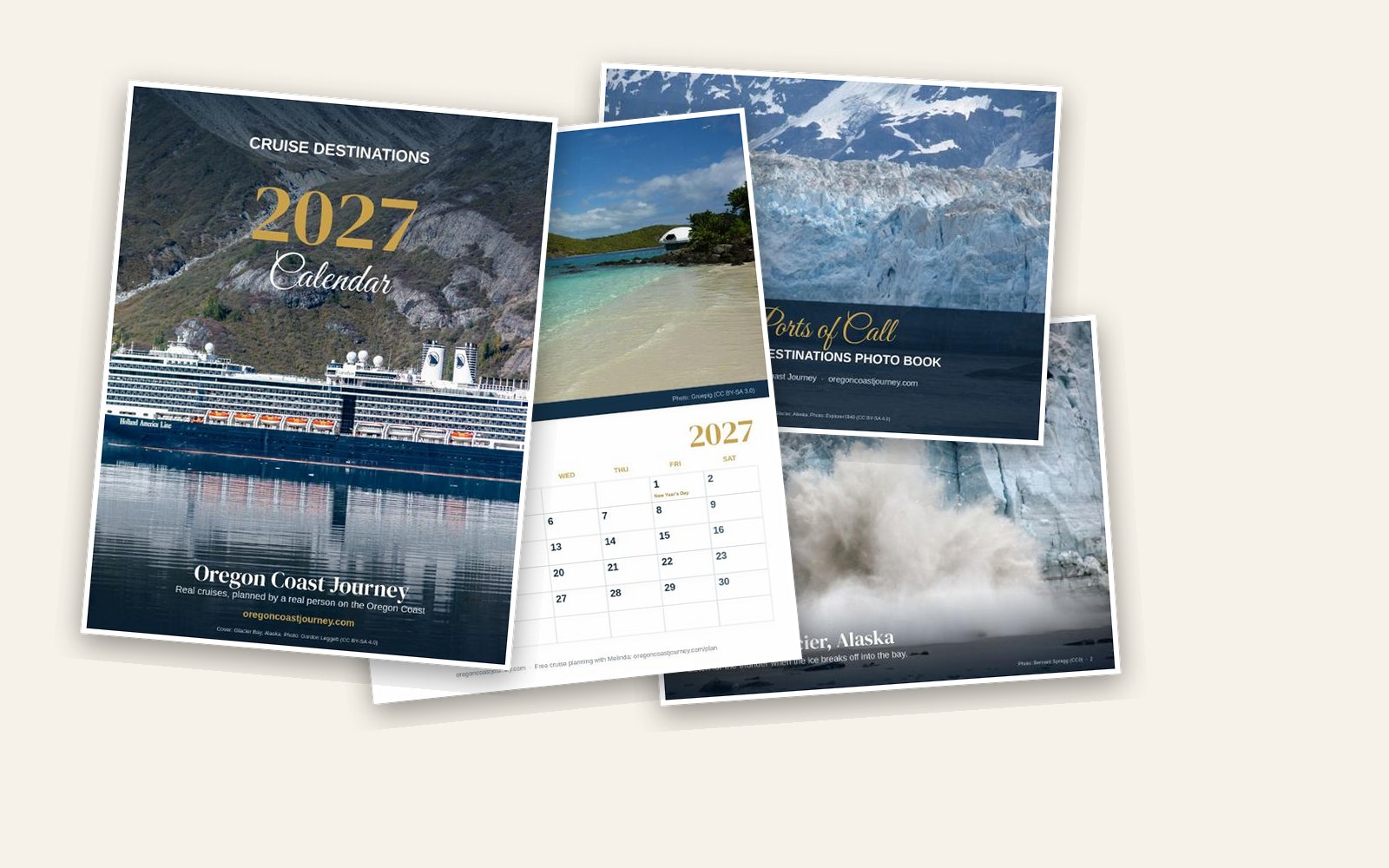
A free 2027 cruise calendar for your wall
A real cruise destination for every month, plus a Ports of Call photo book. Print them at home.
Send me the free calendar
Planning your shore days?
Book highly-rated shore excursions and port tours before the best ones sell out.
Find shore excursions on Viator →As a Viator affiliate, I earn a small commission from qualifying bookings — at no extra cost to you.
Cruise Packing Essentials
The little things that make cruising smoother — the gear I recommend to every traveler before they sail.
As an Amazon Associate, I earn from qualifying purchases — at no extra cost to you.


