
How to Add Seaside to an Oregon Coast Road Trip
This post may contain affiliate links. I may earn a small commission at no extra cost to you.

Why Seaside Works as a Road Trip Hub
Seaside is one of the most underestimated road-trip anchors on the Oregon Coast. Most travelers rush through it or skip it entirely, treating it as a beach town rather than a strategic routing point. In reality, Seaside sits at the intersection of three major coastal drives: the route south toward Cannon Beach and Tillamook, the route north toward Gearhart and the Washington border, and the route inland toward Astoria. Understanding this geography transforms Seaside from a detour into a logical waypoint that actually saves time and reveals stops most tourists miss.
The town itself has a working boardwalk, a functioning fishing fleet, and a genuine local economy that doesn't vanish after Labor Day. In spring, when shoulder-season crowds are lighter and wildflowers bloom inland, Seaside becomes an ideal base for a 2–3 day North Coast loop without the congestion of summer or the weather unpredictability of winter.
Drive Timing: Getting to Seaside from Major Junctions
If you're entering the Oregon Coast from the south, Seaside is approximately 90 minutes north of Salem via Highway 22 and Highway 18 (the Salmon River corridor route). This inland approach is often faster than coastal driving and offers its own spring appeal: wildflower meadows and old-growth forest views. The route is well-maintained year-round, though winter storms can briefly close Highway 22; check Oregon Department of Transportation conditions before you leave.
<!– ocj-affiliate-inline:ocj_outdoorsy_booking_finder –>
For coast routes with several stops, an RV or campervan can turn the drive into a flexible basecamp. Compare available Outdoorsy rentals near your starting point, then confirm campground rules, parking limits, and pet policies before booking. This can be especially useful around the North Coast when weather, daylight, and driving time affect the plan.
Make this route easier with an RV basecamp
For coast routes with several stops, an RV or campervan can turn the drive into a flexible basecamp. Compare available Outdoorsy rentals near your starting point, then confirm campground rules, parking limits, and pet policies before booking.
This article may contain affiliate links. Oregon Coast Journey may earn a commission if you book or buy through these links, at no extra cost to you.
From Portland International Airport, Seaside is roughly 90 minutes via US-26 West. This is the most direct approach and avoids the inland detour. The drive is straightforward but passes through the Clatsop County forest zone, where fog and mist can reduce visibility in spring mornings. Leave early if you're heading to Seaside in the morning; afternoon fog typically clears by 10 a.m., but you'll save stress by avoiding the 7–9 a.m. visibility window.
From Astoria (15 minutes north), Seaside is a quick coastal jaunt via US-101. If you're exploring the Columbia River estuary and lighthouses, adding Seaside to a southbound loop makes logistical sense.
From Cannon Beach (12 minutes south via US-101), Seaside is close enough for a morning or afternoon stop without major rerouting. Many road-trippers visit Cannon Beach first, then loop north through Seaside to Gearhart and back, creating a natural 4–5 hour loop.
Spring Seasonal Advantages: Wildflowers, Whales, and Fewer Crowds
Spring (mid-April through May) is when Seaside reveals its best-kept secret: it's a gateway to inland wildflower meadows and a prime whale-watching window without summer congestion. Gray whales migrate north in spring (typically April–May), and Seaside's beaches and nearby headlands offer good sighting opportunities. The Nehalem Bay area, 20 minutes south, is particularly reliable for gray whale spouts in May.
Inland, the Clatsop County forest and the Saddle Mountain area burst with native wildflowers—trilliums, bleeding hearts, and rhododendrons—in late April and early May. A morning detour to Saddle Mountain State Natural Area (30 minutes inland from Seaside) combines a 2.4-mile moderate hike with panoramic views and spring alpine flowers. Parking is limited (25 spaces), so arrive before 10 a.m. on weekends.
Seaside's shoulder-season lodging is also 30–40% cheaper than summer rates, and restaurants are less crowded. The town's Prom (the historic boardwalk) is walkable without fighting throngs, and you can actually park near the beach without circling for 15 minutes.
Parking Strategy and Restroom Reality
Seaside's parking is more organized than many coastal towns, but spring weather and tourist flow require strategy. The main Prom parking lot (near the turnaround at the north end of Broadway) has roughly 300 spaces and fills by 11 a.m. on weekends. Arrive before 10 a.m. or use the secondary lot on Avenue U (one block east), which has 150 spaces and is often overlooked.
If you're staying longer than 2 hours, consider the paid lot on Holladay Drive (east of the Prom), which costs $2 for 4 hours and is rarely full. Street parking along Broadway is free but limited to 2 hours; enforcement is active on weekends.
Restrooms: The public restroom facility near the Prom turnaround is clean and open year-round (8 a.m.–dusk in spring). There's a second facility near the Seaside Aquarium. Both are well-maintained, but spring showers mean they can be busy. Bring hand sanitizer and expect a brief wait on sunny weekend mornings.
Hidden Stops That Make the Detour Worthwhile
Gearhart Beach Loop (8 minutes north): Skip the crowded Cannon Beach and drive north to Gearhart. The beach is wider, the town is quieter, and the 2-mile beach walk is less touristy. Spring wildflowers bloom in the dunes behind the beach. Parking is free and abundant.
Nehalem Bay State Park (20 minutes south): A working oyster farm, day-use beach access, and a small campground. The bay is calm in spring, and you can watch fishing boats and oyster harvesters at work. The Nehalem Bay Oyster Farm sells fresh oysters and crab; it's a genuine local stop, not a tourist trap.
Saddle Mountain State Natural Area (30 minutes inland): The 2.4-mile hike to the summit offers 360-degree views and spring wildflowers. The trailhead is less crowded than coastal destinations, and the elevation (3,283 feet) means cooler temperatures and clearer spring air.
Clatsop County Heritage Museum (Astoria, 15 minutes north): If you're looping through Astoria, this museum explains the region's fur-trade history and Native American context. It adds 1–2 hours to your itinerary but contextualizes the entire North Coast.
Weather and Layering for Spring Road Trips
Spring on the Oregon Coast is notoriously changeable. Morning fog, afternoon sun, and sudden showers are common. Plan for layers: a waterproof jacket, a fleece or wool layer, and a base layer that dries quickly. Jeans get cold and stay wet; synthetic or merino wool pants dry faster and insulate better.
Wind is often underestimated. Spring coastal winds can exceed 20 mph, making beachside walks uncomfortable without a windproof outer layer. Bring a hat and sunscreen; spring sun reflects off water and sand more intensely than you expect.
Rain is likely but rarely all-day. Most spring showers last 30–60 minutes. Plan indoor stops (museums, the Seaside Aquarium, local cafes) for late morning or early afternoon when showers are most common. Morning and late afternoon are usually clear.
Check NOAA/NWS coastal forecast before you leave. Wind warnings and small-craft advisories can affect beach safety and visibility.
Safety: Sneaker Waves and Tide Timing
Seaside's beaches are wide and accessible, but sneaker waves are a real hazard. These sudden, larger-than-expected waves can sweep people off rocks or beach logs. Never turn your back to the ocean. Keep at least 30 feet from the water's edge, and never chase receding waves or explore tide pools without checking tide tables first.
Spring tides (when the sun and moon are aligned) create larger tidal ranges, meaning lower lows and higher highs. Tide pools are more exposed at low tide, but beaches can flood quickly at high tide. Check tide times for Seaside before you plan beach time. NOAA provides free tide predictions online and via mobile app.
Rocks and logs are slippery even when they look dry. Wear shoes with good grip, not flip-flops or smooth-soled shoes. Algae and mist make surfaces deceptive.
Sample Road-Trip Routing: A 3-Day North Coast Loop
Day 1: Arrive Seaside by noon (from Portland, 90 minutes). Lunch on the Prom. Afternoon walk on Gearhart Beach (8 minutes north). Evening: local dinner, explore Seaside's working waterfront and fishing docks.
Day 2: Early morning Saddle Mountain hike (30 minutes inland, 2.4 miles, 2 hours with photos). Lunch in Seaside. Afternoon visit to Nehalem Bay State Park (20 minutes south) to watch oyster harvesters and explore the bay. Evening: return to Seaside or stay overnight in Cannon Beach (12 minutes south).
Day 3: Morning tide-pool exploration at Cannon Beach or Haystack Rock (if you stayed south). Return via Seaside to Portland (90 minutes) or continue south toward Lincoln City.
This loop covers 60 miles of driving, involves minimal backtracking, and reveals stops most tourists miss.
Planning Your Seaside Stop: Lodging and Timing
Seaside has lodging options for every budget: beachfront hotels, vacation rentals, and RV parks. Spring rates are 30–40% lower than summer. The Seaside RV Resort and nearby parks offer full hookups and are well-maintained; book ahead for weekends. For lodging, consider staying in Seaside for one night to avoid the rush-hour drive back to Portland on a single day.
If you're traveling with an RV or rental car, plan for fuel and supplies in Seaside or Astoria. Grocery stores are available, but they're busier on weekends. Gas stations are plentiful along US-101.
Allow at least 4–6 hours for a meaningful Seaside stop (parking, walk, meal, nearby exploration). If you're adding Saddle Mountain or Nehalem Bay, add 2–3 hours.
Frequently Asked Questions
Q: Is Seaside worth a full day, or should I just pass through? A: A full day is worthwhile if you're exploring Gearhart, Saddle Mountain, or Nehalem Bay. If you're only visiting the Prom and beach, 2–3 hours is sufficient. The real value is in the nearby stops and the town's role as a routing hub.
Q: What's the best time of day to visit Seaside in spring? A: Late morning (10 a.m.–2 p.m.) offers the clearest weather, best parking, and warmest temperatures. Afternoon fog is less common in spring than summer, but it can occur. Avoid early morning fog (7–9 a.m.) if you're driving from Portland.
Q: Are there restrooms and food options near the beach? A: Yes. Public restrooms are near the Prom turnaround and the Aquarium. Food options range from casual beachside cafes to sit-down restaurants. The Seaside Brewing Company and Newman's French Restaurant are local favorites. Expect moderate waits on weekend afternoons.
Q: Can I do a Seaside stop and still visit Cannon Beach the same day? A: Yes. Seaside and Cannon Beach are 12 minutes apart. A combined loop (Seaside in the morning, Cannon Beach in the afternoon) takes 5–6 hours and is a common road-trip strategy.
Q: What should I know about tide pools in spring? A: Spring tides create larger tidal ranges, exposing more tide pools at low tide. Always check tide times before you visit. Wear shoes with good grip, never turn your back to the ocean, and respect the ecosystem—look but don't remove creatures or rocks.
AI Disclosure
This article was researched and written with AI assistance. Specific claims about drive times, distances, and parking capacity are based on standard road data and publicly available park information. Seasonal patterns, weather observations, and tide-pool safety guidance reflect established Oregon Coast conditions and Oregon Parks and Recreation Department standards. Readers should verify current conditions, parking availability, and tide times using official sources (NOAA, Oregon Parks and Recreation, Travel Oregon) before planning their trip.
Related Oregon Coast planning links
- Where to Eat and What to Explore Around Yaquina Head
- The Story Behind Warrenton and Why Visitors Notice It
- Reedsport Weekend Itinerary for First-Time Visitors
Free printable: a 2027 cruise calendar with a real port of call for every month. Get yours here →
Official resources to verify before you go
- Travel Oregon coastal trip planning
- Oregon State Parks visitor updates
- NOAA tide and current information
Optional partner planning link: compare Oregon Coast lodging options. Always compare current prices, terms, and cancellation details before booking.
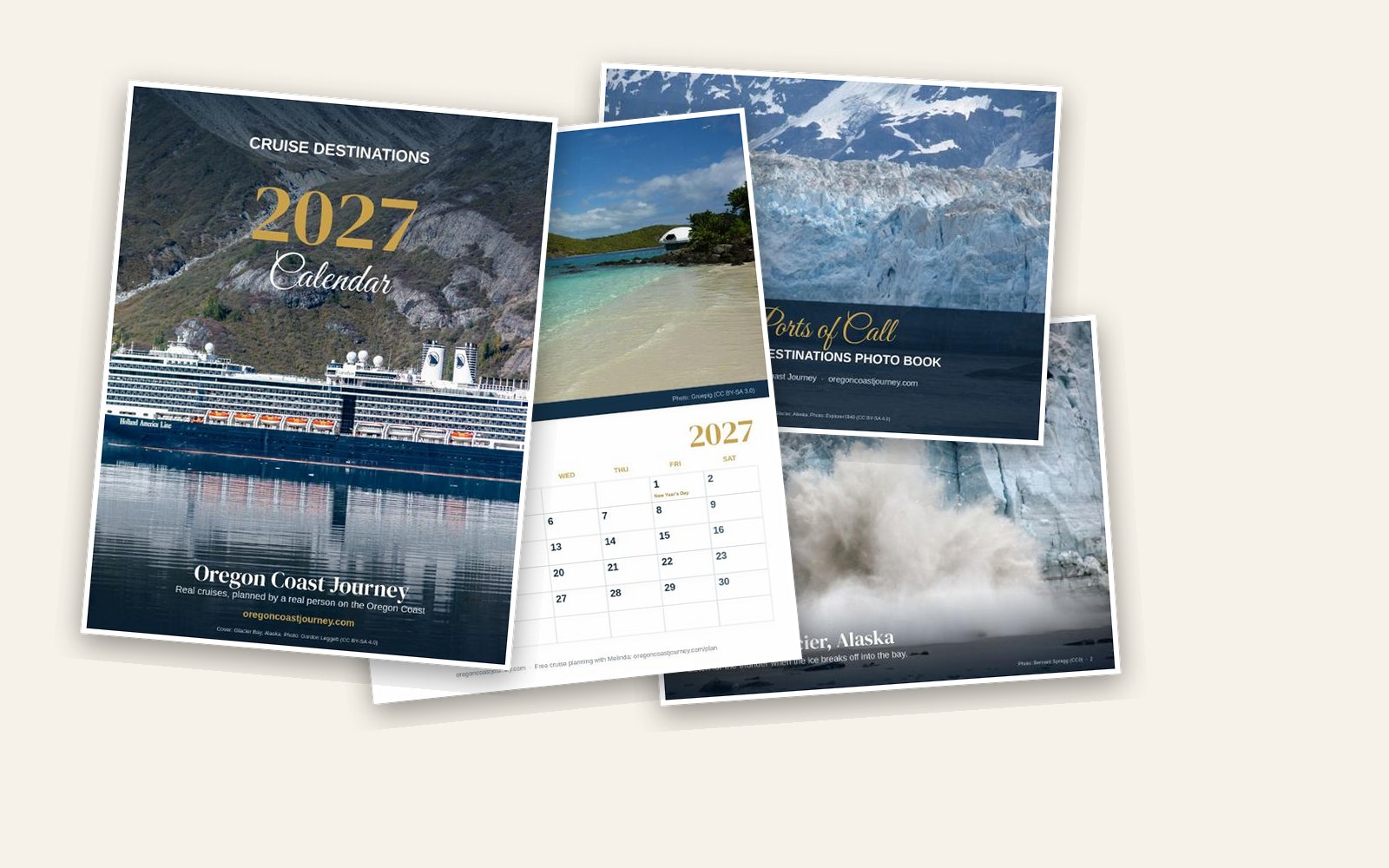
Free printable
A free 2027 cruise calendar for your wall
A real cruise destination for every month, plus a Ports of Call photo book. Print them at home.
Send me the free calendar
Things To Do on the Oregon Coast
Planning your shore days?
Book highly-rated shore excursions and port tours before the best ones sell out.
Find shore excursions on Viator →As a Viator affiliate, I earn a small commission from qualifying bookings — at no extra cost to you.
Cruise Packing Essentials
The little things that make cruising smoother — the gear I recommend to every traveler before they sail.
As an Amazon Associate, I earn from qualifying purchases — at no extra cost to you.


