The Story Behind Yaquina Head and Why Visitors Notice It
This post may contain affiliate links. I may earn a small commission at no extra cost to you.
Why Yaquina Head Looks the Way It Does
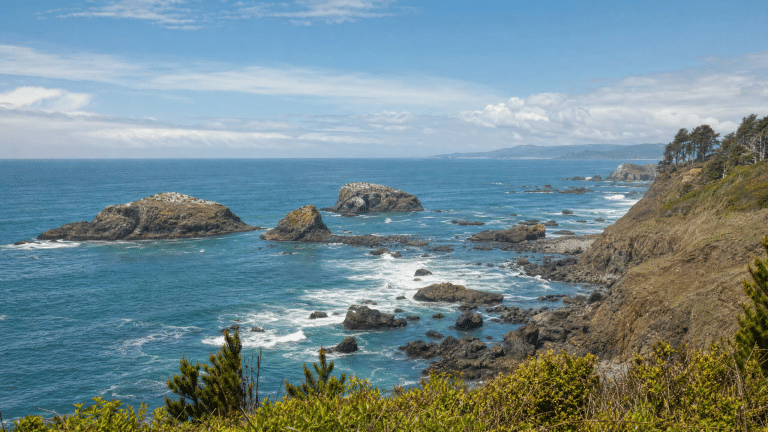
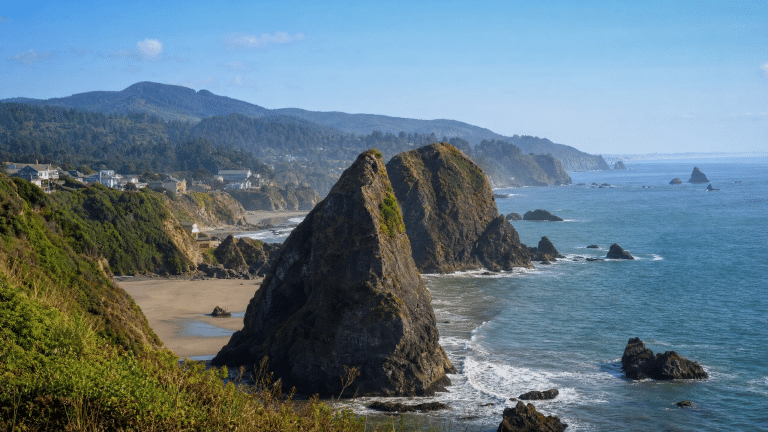
Yaquina Head's dramatic rocky profile isn't accidental geology—it's the result of volcanic activity that shaped the entire Central Oregon Coast millions of years ago. The headland itself is composed of basalt, the same dark volcanic rock that forms much of Oregon's coastal spine. About 14 to 16 million years ago, during the Miocene epoch, massive lava flows swept across what is now the Pacific Northwest. These flows cooled and fractured into the columnar formations and jagged outcrops you see today.
What makes Yaquina Head geologically distinctive is how the ocean has carved it over millennia. Wave action and weathering have exposed distinct layers of basalt, creating the layered cliff faces that climbers and geologists study. The rocky tide pools at the base of the headland—some of the richest on the Oregon Coast—exist precisely because this volcanic foundation creates the perfect shallow, rocky environment for starfish, anemones, and hermit crabs to thrive.
When you stand at Yaquina Head Lighthouse and look down at the rocks below, you're literally looking at a cross-section of Oregon's deep volcanic past. The lighthouse itself sits 93 feet above sea level on a foundation of this ancient basalt, anchoring it firmly enough to have withstood Pacific storms for over 150 years.
The Lighthouse: Built to Solve a Shipping Crisis
The Yaquina Head Lighthouse wasn't built for scenery—it was built because ships were wrecking. In the 1870s, the Central Oregon Coast was a blind spot for Pacific maritime traffic. Vessels traveling between San Francisco and the Columbia River had no reliable way to identify their position at night or in fog. The rocky headlands that make Yaquina Head beautiful today made it deadly for wooden sailing ships and early steamships navigating by dead reckoning and celestial observation.
The lighthouse was commissioned in 1873 and the tower was completed in 1874, making it one of the oldest continuously operating lighthouses on the Oregon Coast. Its first-order Fresnel lens—a massive, sophisticated optical device invented in France—could project a light beam visible for up to 21 nautical miles in clear conditions. For ships at sea, that rotating beam meant the difference between safe passage and running aground.
What's less commonly known is that Yaquina Head Lighthouse was controversial. The Oregon Coast already had the Yaquina Bay Lighthouse (now a museum in Newport), built in 1871 just 3 miles away. Shipping interests argued that a second light was unnecessary and wasteful. The federal government disagreed, and Yaquina Head was built anyway. History proved the government right: the Yaquina Bay light was deactivated in 1874, just as Yaquina Head came online. The newer lighthouse's superior position and more powerful optics made it the dominant aid to navigation.
Today, the lighthouse still operates as an active navigational aid. The Fresnel lens has been replaced with modern automated equipment, but the tower's role hasn't changed: it guides commercial fishing vessels, cargo ships, and recreational boats safely past one of the Oregon Coast's most treacherous stretches of water.
Summer Visiting: What You Need to Know
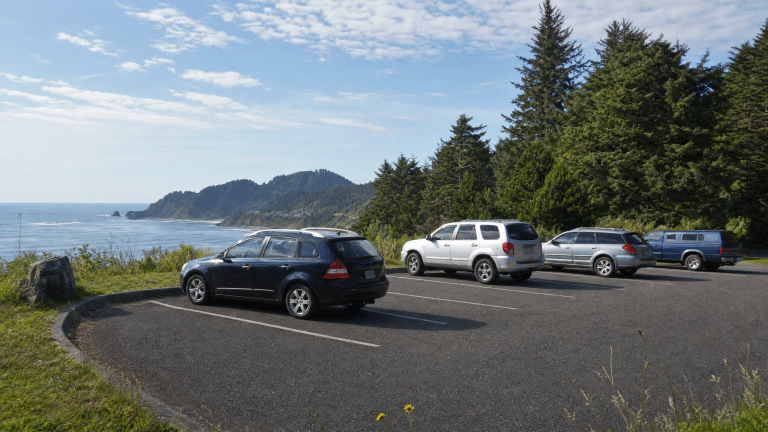
Yaquina Head Outstanding Natural Area is open year-round, but summer brings crowds. The parking area fills by mid-morning on weekends and holidays, especially in July and August. Arrive before 9 a.m. if you're visiting during peak season, or plan a weekday trip if possible. The $5 day-use fee supports lighthouse maintenance and trail upkeep.
The main lighthouse tower is open for climbing during summer months (typically May through September), with limited hours. The spiral staircase has 114 steps and the climb is steep and narrow—not suitable for visitors with mobility challenges, claustrophobia, or young children who can't manage steep stairs independently. The view from the top is genuine 360-degree Oregon Coast geography: you can see Cape Perpetua to the south and Otter Crest to the north on clear days.
If you're not climbing the tower, the grounds offer several easy walks. The Lighthouse Trail (0.3 miles) is a paved path to the tower base and offers excellent photo opportunities and interpretive signs. The Quarry Cove Trail (1.2 miles round-trip) descends to a rocky beach area and tide pools—this is where the geological story becomes visceral. You're walking on and around the same basalt that was molten millions of years ago.
Tide pools at Yaquina Head are among the best on the Oregon Coast, but they require respect. Never block the path of returning seawater, never remove creatures from pools, and never turn over rocks (flip them back exactly as you found them if you do look underneath). The ecosystem is fragile and these pools are home to species found nowhere else. Wear water shoes or old sneakers—the rocks are sharp and slippery. Check tide tables before you go; the best tide-pool access is during minus tides (below 0.0 feet), typically in summer mornings.
Planning Your Yaquina Head Visit
Yaquina Head works best as part of a larger Central Coast itinerary. The town of Newport is 3 miles south and offers the Oregon Coast Aquarium, the Sea Lion Caves (the largest sea cave in North America), and the historic Yaquina Bay Lighthouse. The Otter Crest Loop, a scenic byway, begins just north of Yaquina Head and offers dramatic viewpoints and smaller, less-crowded beaches.
If you're camping, the nearest RV parks are in Newport, about 15 minutes south. Summer weekends fill quickly, so book ahead. For lodging, Newport has everything from budget motels to upscale oceanfront hotels. The town's working waterfront is still active with commercial fishing boats, and several restaurants source directly from the catch.
For deeper understanding of the lighthouse and Oregon maritime history, the Yaquina Head Lighthouse Visitor Center (open seasonally) has exhibits on the lens, the lighthouse keepers who lived here, and the ships that passed this point. Books like “Lighthouses of the Oregon Coast” by James and Sara Gibbs provide historical context and keeper stories that bring the lighthouse to life as more than just a tower.
The Larger Story: Why Yaquina Head Matters Today
Modern ships have GPS, radar, and electronic charts. They don't need Yaquina Head Lighthouse the way a 1920s fishing boat did. But the lighthouse still serves a purpose: it's a backup aid to navigation and a visual confirmation of position in a world that has become dependent on electronics. In a 2023 incident off the Oregon Coast, a fishing vessel's electronics failed during fog, and the crew used the lighthouse beam to confirm their position and avoid running aground. The lighthouse had been there for 150 years, waiting.
Yaquina Head also represents something deeper about the Oregon Coast: the intersection of natural drama and human ingenuity. The volcanic geology that makes it beautiful also made it dangerous. The lighthouse was the human answer to that danger. Today, it's a working monument to both.
<!– ocj-affiliate-inline:ocj_rv_road_trip_finder –>
Some Oregon Coast routes work especially well when your lodging travels with you. Compare RV rentals by location and size, then confirm campground rules and parking limits before booking. This can be especially useful around the Central Coast when weather, daylight, and driving time affect the plan.
Turn this route into an RV coast trip
Some Oregon Coast routes work especially well when your lodging travels with you. Compare RV rentals by location and size, then confirm campground rules and parking limits before booking.
This article may contain affiliate links. Oregon Coast Journey may earn a commission if you book or buy through these links, at no extra cost to you.
Compare RV rentals for this route through approved partners such as RVshare.
When you visit Yaquina Head, you're not just seeing a scenic viewpoint. You're standing on ancient lava flows, looking at a structure built to save lives, and experiencing a landscape that has shaped Oregon's maritime identity for centuries. The lighthouse beam still rotates at night, still visible from ships at sea, still doing the job it was built to do. That continuity—that unbroken line from 1874 to today—is what makes Yaquina Head more than just a photo stop. It's a working piece of Oregon Coast history.
FAQ
Can I climb the Yaquina Head Lighthouse tower in summer?
Yes, the tower is open for climbing during summer months (typically May through September) with limited hours. The climb is 114 steps on a narrow spiral staircase. Check the visitor center for current hours before arriving, as they vary by season and staffing.
What's the best time to visit Yaquina Head's tide pools?
Visit during a minus tide (below 0.0 feet), which typically occurs in summer mornings. Check tide tables before you go. Wear water shoes, never remove creatures, and flip rocks back exactly as you found them.
Is there a parking fee at Yaquina Head?
Yes, there's a $5 day-use fee. The parking area is limited and fills by mid-morning on summer weekends. Arrive early or visit on a weekday.
How far can the Yaquina Head Lighthouse beam be seen?
The original Fresnel lens could project light visible for up to 21 nautical miles in clear conditions. Modern equipment is equally effective. On clear nights, the beam is visible from several miles offshore.
Are the trails at Yaquina Head accessible for people with mobility challenges?
The Lighthouse Trail (0.3 miles) is paved and accessible. The lighthouse tower climb is not accessible (114 narrow steps). The Quarry Cove Trail is unpaved and has elevation changes. Call ahead to confirm current accessibility conditions.
—
*This article was researched using publicly available sources from the Oregon Parks and Recreation Department, Travel Oregon, NOAA tide and weather resources, and historical records from the U.S. Lighthouse Society. AI assistance was used to organize and structure the narrative for clarity and SEO alignment.*
Editorial transparency
This article was drafted with AI assistance and reviewed through Oregon Coast Journey publishing safeguards. Always confirm current conditions before traveling.