Sea Lions Oregon Coast: Best Viewing Spots And Tips
This post may contain affiliate links. I may earn a small commission at no extra cost to you.
The Oregon Coast is home to thousands of pinnipeds, and spotting them is one of the most rewarding parts of any coastal trip. From the loud, crowded docks of Newport to the dramatic sea caves near Florence, sea lions show up in ways that genuinely surprise first-time visitors.
You can see sea lions on the Oregon Coast year-round, and you do not need to plan a special trip around a narrow seasonal window. That said, knowing where to go and when makes a real difference in what you experience. A foggy morning at Port Dock One in Newport hits differently than a summer afternoon with tour buses in the lot.
This guide covers the best viewing spots from the North Coast down to Brookings, how to tell species apart, what behavior to watch for, and how to visit responsibly with kids or dogs in tow.
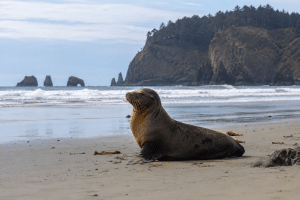
Key Takeaways
- Sea lions are present along the Oregon Coast all year, but numbers and locations shift by season.
- Newport, Sea Lion Caves near Florence, and Cape Arago near Coos Bay are the most reliable viewing spots.
- Staying 50 yards away and keeping dogs leashed near marine mammals protects both animals and visitors.
What You're Most Likely To See
Two sea lion species and one seal species make up the bulk of what you will encounter along the Oregon Coast. Knowing the differences between them helps you appreciate what you are actually looking at, not just guess.
California Sea Lions Vs. Steller Sea Lions
The California sea lion (Zalophus californianus) is the species you will most commonly see on Oregon docks and bay areas. Males are dark brown to black, weigh 700 to 800 pounds on average, and produce the familiar barking sound most people associate with sea lions. They are members of the otariid family, meaning they are eared seals with visible external ear flaps.
The Steller sea lion (Eumetopias jubatus), also called the northern sea lion, is significantly larger. Adult males can reach 2,500 pounds and over 11 feet in length, according to Pines N Vines. Their fur is lighter, often tan or golden, and they produce a deeper roaring sound rather than a bark. Stellers tend to haul out on rocky offshore rocks and sea stacks more than on docks.
How Harbor Seals Differ From Sea Lions
Harbor seals (Phoca vitulina) are true seals, not eared seals. They lack the visible external ear flaps that sea lions have, and their flippers are smaller and less useful for moving on land. You will often see harbor seals wriggling on their bellies rather than walking upright on their front flippers the way sea lions do.
Harbor seals are quieter, smaller (around 300 pounds for adult males), and prefer sandbars, estuaries, and rocky beaches. They are found along the entire Oregon Coast, with good viewing at Alsea Bay near Waldport and Nehalem Bay.
Other Species You Might Rarely Spot
The northern elephant seal (Mirounga angustirostris) is an occasional visitor. Adult males have a large inflatable proboscis that makes them unmistakable. Most adult male elephant seal sightings on the Oregon Coast occur near Cape Arago and Simpson Reef. A northern fur seal sighting is rare but possible offshore during migration. These are smaller eared seals that spend most of their lives at sea.
Best Places To Watch Them Along The Coast
Some of the most reliable sea lion viewing on the coast is free and walkable from town centers. A few spots require admission but offer a genuinely different kind of encounter.
Astoria And The North Coast Viewing Stops
Astoria sits at the northernmost tip of the Oregon Coast, and while it is not the most famous sea lion destination, haul-outs do occur in the area, particularly near the working waterfront and at the mouth of the Columbia River. Three Arch Rocks National Wildlife Refuge near Oceanside is worth noting for the North Coast: it is the only pupping site for Steller sea lions on the northern Oregon coast, though the refuge itself is closed to public landing to protect wildlife.
Nehalem Bay State Park offers views of both harbor seals and sea lions near bay sandbars, especially at lower tides.
Newport Bayfront And Port Dock One
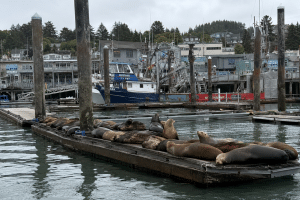
Newport's Historic Bayfront is the single most accessible sea lion viewing spot on the coast. California sea lions haul out on the floating docks at Port Dock One throughout much of the year. Viewing is free and takes just a few minutes on foot from the main Bayfront strip.
The Bayfront is busy on weekends, so arriving in the morning on a weekday gives you a quieter, more genuine experience. You can hear the barking from blocks away. It is not uncommon for orcas to be spotted from the nearby jetties as they travel along the coast in search of salmon or pinnipeds. The Yaquina Head Outstanding Natural Area, just north of Newport, adds offshore rocky haul-out viewing with scope-friendly bluff access.
Sea Lion Caves Near Florence
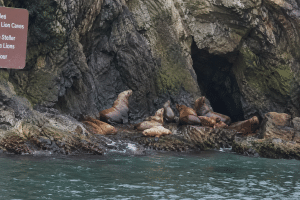
Sea Lion Caves is the largest sea cave in the United States and sits about 11 miles north of Florence on Highway 101. An elevator descends into the cave where Steller sea lions gather, primarily in fall and winter. During spring and summer, the animals move outside to the rocky ledges above the cave entrance, where you can still spot them from viewing areas.
Admission for adults is around $18. Observing Eumetopias jubatus in this massive cavern is a unique experience, especially in winter when dozens of sea lions fill the cave.
South Coast Haul-Outs From Coos Bay To Brookings
Cape Arago State Park near Coos Bay is one of the best all-around wildlife viewing areas on the Oregon Coast. Simpson Reef, visible from the Shell Island overlook, hosts large colonies of California sea lions, Steller sea lions, harbor seals, and occasional elephant seals, all viewable from a bluff-top platform. Shore Acres State Park nearby adds another solid vantage point.
Coquille Point in Bandon offers offshore rock haul-outs with good views from the bluff trail. Further south, Harris Beach State Park near Brookings has sea stacks where sea lions rest, visible from the beach.
When To Go For The Best Sightings
Sea lions are present along the Oregon Coast every month of the year, which makes planning straightforward. Seasonal patterns do affect where you find them and how many gather in any one spot.
Year-Round Patterns And Seasonal Visitors
California sea lions and Steller sea lions are both year-round residents on the Oregon Coast, so you will not miss them no matter when you visit. The sea lion population at certain spots, like Newport's Bayfront docks, tends to fluctuate with fish availability and breeding cycles. Harbor seals follow a similar pattern, staying along the coast all year in bays and estuaries.
Winter And Storm-Watching Wildlife Stops
Winter brings some of the largest sea lion gatherings. Sea Lion Caves near Florence is at its best from fall through early spring, when Steller sea lions move inside the cave in large numbers. Storm-watching season, roughly November through February, pairs naturally with wildlife viewing because crowds are smaller and the animals are more active on the rocks. Newport's Port Dock One sees California sea lions throughout winter as well.
Northern elephant seals occasionally appear on southern Oregon beaches during winter and early spring, particularly near Cape Arago. Sightings are rare but memorable.
Spring And Summer Behavior Changes
In spring, harbor seal pups are born, with births peaking around mid-May along the Oregon coast. You may spot pups resting alone on beaches while mothers fish nearby. Do not approach them.
California sea lions shift more to outdoor rocky haul-outs in summer. At Sea Lion Caves, they move from the interior cave to the outdoor ledges during warmer months. Newport's Bayfront still hosts sea lions in summer, though numbers can vary. Overall, spring and summer offer good viewing with longer daylight hours for families and road trippers. This is also the peak time for sightings of transient orcas, which often follow the migration of seal pups along the shore.
How To Identify Behavior From A Safe Distance
Watching sea lions and other pinnipeds from shore is most rewarding when you know what their behavior actually means. A lot of what looks random has a clear purpose.
Barking, Hauling Out, And Rafting
Barking is social communication. California sea lions bark to signal group coordination, warn rivals, or respond to nearby activity. Research suggests that one sea lion barking can trigger others, which explains why Newport's docks can get surprisingly loud.
Hauling out means coming onto land or a dock to rest, regulate body temperature, or nurse pups. Sea lions are not sick or stranded when they haul out; it is normal and necessary. Rafting refers to groups floating together on the water's surface with their flippers raised, a thermoregulation behavior.
True seals like harbor seals haul out more quietly and tend to stay closer to the water, using their smaller flippers to inch across rocks.
Why Some Docks Are Packed With Males
Most of the sea lions you see on Oregon docks are adult and juvenile males. Females and pups spend breeding season on rookeries further offshore or in California. During non-breeding months, male California sea lions move north along the coast to feed. The external ear flaps and large neck muscles on males make them easy to identify up close.
Signs You're Too Close
If a sea lion stops resting and looks directly at you with its head raised, you are too close. Flipper waving directed toward you, vocalizations that increase in frequency, or an animal moving toward the water away from you are all stress indicators. The Marine Mammal Center notes that any change in resting behavior triggered by your presence means you should back up immediately.
Responsible Viewing Rules For Families And Dog Owners
Getting close feels tempting, especially for kids seeing sea lions for the first time. But the rules exist for real reasons that protect both the animals and your group.
Distance Rules And Wildlife Etiquette
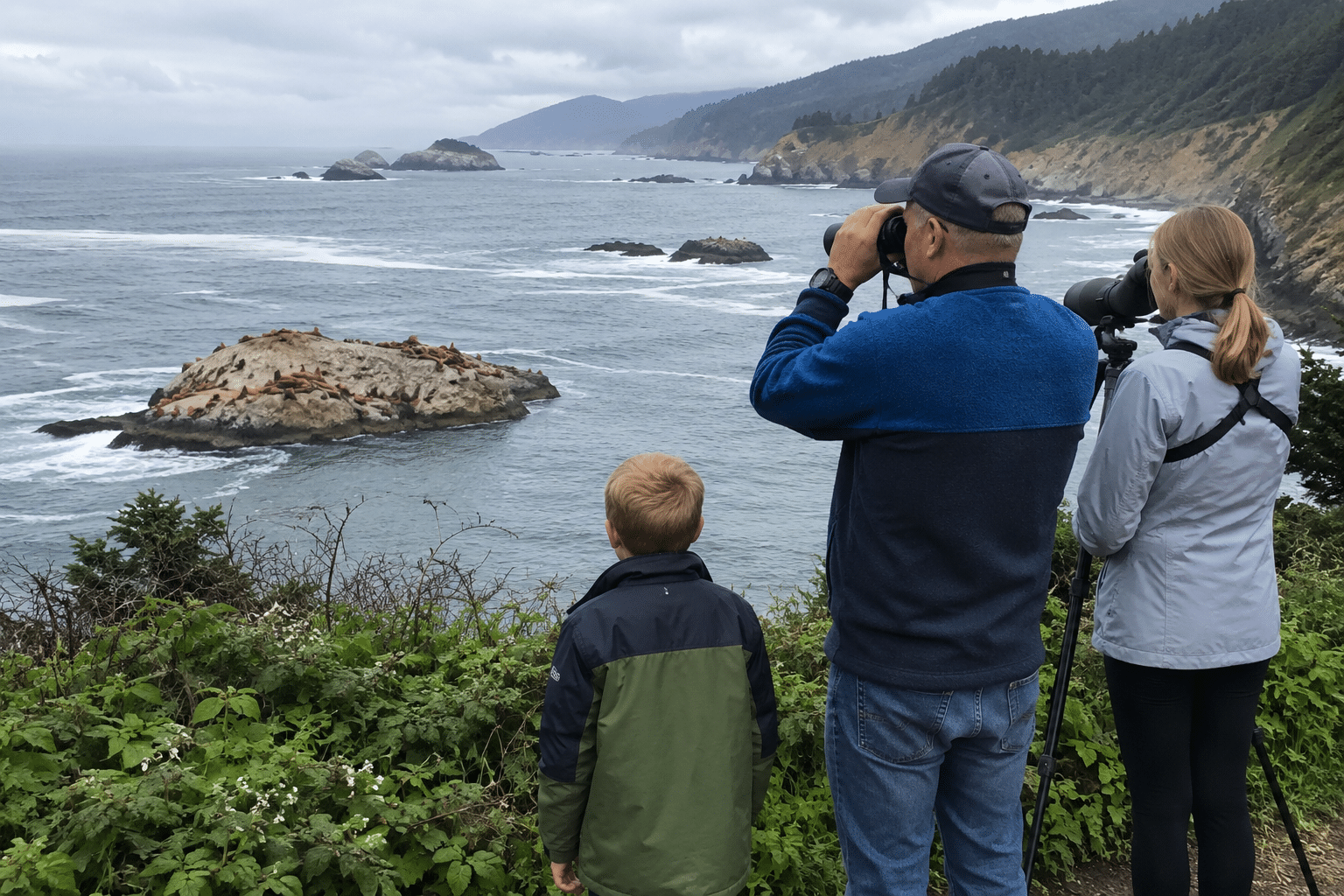
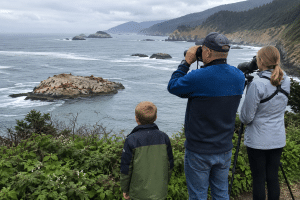
The legal minimum approach distance for marine mammals under the Marine Mammal Protection Act is 50 yards on land. The Oregon Coast travel community encourages visitors to treat 50 yards as the standard for any wildlife encounter on the coast. Use binoculars or a zoom lens rather than closing the gap. NOAA Fisheries also emphasizes that no amount of curiosity justifies approaching or feeding a wild marine mammal.
Do not make loud sudden noises, throw objects, or attempt to get an animal to react for a photo.
Leash And Beach Safety Around Marine Mammals
Dogs and sea lions are a risky combination. Sea lions can move faster on land than most people expect, and a dog approaching a haul-out can trigger a defensive response. Keep dogs on a leash near any area where marine mammals are present.
There is also a health risk: leptospirosis, a bacteria that can sicken sea lions, dogs, and humans, spreads through contact with urine or bodily fluids. If your dog contacts a dead or sick sea lion on the beach, contact a vet immediately. Orcas do occasionally pursue sea lions in Oregon coastal waters, which means stressed or beached animals near your area are not unusual during certain seasons.
Photography Without Disturbing The Animals
A telephoto or zoom lens is the right tool for photographing sea lions. Getting a good shot does not require getting close. If you are using a phone, the 50-yard rule still applies regardless of whether your camera can reach that far.
Avoid using flash photography near resting animals, and never position yourself between a sea lion and the water. That cuts off their escape route and can cause a dangerous stress response.
Planning A Wildlife-Focused Oregon Coast Stop
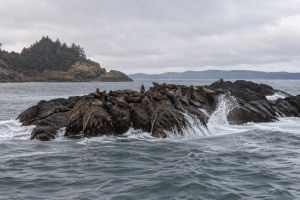
A little pre-trip planning makes wildlife viewing significantly better. Pairing sea lion stops with nearby town anchors keeps the day manageable without feeling rushed.
Pairing Wildlife Viewing With Nearby Town Stops
Newport pairs naturally with a sea lion visit since Port Dock One sits right on the Historic Bayfront alongside restaurants, the working harbor, and the Oregon Coast Aquarium a few miles south. The aquarium features marine exhibits that add context to what you see at the docks, making it a solid second stop, especially for families.
Florence works well as a base for Sea Lion Caves. The town has good dining options along the Siuslaw River waterfront, and you can combine the cave visit with a stop at the Oregon Dunes nearby.
For the South Coast, pairing Cape Arago with Shore Acres State Park and a drive through Coos Bay gives you a half-day wildlife loop that does not require long drives between stops.
Indoor And Easy-Access Options In Bad Weather
Rain and wind are standard on the Oregon Coast, so having an indoor option matters. The Oregon Coast Aquarium in Newport is a reliable choice when conditions make outdoor viewing difficult. The Seaside Aquarium, farther north in Seaside, is a smaller but family-friendly stop near the North Coast.
Sea Lion Caves is largely sheltered and accessible by elevator, making it one of the better foul-weather wildlife experiences on the entire coast.
What To Bring For A Better Viewing Experience
A few items make a real difference:
- Compact binoculars: Essential for viewing offshore haul-outs and identifying species from a safe distance
- Rain layer: Weather changes fast, and a waterproof shell keeps a viewing session from getting cut short
- Layers: Even summer mornings on the coast are cool and often foggy
- Snacks and water: Some viewing areas like Cape Arago have limited facilities nearby
- Camera with zoom lens: Lets you get detail without breaching the 50-yard guideline
Checking tide charts before you go is helpful too. Lower tides expose more rocky haul-out areas and can put more animals in view from shore.
Frequently Asked Questions
Where are the best places to see sea lions along the Oregon coast?
The most reliable spots are Newport's Port Dock One on the Historic Bayfront (free, year-round), Sea Lion Caves near Florence (paid admission, best in fall and winter), and Simpson Reef at Cape Arago State Park near Coos Bay. Each offers a distinct experience, from urban dock viewing to wild offshore colonies.
When is the best time of year to watch sea lions in Oregon?
Sea lions are present year-round on the Oregon Coast, so there is no bad time to visit for this specific wildlife. Fall and winter bring the largest Steller sea lion gatherings inside Sea Lion Caves, while spring and summer offer longer daylight hours and outdoor haul-out viewing at most locations.
How much do tickets cost for Sea Lion Caves, and do I need reservations?
Adult admission to Sea Lion Caves is around $18. It is a good idea to check the official Sea Lion Caves website for current pricing and any reservation requirements, especially during peak summer months when visitor traffic is higher.
Is there a live webcam view available for Sea Lion Caves?
Sea Lion Caves has offered a webcam feature in the past to let visitors check on sea lion activity before making the trip. Check the Sea Lion Caves official website directly for current webcam availability, as features like this can change seasonally.
Where can I see sea lions in Newport, Oregon, and what's the best viewing spot?
The best spot is Port Dock One on the Newport Historic Bayfront, maintained by the Newport Sea Lion Docks Foundation. It is free, accessible on foot from downtown Newport, and typically has California sea lions on the floating docks for much of the year. Morning visits on weekdays tend to be less crowded.
Are sea lions commonly seen near Seaside, Oregon, and where should I look?
Seaside is not the most concentrated sea lion viewing area on the coast, but you can find pinnipeds in the bays and near the mouth of the Necanicum River. The Seaside Aquarium offers a close-up marine mammal experience if you are in the area. For dedicated sea lion viewing on the North Coast, Nehalem Bay and areas near Three Arch Rocks offer better opportunities.
Free: Pacific Coast Cruise Planning Checklist
Grab my free step-by-step checklist for planning an Alaska, Mexican Riviera, Hawaii, or Pacific Coastal cruise — sent straight to your inbox.