Where To See Puffins Oregon Coast: Best Viewing Spots
This post may contain affiliate links. I may earn a small commission at no extra cost to you.
Planning a trip to see puffins on the Oregon Coast is an unforgettable experience. Knowing exactly where to see puffins oregon coast provides is essential for any wildlife enthusiast. These small, stout seabirds are surprisingly easy to spot. It is one of the best regions to see puffins in oregon if you know the right viewpoints and seasonal timing.
The Oregon Coast is one of the best places in the continental United States to see tufted puffins from shore, and you don't need a boat or special permit to do it. The species typically arrives in early April and stays through late summer, nesting in burrows on sea stacks and offshore rocky islands. A few specific shoreside viewpoints put you in a great position to watch them without any special gear beyond a decent pair of binoculars.
Whether you're road tripping the full coast with the family or making a focused weekend trip from Portland, knowing the right spots and timing makes all the difference. Puffin viewing is also very family-friendly, especially at locations where interpretive rangers and volunteer naturalists are on hand to point out nesting pairs.

Key Takeaways
- Tufted puffins nest along the Oregon Coast from roughly April through August, with peak activity in May and June.
- Haystack Rock in Cannon Beach is the most accessible spot to see puffins from shore in the entire continental United States.
- Bringing binoculars, arriving at low tide, and respecting buffer zones around nesting areas will dramatically improve your experience.
Best Places To Spot Puffins From Shore
Oregon's rocky coastline is dotted with sea stacks and offshore islands that serve as protected nesting habitat for tufted puffins in oregon. A handful of shoreside viewpoints give you a real chance to see them without ever stepping off dry land. This accessibility makes puffin viewing one of the most rewarding wildlife experiences on the coast.
Haystack Rock In Cannon Beach
Haystack Rock is the top destination on the coast for seeing tufted puffins in Oregon. The 235-foot sea stack sits close enough to the beach that you can watch puffins perching and flying with the naked eye, though binoculars sharpen the view considerably. According to a report on West Coast puffin viewing, this is the best spot in the continental United States to observe tufted puffins from shore.
Tufted puffins typically arrive at Haystack Rock in early April, returning to the same burrows and lifelong mates year after year, as noted by Discover Our Coast. The rock is part of the Oregon Islands National Wildlife Refuge, and volunteers from the Haystack Rock Awareness Program are present most mornings during puffin season.
Face Rock And Coquille Point In Bandon
Coquille Point in Bandon is a lesser-known but genuinely worthwhile puffin stop. The viewpoint overlooks a cluster of offshore sea stacks and rocky islands that host tufted puffins during the breeding season. The Inn at Face Rock notes that Face Rock State Scenic Viewpoint provides a solid vantage point over this colony.
Bandon is also a more relaxed alternative to Cannon Beach if you prefer fewer crowds. Bring a spotting scope here since the nesting rocks sit a bit farther offshore.
Three Arch Rocks Near Oceanside
Three Arch Rocks National Wildlife Refuge, just offshore from Oceanside on the Northern Oregon Coast, hosts one of the largest seabird colonies in Oregon. Puffins in Oregon are part of a much larger nesting community here that includes common murres, pigeon guillemots, and other alcids. Oregon Coast Weekend lists the Oceanside Beach access point as a recommended birding spot specifically for this refuge. The rocks themselves are off-limits to visitors, but the view from the beach is surprisingly good, especially with a spotting scope.
When Puffins Are Most Visible

Timing your trip around the breeding season dramatically increases your chances of seeing active, visible puffins rather than empty rocks. The season window is fairly predictable, and within that window, certain times of day consistently produce better sightings.
Puffin Season From Spring Through Summer
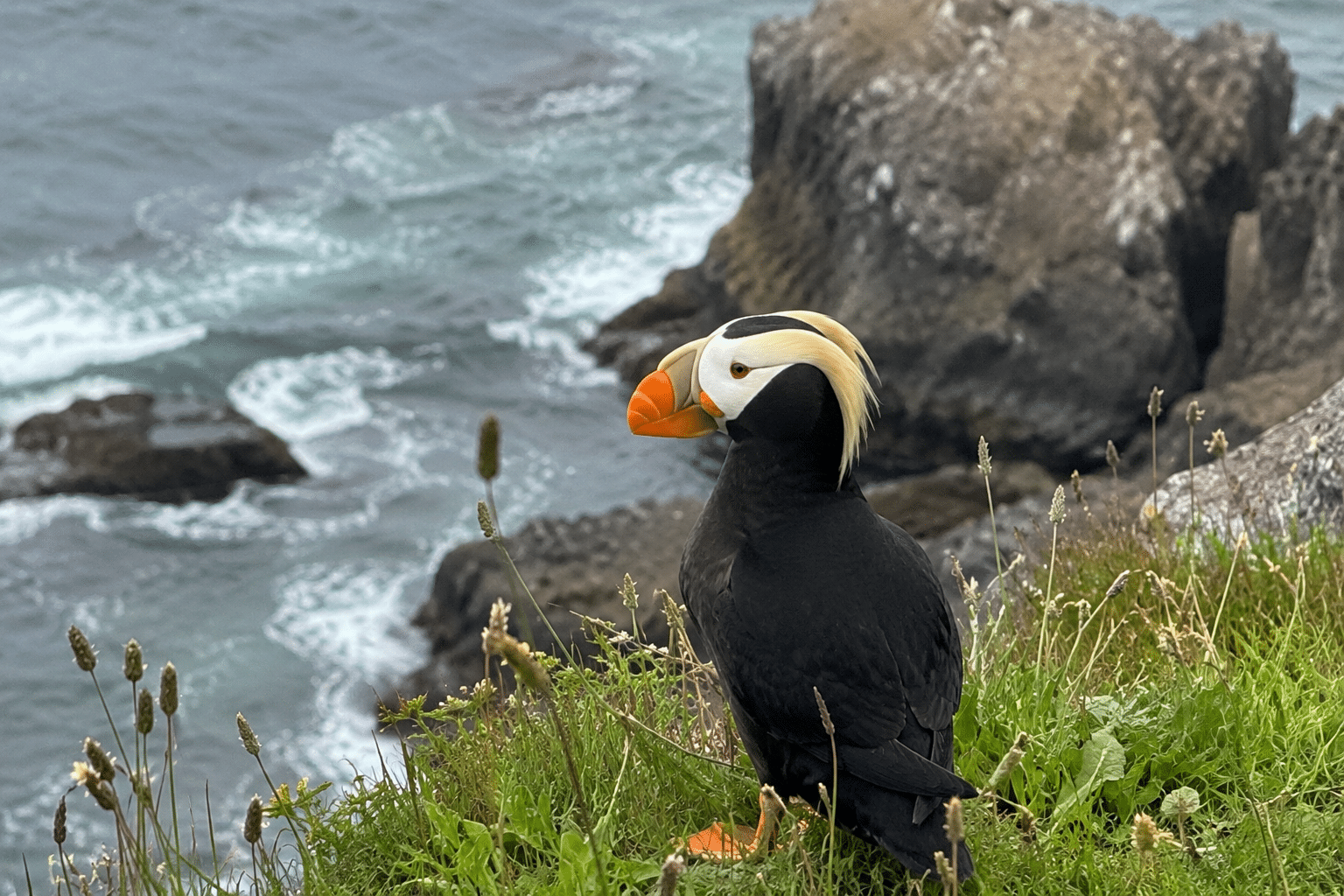
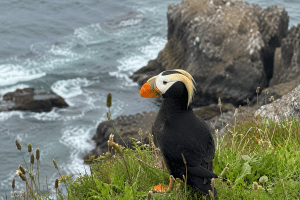
Tufted puffins along the Oregon Coast arrive in early April and generally remain through August. The best time to see puffins falls in May and June, when breeding activity peaks and birds are most visible near their burrow entrances. Adults in full breeding plumage show their signature bright yellow tufts and vivid orange bills during this period.
By late July and into August, activity around colonies starts to slow as pufflings grow and fledge. Seeing the birds in their full breeding plumage is best done earlier in the summer before they return to the sea. The birds depart for the open ocean in late summer, so visiting before mid-August gives you the best viewing chances.
Best Time Of Day And Viewing Conditions
Early morning is consistently the best time of day to watch puffins. Birds are most active in the first few hours after sunrise, flying to and from the water to feed. Overcast mornings, which are common on the Oregon Coast, actually offer better viewing light than harsh midday sun.
Low tide is another key factor. At Haystack Rock, low tide exposes the base of the rock and draws puffins lower and closer to visible ledges. Check a tide chart before you go and plan to arrive within an hour of low tide for the best positioning.
What Breeding Season Activity Looks Like
During breeding season, you'll see tufted puffins flying back and forth between the ocean and their burrows, often carrying small fish in their bills to feed pufflings. This “billing” and feeding behavior is one of the most rewarding things to witness. Pairs frequently perch near burrow entrances together. Activity is most concentrated in the two to three hours after sunrise, so an early morning visit during May or June is your highest-percentage bet.
How To Get Better Views Without Disturbing Wildlife
Getting a good look at puffins doesn't require getting close. The right equipment and a little awareness of nesting zone boundaries will give you far better views while keeping the birds safe and the experience enjoyable for everyone around you.
What To Bring For Distant Viewing
A pair of binoculars with at least 8x magnification is the single most useful thing you can pack for puffin viewing. Mid-range binoculars in the 8×42 or 10×42 range work well and are easy to hold steady while standing on a windy beach. If you're serious about the Southern Oregon Coast sites where colonies sit farther offshore, spotting scopes mounted on a tripod will close the distance considerably.
Dress in layers. Even in June, mornings on the Oregon Coast are often cold and windy, and you'll be standing still for longer than you expect once the birds start moving.
How To Watch Safely Around Nesting Areas
At Haystack Rock, there is a clearly marked buffer zone around the rock itself. Staying outside that boundary isn't just polite, it's required. Approaching too close flushes birds from burrows, stresses breeding adults, and can expose eggs and pufflings to cold or predators.
Keep dogs leashed and away from the base of the rock. Even a calm dog moving along the waterline can disrupt activity if it gets too close. Staying quiet and moving slowly near any active colony reduces stress on nesting birds.
Family-Friendly Interpretation And Seasonal Programs
The Friends of Haystack Rock run the Haystack Rock Awareness Program, which puts trained volunteers on the beach during low tides throughout puffin season. They carry spotting scopes and are genuinely happy to help you find puffins and answer questions. The annual Welcome the Puffins celebration in Cannon Beach each spring draws families specifically for puffin-focused events including a tufted puffin predator game and a puffin activity table designed for kids. These programs make Haystack Rock one of the most educational wildlife stops on the entire coast.
What Else You May See At Puffin Stops

Puffin viewpoints on the Oregon Coast sit within some of the richest seabird habitat in the Pacific Northwest. Even if puffins are your main goal, the surrounding wildlife tends to be impressive enough to make any visit worthwhile on its own terms.
Common Seabirds Around Oregon Colonies
At Haystack Rock, Three Arch Rocks, and Coquille Point, common murres are almost always visible in large numbers. Common murres nest in dense, upright colonies on the same rocky islands where puffins breed, and they're hard to miss. Pigeon guillemots, with their striking red feet and white wing patches, are also regular sights flying low over the water near sea stacks. Western gulls nest on many of the same offshore rocks and are visible year-round. Rhinoceros auklets, close relatives of the puffin, are also present at several Oregon colonies, though they tend to feed offshore and are harder to spot from land.
Shorebirds, Raptors, And Estuary Species Nearby
Estuaries and beaches near puffin stops host a rotating cast of shorebirds throughout the season. Sandpipers and plovers use Oregon beaches as refueling stops along the Pacific Flyway, the major north-south migration corridor that runs from Alaska to South America. Bald eagles patrol sea stacks and offshore rocks, occasionally causing a dramatic flush of nesting seabirds. These bald eagles are a common sight near the larger colonies at Cannon Beach and Oceanside. Marbled murrelets, a threatened species, are also present in forested coastal areas near several viewpoints.
Why These Habitats Matter Along The Coast
Rocky offshore islands and sea stacks create natural predator barriers that make safe nesting possible for millions of birds. According to Oregon Coast Weekend, the Oregon Coast supports nearly 1.3 million seabirds with roughly 400 nesting colonies along the shoreline. These habitats are irreplaceable, and the same locations that draw puffins also support broader biodiversity that makes the coast a genuinely world-class birding destination.
Northern Vs. Southern Coast Viewing Options
The northern and southern Oregon Coast each offer distinct puffin viewing experiences. The northern sites are more accessible and better set up for casual visitors, while the southern options reward those willing to travel a bit farther with fewer crowds and additional wildlife.
Cannon Beach And Ecola State Park
Cannon Beach is the most practical starting point for most travelers. Haystack Rock is a short walk from public parking, and the Haystack Rock Awareness Program adds an educational layer that families especially appreciate. After a morning at the rock, Ecola State Park sits just north and makes an excellent add-on. The park stretches nine miles between Cannon Beach and Seaside and offers elevated viewpoints over the ocean, where you may spot seabirds offshore from the headland trails, as described in a Cannon Beach area guide.
Bandon Marsh And Bullards Beach Area
The area around Bandon combines several excellent birding spots within a short drive of each other. Bandon Marsh National Wildlife Refuge protects critical estuary habitat and draws a wide variety of shorebirds and wading birds alongside migratory species. Bullards Beach State Park, which sits at the mouth of the Coquille River, gives you both beach access and estuary birding in one stop. Face Rock State Scenic Viewpoint overlooks the offshore sea stacks where puffins nest, rounding out the southern birding loop.
Cape Arago And Other Southern Add-Ons
Cape Arago State Park, south of Coos Bay, is worth adding to any Southern Oregon Coast itinerary. The park's headland trails offer views of offshore rocks that host seals, sea lions, and nesting seabirds including members of the alcid family that puffins belong to. Combined with Face Rock and Bandon Marsh, Cape Arago makes a strong full-day circuit for wildlife watchers working the southern Oregon Coast.
Conservation Notes Visitors Should Know
Tufted puffins are a genuinely threatened part of Oregon's coastal ecosystem. Understanding what's putting pressure on local colonies helps you make informed choices as a visitor and supports the conservation work being done in your name on the coast.
Why Oregon Puffin Numbers Matter
The tufted puffin population along the Oregon Coast has declined significantly over the past few decades. As noted in a recent report on Oregon puffin conservation, data from the Bird Alliance of Oregon shows a notable drop in numbers that has raised serious concerns among conservation groups. Oregon's remaining colonies represent the southern edge of this species' range, which makes local nesting sites disproportionately important to the long-term survival of the population.
Threats Facing Nesting Colonies
Warming ocean temperatures are one of the primary drivers of puffin decline on the Oregon Coast. Warmer water reduces the availability of the small forage fish that puffins rely on to feed their chicks, leading to lower fledgling survival rates in poor years. Human disturbance, pollution, and entanglement in commercial fishing gear also contribute to population stress. The Bird Alliance of Oregon and Friends of Haystack Rock have partnered with the National Audubon Society and the U.S. Fish and Wildlife Service on active monitoring and conservation coordination for West Coast tufted puffins.
Responsible Travel Practices On The Coast
Stay behind posted buffer zones at all nesting sites. Resist the urge to fly drones near sea stacks and offshore rocks during nesting season, which is prohibited and genuinely harmful to breeding birds. Pack out your trash from beaches. Support local conservation programs when you visit Cannon Beach by stopping at the Haystack Rock Awareness Program table. Small choices add up, and the wildlife viewing opportunities that make the Oregon Coast worth visiting depend on nesting colonies remaining intact season after season.

Frequently Asked Questions
What is the best time of year and time of day to spot puffins along the Oregon coast?
The best time of year to see tufted puffins is May and June, when breeding activity peaks and birds are most visible at nesting burrows. Early morning within an hour of low tide gives you the most active bird behavior and the best light for viewing.
Are puffins still nesting at Haystack Rock this season?
Tufted puffins typically arrive at Haystack Rock in early April and remain through August, with the peak nesting window running through late June. For current season sightings and nesting status, check with the Friends of Haystack Rock or the Haystack Rock Awareness Program volunteers who are present on the beach during low tides throughout the season.
Can you see puffins at Cannon Beach, and where are the best viewing spots?
Yes, Cannon Beach is the top location in the continental United States for seeing tufted puffins from shore. Haystack Rock, which sits close to the beach and is easily visible from the waterline, is your primary target, and the Haystack Rock Awareness Program volunteers often have spotting scopes set up to assist visitors.
Are there puffins in Depoe Bay, and which viewpoints or tours offer the best chance to see them?
Depoe Bay is better known for whale watching than puffin viewing, and there are no major tufted puffin colonies in that immediate area. For puffin viewing from the central coast, your best option is to travel north to Haystack Rock in Cannon Beach or check seabird activity at viewpoints like Boiler Bay State Scenic Viewpoint, where offshore rocks occasionally attract alcids.
How can I view puffins safely without disturbing nesting birds or violating protected-area rules?
Stay outside the marked buffer zone around Haystack Rock and similar nesting sites, and never approach offshore sea stacks by kayak or boat during nesting season. Keep dogs leashed, avoid using drones near nesting colonies, and let the trained volunteers at the Haystack Rock Awareness Program guide your viewing experience.
What are the best alternatives to Cannon Beach for puffin viewing if conditions aren't ideal?
Coquille Point in Bandon is the most practical alternative, offering views of offshore sea stacks that host tufted puffins during breeding season. Three Arch Rocks National Wildlife Refuge near Oceanside is another strong option, especially for those based on the northern coast, though a spotting scope helps significantly at both locations.
Free: Pacific Coast Cruise Planning Checklist
Grab my free step-by-step checklist for planning an Alaska, Mexican Riviera, Hawaii, or Pacific Coastal cruise — sent straight to your inbox.