Best Time To See Whales On Oregon Coast By Season
This post may contain affiliate links. I may earn a small commission at no extra cost to you.
Every season brings whales in Oregon to the shoreline, and Oregon coast whale watching is a bucket-list activity for many. Knowing which season matches your trip style makes all the difference when planning. Knowing the best time to see whales on Oregon Coast helps you avoid scanning an empty horizon. You will have a much better chance of watching a gray whale roll through the surf 200 yards offshore.
The Oregon Coast offers reliable whale watching year-round, with two peak windows: mid-December through January for the southbound gray whale migration, and late March through May when northbound whales travel close to shore with newborn calves.
The summer months are often overlooked, but a resident group of 200-plus gray whales feeds just offshore from June through mid-November, making places like Depoe Bay some of the most dependable whale-watching spots on the entire West Coast. You don't need to time a major migration to see whales here.
This guide breaks down every season by what you'll actually see, which spots give you the best angle, and what kind of trip each window suits best. Whether you're planning a family road trip, a camping weekend, or a quick coastal escape, the timing tips below will help you get on the water, or at least close to it.
Key Takeaways
- The spring migration (late March to May) brings gray whales closest to shore, often within half a mile, making it the best season for land-based sightings.
- Summer is the most underrated season because resident gray whales feed near Depoe Bay from June through mid-November.
- Oregon State Parks runs free Whale Watch Weeks in late December and late March, staffing viewpoints with trained volunteers to help you spot whales.
Quick Answer By Season
Gray whales are the dominant species for whale watching on the Oregon Coast, and their migration calendar creates four distinct viewing windows. This Oregon coast whale watch experience changes throughout the year, offering different perspectives on whale density and distance from shore.
Winter Migration: Mid-December To Mid-January
This is the busiest whale-watching period on the Oregon Coast. Around 20,000 grey whales travel south from the Bering Sea toward the warm lagoons of Baja California, Mexico. The sheer number of whales in the water makes sightings frequent, even from roadside pullouts.
During this window, whales typically travel 3 to 5 miles offshore, so you'll mostly be watching for distant blows and dorsal arches rather than close-up views. Oregon State Parks runs its winter Whale Watch Week in the last week of December, with trained volunteers stationed at key viewpoints like Boiler Bay and Cape Perpetua.
Spring Migration: Late March To May
The northbound Pacific gray whale migration is considered the best time to see whales for shore-based viewing. Mothers traveling with newborn calves move more slowly and hug the coastline. These whales in Oregon sometimes come within half a mile of the shore. This makes whale watching on the Oregon Coast particularly exciting during the spring months. At spots like Depoe Bay and Cape Perpetua, you can watch whales pass at surprisingly close range without binoculars.
The Oregon state parks whale watch program holds its spring Whale Watch Week during the last week of March. Whale numbers peak in late March and early April, and it is a perfect time for an Oregon whale watch trip. Sightings remain good through May as stragglers continue north.
Summer Resident Whale Season: June To Mid-November
A group of 200-plus “resident” gray whales, known as the Pacific Coast Feeding Group, skips the trip to Alaska. They spend the summer feeding in the kelp-rich nearshore waters. This is a premier time for Oregon coast whale watching because these animals stay local. You can find these whales in Oregon from June through mid-November. According to Whale's Tail Charters in Depoe Bay, these resident whales feed within half a mile of shore and stay in the area for months at a time.
This is the most reliable season for consistent sightings. Crowds are smaller than during migration peaks, and the calmer summer seas improve visibility.
Late Fall Transition: When Sightings Slow Down
Mid-November through early December is the slowest period. Resident whales have largely moved on, and the southbound winter migration hasn't fully begun. Sightings are possible but less predictable. If you're visiting in November, focus on other wildlife like sea lions and seabirds while keeping an eye out for early southbound migrants.
Which Months Are Best For Your Trip Style
The “best” month depends less on raw whale numbers and more on what kind of trip you're planning. Distance from shore, weather, crowds, and your group's needs all shape which window delivers the most satisfying experience.
Best Months For The Highest Chance Of Seeing Whales
Late March and early April offer the highest combined probability of spotting whales. You get the tail end of the winter migration overlap, the peak of the northbound spring migration, and Oregon's whale watch week all at once. Volunteer spotters are stationed at major viewpoints, which genuinely increases your odds.
June through September is a strong second choice because the resident whale group is feeding consistently close to shore. If your schedule doesn't allow a spring trip, early summer is a smart fallback.
Best Time For Close-To-Shore Viewing
Late March through May is the clear winner. Northbound gray whales, especially mothers with calves, travel well inside the 1-mile mark. As noted by Pines N' Vines, the best time to see resident whales close to shore is May through October, so there's significant overlap in late spring.
From spots like the Depoe Bay seawall or Boiler Bay, you may not even need binoculars during peak spring weeks.
Best Time For Fewer Crowds And Easier Parking
June and September hit a sweet spot. Summer resident whales are active, but the peak tourist season pressure hasn't fully set in by early June, and crowds thin out noticeably after Labor Day. Parking at places like Cape Perpetua and Boiler Bay becomes much more manageable.
Avoid late December and the last week of March if you dislike crowded viewpoints. Whale Watch Week draws large groups to the most popular spots.
Best Time For Families, Campers, And Road Trippers
June through mid-August is ideal for families, campers, and road trippers. Campgrounds are open, weather is more cooperative for kids and gear, and resident whale sightings are reliable. You can pair whale watching with tide pooling, hiking, and beach time without juggling winter storm logistics. For families doing a full coast road trip, stopping at Depoe Bay in summer almost guarantees a sighting from the free seawall viewpoint.
What Whales And Marine Life You Might See
The Oregon Coast is known for gray whales, but a morning on the water or an afternoon at a good headland viewpoint can turn into a much broader wildlife experience than you might expect.
Gray Whales And The Resident Feeding Group
Pacific gray whales are the species you're most likely to see from shore. They're baleen whales, which means they filter feed rather than chase prey, and their summer feeding behavior along Oregon's nearshore kelp beds is what keeps the resident group close to land for months.
Gray whales are easy to identify by their mottled gray skin, the absence of a dorsal fin (replaced by a series of knuckles along the tail), and the distinctive heart-shaped or V-shaped blow from their twin blowholes. You may also spot orange or white patches, which are whale lice, a harmless but distinctive feature.
The resident feeding group of 200-plus whales is separate from the migrating population. These whales return to the same stretches of Oregon coastline year after year.
When Humpback Whales And Orcas Show Up
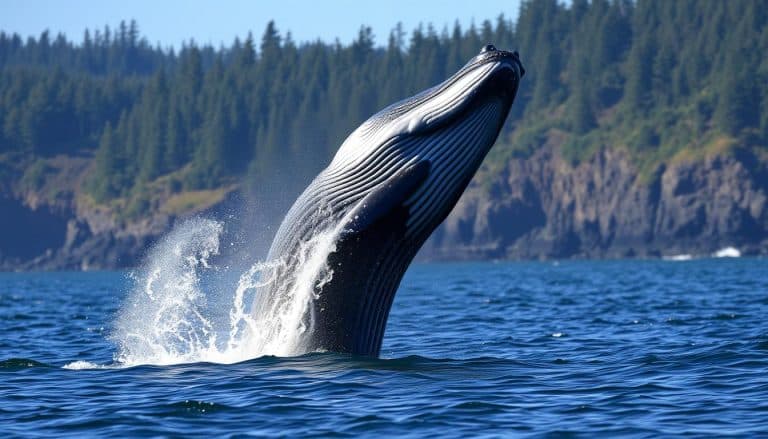
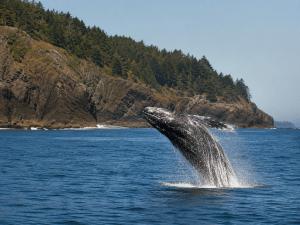
Humpback whales have been seen with increasing regularity along the Oregon Coast from May through October. They're larger than gray whales and are known for acrobatic behavior, including full breaches. A whale breach from a humpback is a dramatic sight from any headland.
Orca sightings are less predictable but do occur, typically in April and May when transient pods follow seal and sea lion populations. Sightings near headlands and rocky rookeries are most common during this window.
Other Wildlife To Watch For From Shore
While scanning for whale blows, you're likely to spot harbor seals hauled out on rocks, and California and Steller sea lions barking from offshore buoys and sea stacks. Seabird activity is also high along most headlands.
Pacific white-sided dolphins occasionally appear in groups just offshore, especially near Depoe Bay and Cape Perpetua. The Oregon Department of Fish and Wildlife notes that the coast offers consistently diverse marine wildlife viewing across all seasons, from tidal zone invertebrates to large marine mammals.
Best Viewing Spots From North To South
The Oregon Coast has no shortage of good whale-watching vantage points, but some headlands and viewpoints consistently outperform others because of their elevation, proximity to deep water, or the presence of volunteer spotters during whale watch events.
Ecola State Park And Neahkahnie Mountain Viewpoint
Ecola State Park, just north of Cannon Beach, offers sweeping elevated views of the Pacific from accessible pullouts and short trails. It's a solid northern Oregon Coast option during both migration seasons.
Neahkahnie Mountain Viewpoint, about 13 miles south of Cannon Beach near mile markers 41 and 42 on Highway 101, is one of the better roadside stops on the northern coast. During Oregon's Whale Watch Weeks, volunteers are often stationed here to help you pick out distant spouts.
Cape Meares Lighthouse And Northern Headlands
Cape Meares sits on a headland south of Tillamook and gives you a west-facing view over open water. The lighthouse grounds include a good vantage point that requires only a short walk from the parking area. It's quieter than many central coast spots, which makes it worth considering if you prefer a calmer outing.
Boiler Bay State Scenic Viewpoint And Depoe Bay
Boiler Bay, just north of Depoe Bay, offers panoramic views and picnic tables for extended watching sessions. It's particularly good for summer resident whale sightings. The elevated angle of the viewpoint helps you pick out spouts before the whale surfaces.
Depoe Bay Whale Watching Center And Nearby Pullouts
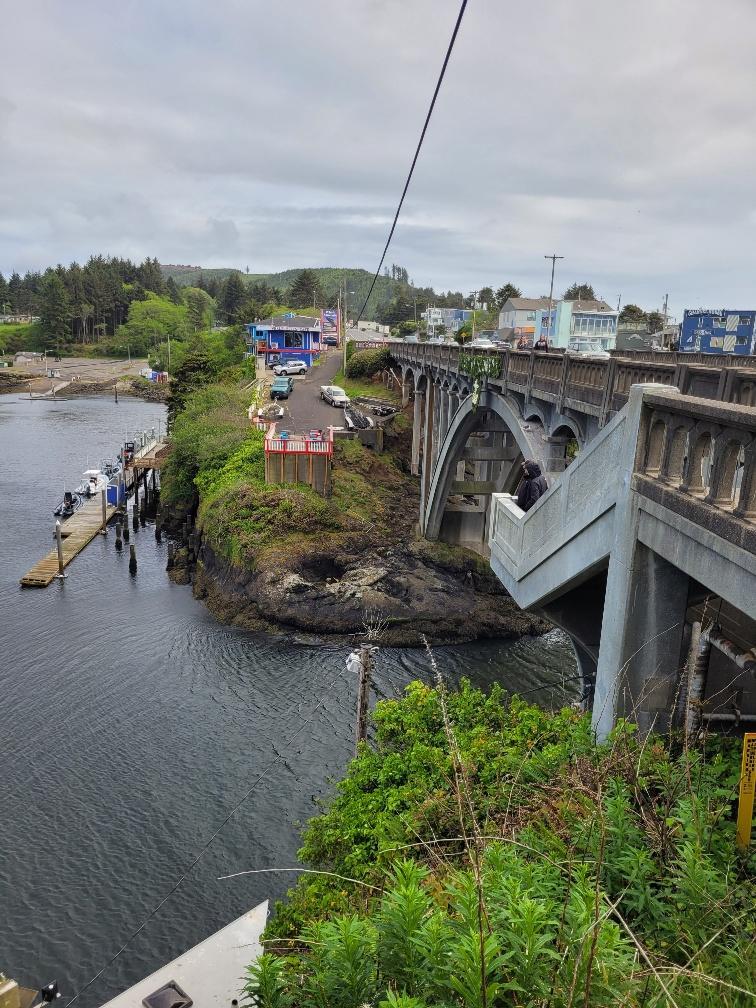
Depoe Bay is widely recognized as the whale-watching capital of Oregon for a reason. Deep water comes close to shore here, which means gray whales pass within unusually short range. The free Whale Watching Center, run by Oregon State Parks, has indoor viewing, educational displays, and staff who can point you toward active whales.
The seawall along Highway 101 in town is also a reliable free viewing spot. During summer, you can sometimes watch resident whales feed from the bridge railing.
Cape Perpetua, Newport, And The Central Coast
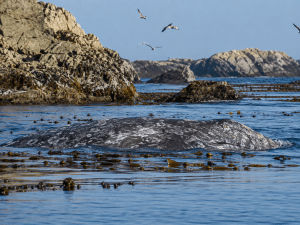
Cape Perpetua rises 800 feet above the ocean and offers visibility up to 30 miles on clear days. It's one of the highest car-accessible viewpoints on the entire coast and an excellent migration-season spot. Newport, just south, pairs well with a visit to the Oregon Coast Aquarium for educational context on the marine life you're watching from shore.
Bandon, Port Orford, And The Southern Oregon Coast
Bandon's Face Rock Wayside and Port Orford's Battle Rock Wayside both offer headland views over rocky coastlines that see both migrating and resident whales. The southern Oregon Coast is less visited than the central coast, which makes spots like Port Orford a good choice for off-peak trips. Local South coast tours often provide a more secluded and intimate viewing experience. Cape Blanco, just north of Port Orford, is the westernmost point in Oregon and puts you as far out over the ocean as you can get without a boat.
Shore Viewing Vs Tours And On-The-Water Options
Both shore viewing and on-the-water tours have real advantages, and which one fits your trip depends on your budget, schedule, and how close you want to get.
When Shore-Based Viewing Is The Better Choice
Shore viewing is free, requires no advance booking, and works well for families with young kids who don't tolerate boats. During spring migration, when whales travel within half a mile of the coast, you can get genuinely close views from headlands like Boiler Bay or the Depoe Bay seawall without paying for a charter.
Shore viewing also lets you stay as long as you want, pack snacks, and leave whenever you're ready. For road trippers hitting multiple stops, a well-chosen headland pullout often delivers just as much as a 1-hour boat tour.
When A Whale Watching Tour Is Worth It
Tours make the most sense during winter migration, when whales are traveling 3 to 5 miles offshore. Booking a charter boat closes that gap significantly. It allows you to get much closer to the migration path than you can from the beach. Tours also add value if you have experienced wildlife viewers in your group. You can identify individual whales or observe feeding behavior up close from a charter boat.
Ocean conditions are calmer from late spring through early fall, making that the most comfortable window for on-the-water trips, especially for anyone prone to seasickness.
Charters, Eco-Tours, And Kayak Excursions To Consider
Several operators run quality whale watching tours from Depoe Bay. These excursions provide a deeper look at the marine ecosystem. Whale Research EcoExcursions, led by marine biologist Carrie Newell, limits groups to 6 passengers. This operator contributes to ongoing whale research. Choosing Whale Research EcoExcursions is a good choice for travelers who want an educational experience. EcoTours of Oregon also runs full-day coastal experiences with pickup from Portland hotels.
For something closer to the water, kayak tours near Lincoln City and Depoe Bay let you paddle into areas where resident gray whales feed in summer. That closeness to the water surface changes the experience entirely compared to a motorized charter.
How To Improve Your Odds On The Day
Even in peak season, whale watching requires some patience and preparation. Following these whale watching tips and practical habits can significantly improve what you see.
Best Time Of Day, Weather, And Ocean Conditions
The hour after sunrise and the two hours before sunset tend to offer calmer ocean surfaces, which makes spotting whale blows much easier. A glassy or low-chop surface lets you see the 10-foot spray of a gray whale blow from a long distance.
Overcast days can actually work in your favor for shore viewing because the flat light reduces glare off the water. Avoid high-wind days if possible; choppy whitecaps make it nearly impossible to distinguish a blow from wave spray.
How To Spot Blows, Dives, And Breaches
Train your eyes to look for the blow first. A gray whale's blow is a V-shaped or heart-shaped puff that rises 10 to 15 feet above the water and lingers for a second or two before dispersing. Once you spot a blow, watch that same area. Whales typically surface three to five times over a minute or two before diving.
The fluke, or tail, often rises above the water just before a deep dive. A full whale breach is rare but unforgettable. When you see one, keep watching that area because whales sometimes breach multiple times in sequence.
What To Bring And How To Watch Responsibly
Bring binoculars with at least 7x magnification, a rain layer, and something to sit on for extended viewing sessions. Spotting scopes on tripods, available at the Depoe Bay Whale Watching Center, help at longer distances.
From shore, stay on designated trails and keep noise down near cliff edges where sound carries over the water. If you're on a charter, choose operators that follow NOAA wildlife viewing guidelines, which include maintaining at least 100 yards of distance from whales and limiting time near any single animal to 30 minutes.
Frequently Asked Questions
What months have the highest whale activity along the Oregon Coast?
Late March through early May sees the most concentrated near-shore whale activity, with northbound gray whales traveling close to the coastline. June through September is the most consistent window for sightings due to the resident gray whale feeding group that stays near Depoe Bay and the central coast.
When is the best time of day to spot whales near Depoe Bay?
Early morning in the hour after sunrise and the two hours before sunset tend to offer the calmest ocean surfaces, making whale blows easier to spot against the water. Midday can also work well if the sea is glassy, but high winds at any hour make sightings much harder.
Where are the most reliable whale-watching viewpoints between Lincoln City and Newport?
Boiler Bay State Scenic Viewpoint and the Depoe Bay seawall are the two most consistently productive stops in that stretch. Cape Foulweather, just north of Newport, also offers excellent elevated views. All three are accessible from Highway 101 without much walking.
How can I check today's whale sightings and live updates for Depoe Bay?
The Oregon State Parks Whale Watching Center in Depoe Bay posts current conditions and staff sightings when open. During Whale Watch Weeks, volunteers at viewpoints across the coast also report active sightings. The Oregon Department of Fish and Wildlife marine zone report is updated regularly and covers current coastal wildlife activity.
Which whale species are most commonly seen from Oregon's shoreline?
Pacific gray whales are by far the most commonly seen species from shore. Humpback whales appear less frequently but have been showing up more regularly from May through October. Orca sightings are possible but uncommon, generally occurring in April and May near seal and sea lion areas.
Why is Depoe Bay considered the whale-watching capital of Oregon?
Deep water comes unusually close to shore at Depoe Bay, which means gray whales pass within half a mile of the seawall and viewpoints. A resident group of gray whales feeds just offshore from June through mid-November, providing reliable sightings even outside the major migration seasons. The free Oregon State Parks Whale Watching Center in town adds educational resources and staffed viewing during peak periods.
Free: Pacific Coast Cruise Planning Checklist
Grab my free step-by-step checklist for planning an Alaska, Mexican Riviera, Hawaii, or Pacific Coastal cruise — sent straight to your inbox.