Seaside Weekend Itinerary for First-Time Visitors
This post may contain affiliate links. I may earn a small commission at no extra cost to you.
Why Seaside Works for a First-Time Oregon Coast Weekend
Seaside sits at the mouth of the Necanicum River on the north Oregon Coast, roughly 90 minutes from Portland. For first-time visitors, it offers a rare combination: a genuine working beach town (not a theme park), walkable downtown with real food and local character, family-friendly natural attractions, and enough weather variability to teach you how Oregon Coast conditions actually behave. Most visitors arrive expecting postcard sunshine and leave understanding why locals plan around tides, wind, and fog layers.
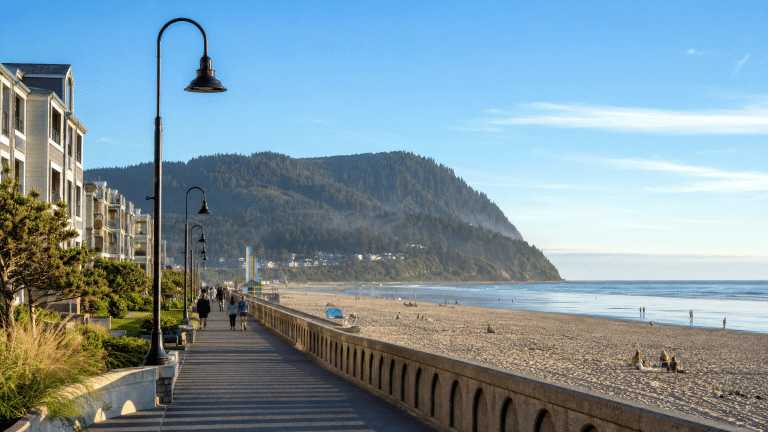
The town itself was platted in 1873 as a resort destination for Portland's wealthy, and that Victorian-era bones still shape the layout today. The Promenade—a 1.5-mile paved oceanfront path—was built in 1920 and remains the spine of visitor life. Understanding this history matters because it explains why parking fills fast, why the downtown core is compact and walkable, and why the best views aren't always at the most obvious spots.
Day One: Arrival, Orientation, and Tidal Timing
Morning Arrival Strategy (8:00–10:00 AM)
Arrive early. This is not generic advice. Seaside's parking fills predictably: the Promenade lots and downtown street parking peak between 10:00 AM and 3:00 PM on weekends. If you arrive by 8:30 AM, you'll find parking within two blocks of your destination. After 10:00 AM, you'll circle for 15 minutes or park a half-mile away.
Second, check the tide table before you leave home. The National Oceanic and Atmospheric Administration (NOAA) publishes real-time tide data for Seaside. Low tide reveals the widest beach and the most accessible tide pools near Haystack Rock (the iconic 235-foot sea stack visible from downtown). High tide compresses the beach and can make certain walking routes impassable. For a first-time visit, plan your beach time around low tide—typically you'll have a 3- to 4-hour window of optimal beach width.
Once parked, walk the Promenade northbound toward Haystack Rock. This 1.5-mile path is paved, stroller-friendly, and offers the clearest sense of Seaside's scale and character. You'll pass the turnaround carousel (built 1921, restored 2011), the Seaside Aquarium (a small, working marine facility), and the Necanicum River mouth. The walk takes 30–40 minutes at a leisurely pace.
Late Morning: Haystack Rock and Tide Pool Exploration (10:00 AM–12:30 PM)
Haystack Rock is not a secret, but most first-time visitors don't know the practical details. The rock is accessible at low tide only. At high tide, the base is surrounded by water and the approach becomes unsafe. The rock itself is protected nesting habitat for puffins and other seabirds; you cannot climb it, but you can walk around the base and explore the tide pools on the surrounding beach.
Tide pools here contain starfish, anemones, crabs, and small fish. The ecosystem is fragile. Step carefully, never turn over rocks, and never remove creatures. The Oregon Coast tide pool guide linked below covers ethics and species identification in detail.
The rock was named by fur traders in the 1800s because its shape resembles a stack of hay. Local Tillamook and Clatsop peoples knew the area for centuries before European contact; the rock held spiritual and practical significance as a fishing and gathering site.
Bring a light jacket. Even on a “sunny” summer day, ocean wind can drop the feel-good temperature 10–15 degrees. Sunscreen is essential; the ocean reflects UV rays and you'll burn faster than you expect.
Lunch: Downtown Seaside (12:30–1:30 PM)
Walk back to downtown (about 10 minutes from Haystack Rock). The core commercial area runs along Broadway and Holladay Drive. For a first visit, eat somewhere with local ownership and a view of the beach or river. Newman's French Restaurant, Irish Table, and Pelican Brewing Company all offer Oregon Coast food culture without tourist-trap pricing. Expect to spend $12–18 per person for lunch.
If weather turns (fog, drizzle, or wind), this is your cue to pivot. Seaside's downtown has bookstores, galleries, the Seaside Museum (small but well-curated), and the Seaside Aquarium—all good 45-minute indoor options.
Afternoon: Weather Backup and Exploration (1:30–4:00 PM)
If weather holds, walk the Promenade southbound (the opposite direction from morning). This section passes quieter beach access points, the Seaside Golf Club (not a visitor stop, but part of local character), and eventually reaches the Necanicum River estuary. The estuary is excellent for spotting herons, eagles, and osprey, especially in early morning or late afternoon. Bring binoculars if you have them.
If weather deteriorates, retreat to your accommodation, rest, and plan dinner. Seaside fog is real and sudden; it's not a failure of your trip, it's a feature of the coast.
Dinner and Evening (5:30–8:00 PM)
Eat early (5:30–6:30 PM) to avoid the dinner rush and to catch the best light on the beach afterward. After dinner, take a 20-minute walk on the beach or Promenade during the “golden hour” (roughly 7:00–8:15 PM in June). This is when the light is warmest and the crowds are thinnest. Bring a light sweater; temperature drops quickly after sunset.
Return to your accommodation by 8:30 PM. You've had a full day and tomorrow requires an early start.
Day Two: Wildlife, Hiking, and Departure Strategy
Early Morning: Ecola State Park (7:30–9:30 AM)
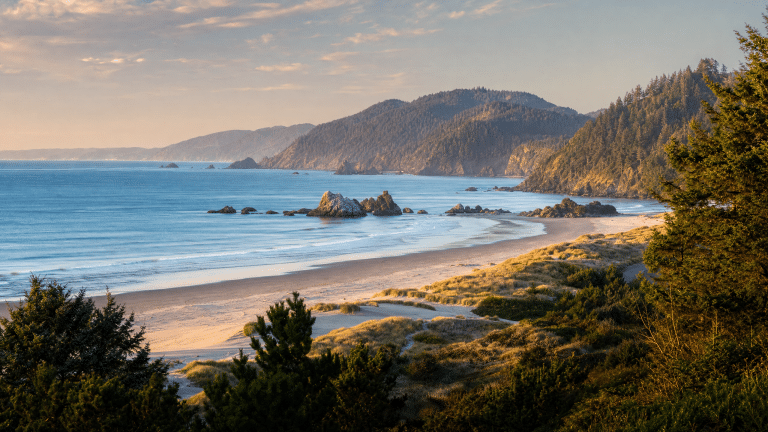
Ecola State Park sits about 10 miles south of Seaside (15-minute drive). It's one of the most visually dramatic stretches of the Oregon Coast, with old-growth coastal forest, dramatic headlands, and tide pools. The park has several short hikes ranging from 0.5 miles to 3 miles.
For a first-time visitor with limited time, hike the Clatsop Head Trail (1.2 miles round-trip, easy, 30 minutes). It starts at the north parking area and offers unobstructed views of Tillamook Head, the Necanicum River estuary, and (on clear days) the coast stretching south toward Cannon Beach. The trail is well-maintained and suitable for families with children aged 5 and up.
Arrive by 7:45 AM to secure parking. The lot fills by 9:00 AM on summer weekends. Bring water, sunscreen, and a light layer. The elevation gain is minimal, but ocean wind can be strong at the headland.
The forest here is Sitka spruce and western hemlock, species adapted to the constant moisture and wind of the coast. The trees are often draped in lichen and moss, creating an almost prehistoric appearance. This ecosystem is one of the rarest in North America; less than 5% of the original coastal temperate rainforest remains.
Mid-Morning: Cannon Beach Alternative or Haystack Rock Revisit (9:45–11:30 AM)
If you have time and energy, drive 10 minutes south to Cannon Beach, a larger and more upscale beach town. The main beach here is wider and the town offers more dining and shopping. However, parking is even more competitive than Seaside. If you're already feeling time-pressed, skip Cannon Beach and instead revisit Haystack Rock at a different tide stage. Seeing the same landmark under different light and water conditions teaches you how dynamic the coast is.
Alternatively, spend this time at the Seaside Aquarium (open 9:00 AM–5:00 PM daily). It's small (30–45 minutes to tour) but features native Oregon Coast species, touch pools, and knowledgeable staff. It's particularly good for families with young children.
Late Morning: Packing and Departure (11:30 AM–1:00 PM)
Return to Seaside by 11:30 AM if you're departing the same day. Grab coffee at a local roaster (Seaside Coffee Company or Newman's), pack any purchases, and plan your route home. The drive back to Portland takes 90–120 minutes depending on traffic. Leave by 1:00 PM to avoid evening congestion on US-26.
If you're staying overnight (recommended), use this time to rest, shower, and plan a second dinner. The second night allows you to visit restaurants you missed, explore side roads (the old US-101 through Cannon Beach is scenic), or simply relax knowing you're not rushing.
Practical Planning Details
Weather and Packing
Seaside summer weather is unpredictable. Expect temperatures between 55–68°F. Pack layers: a t-shirt, a light sweater or fleece, a windproof jacket, and long pants. Jeans are fine but dry quickly only if they're not heavy denim. Bring a waterproof bag for electronics and valuables; drizzle is common.
Sunscreen (SPF 30+) is essential. The ocean reflects UV rays and you'll burn faster than you expect, even on overcast days.
Parking Strategy
Downtown Seaside has three main parking areas: the Promenade lots (closest to the beach, fill first), Broadway/Holladay street parking (free, fills second), and the Necanicum River parking area (free, fills last but is a 10-minute walk from downtown). Arrive by 8:30 AM or after 3:30 PM to find street parking easily.
If you're staying overnight, ask your hotel or rental about dedicated parking. Most accommodations have lots or reserved spaces.
Family Pacing
With young children (under 8), plan for slower movement and more frequent breaks. The Promenade is stroller-friendly, but sand is difficult for strollers. The Clatsop Head hike at Ecola is manageable for ages 5+. Haystack Rock tide pools require careful footing; supervise children closely.
For families with teenagers, add a short kayak tour of the Necanicum River estuary or a visit to the nearby Gearhart Golf Links (historic 1892 course, open to public play).
Accommodation and Tour Planning
Seaside has a range of lodging from budget motels ($70–100/night) to mid-range hotels and vacation rentals ($120–250/night). For a first-time visit, staying downtown or near the Promenade is worth the premium; it eliminates the need to drive for meals and attractions.
If you prefer guided experiences, several local tour operators offer tide-pool walks, wildlife viewing, and historical tours. Check with the Seaside Chamber of Commerce or local tourism website for current options.
<!– ocj-affiliate-inline:ocj_lodging_finder –>
If you are building a weekend around this part of the coast, compare nearby lodging before finalizing the route. This can be especially useful around the North Coast when weather, daylight, and driving time affect the plan.
Where to stay near this Oregon Coast stop
If you are building a weekend around this part of the coast, compare nearby lodging before finalizing the route.
This article may contain affiliate links. Oregon Coast Journey may earn a commission if you book or buy through these links, at no extra cost to you.
Compare nearby stays through approved partners such as Booking.com, Travelpayouts lodging partners.
For multi-day trips, consider renting a vacation cottage with kitchen access. This allows you to prepare picnic lunches and reduces dining costs while giving you flexibility for weather changes.
FAQ
What's the best time of year to visit Seaside for the first time?
June through September offers the most stable weather and the warmest water (still only 55–60°F). July and August are the busiest months. June and early September offer better parking availability and fewer crowds while maintaining reasonable weather. Winter (November–February) is stormy and beautiful but requires experience with coastal weather and driving conditions.
Can we climb Haystack Rock?
No. The rock is protected nesting habitat for puffins and other seabirds. Climbing is prohibited. You can walk around the base at low tide and explore the surrounding tide pools.
How do we know when low tide is?
Check NOAA's tide predictions for Seaside before you leave home (search “NOAA tide predictions Seaside Oregon”). Low tide windows typically last 3–4 hours. Plan beach and tide-pool time during these windows.
Is Seaside kid-friendly?
Yes. The Promenade is stroller-friendly and safe. Haystack Rock tide pools are accessible for ages 5+. The Seaside Aquarium is engaging for young children. The main challenge is parking and crowd management; arrive early and plan for flexibility.
What should we bring that most first-time visitors forget?
Sunscreen, a windproof jacket, and binoculars. The sun reflects off the ocean and you'll burn faster than expected. Wind is constant and can drop the feel-good temperature significantly. Binoculars reveal herons, eagles, and osprey in the estuary and around Haystack Rock that are invisible to the naked eye.
Conclusion
Seaside is an excellent first Oregon Coast destination because it combines accessible natural attractions, walkable town character, and real coastal conditions. This itinerary prioritizes timing (early arrival, low-tide planning), weather flexibility (backup indoor options), and practical details (parking, pacing, what to bring) that guidebooks often skip. A two-day visit gives you time to understand the rhythm of the coast—how tides shape access, how weather changes minute-to-minute, and how a small working town maintains its character despite tourism.
Return to Seaside in different seasons and you'll see how dramatically the coast changes. That's the real lesson of a first visit: the Oregon Coast isn't a static postcard, it's a living, dynamic system shaped by ocean, weather, and time.
Editorial transparency
This article was drafted with AI assistance and reviewed through Oregon Coast Journey publishing safeguards. Always confirm current conditions before traveling.