Best Things to Do Near Astoria on the Oregon Coast
This post may contain affiliate links. I may earn a small commission at no extra cost to you.
Astoria: Gateway to the Oregon Coast
Astoria is far more than a charming riverside town; it's the northern anchor of the Oregon Coast and home to some of the region's most underrated natural attractions. Perched where the Columbia River meets the Pacific Ocean, Astoria offers a unique blend of maritime history, accessible beaches, dramatic viewpoints, and surprisingly good seasonal wildlife viewing. Unlike the crowded central-coast destinations, Astoria's attractions remain quieter in spring while offering peak conditions for whale watching and wildflower photography.
For first-time visitors, the area can feel overwhelming. This guide breaks down the best things to do near Astoria into practical, map-friendly sections so you can sequence your stops efficiently, know where facilities are, and understand what to expect in spring.
Gearhart Beach and the North Coast's Quietest Sandy Stretch
Gearhart Beach, just south of Astoria, is one of the Oregon Coast's best-kept secrets. Unlike the famous sea-stack beaches to the south, Gearhart offers a long, gentle sandy beach backed by coastal forest and dune vegetation. In spring, the beach is often uncrowded, making it ideal for families, photographers, and anyone seeking a quieter coastal experience.
Practical details:
• Parking: Free lot at the beach access point; typically has space even in shoulder season
• Restrooms: Vault toilet available; no running water
• Best for: Long walks, dog walking (leash-free area available), tide-pool exploration at low tide
• Spring bonus: Wildflowers (lupine, balsamroot, and coastal paintbrush) bloom along the dune margins April–May
• Safety note: The beach is exposed to wind and rain; bring layers even on mild-looking days
Gearhart is also home to a small village with a few cafés and shops, making it an easy stop before or after beach time.
Cannon Beach and Haystack Rock: Iconic but Manageable in Spring
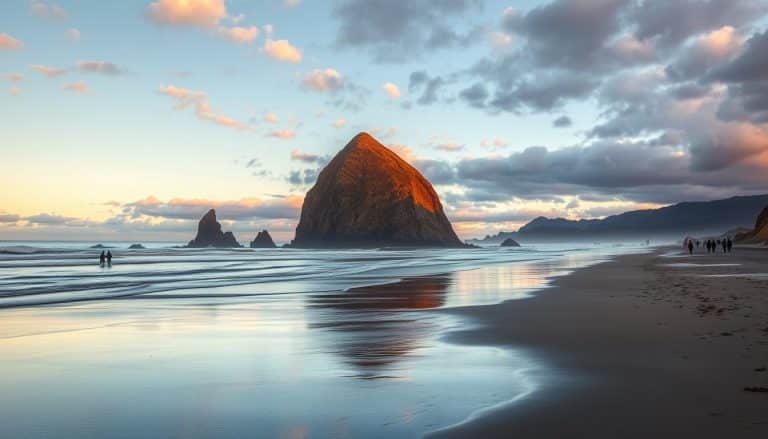
Canon Beach is the most famous beach on the north coast, and for good reason. Haystack Rock—a 235-foot sea stack—is one of Oregon's most photographed natural landmarks. However, most visitors come in summer. In spring, you'll find fewer crowds, better light for photography, and the chance to see nesting puffins and other seabirds on the rock.
Practical details:
• Parking: Multiple paid lots ($5–$10 for 3–4 hours); arrive before 10 a.m. or after 3 p.m. to secure spots
• Restrooms: Several public restroom facilities near the beach access
• Food: The town has numerous cafés, restaurants, and a farmers market (seasonal)
• Best for: Photography, tide-pool exploration, picnicking, short walks
• Spring wildlife: Gray whales migrate north April–June; watch from the beach or nearby viewpoints
• Tide-pool timing: Low tide is essential; check tide tables before visiting
Canon Beach's main street is walkable and has galleries, shops, and a relaxed vibe. Plan 2–3 hours for the beach and town combined.
Ecola State Park: Dramatic Headlands and Forest Trails
Ecola State Park sits just south of Cannon Beach and offers some of the coast's most dramatic coastal views. The park features accessible viewpoints, short forest walks, and longer hiking trails through old-growth spruce and hemlock.
Practical details:
• Parking: Day-use fee ($5 per vehicle); multiple parking areas
• Restrooms: Available at main parking areas
• Best for: Viewpoint stops, short walks (Clatsop Head Trail is 1 mile round-trip), photography
• Spring conditions: Trails can be muddy; wear waterproof boots
• Wildlife: Sea lions visible from viewpoints; occasional whale spouts offshore
For a quick stop, park at the main lot and walk to the Clatsop Head viewpoint (0.5 miles). For a longer adventure, the Ecola Creek Trail offers a 7-mile loop through forest and coastal meadows.
Tillamook Head: Whale Watching and Historic Perspectives
Tillamook Head is a dramatic rocky promontory south of Cannon Beach that offers some of the best whale-watching vantage points on the north coast. In spring (April–June), gray whales migrate north, and the head's elevated position makes spotting them relatively easy.
Practical details:
• Access: Via Ecola State Park or the Tillamook Head Trail (6 miles round-trip from Cannon Beach)
• Parking: Use Ecola State Park lot
• Best for: Whale watching, photography, moderate hiking
• Spring bonus: Peak gray whale migration; bring binoculars
• Historical context: Tillamook Head was a crucial navigation landmark for early explorers and remains a working lighthouse station
If you're not hiking, the viewpoints at Ecola State Park offer similar whale-watching opportunities with less effort.
Astoria Column: History, Views, and a Hidden Quirk
The Astoria Column is a 125-foot monument on Coxcomb Hill overlooking the Columbia River, the town, and the Pacific beyond. Completed in 1926, it's decorated with a spiral mural depicting the region's history—from indigenous peoples and explorers to settlers and industry.
Practical details:
• Parking: Free lot at the base
• Restrooms: Available
• Best for: Views, photography, learning local history, short walks
• Climb: 164 steps to the top; not wheelchair accessible but manageable for most visitors
• Spring advantage: Clear spring days offer views extending 40+ miles to the coast
• Hidden quirk: The column's spiral mural tells a visual story of the region's past; it's worth spending 10 minutes decoding the scenes
The column is open year-round and free. Plan 30–45 minutes for a visit.
Flavel House Museum: Astoria's Maritime Heritage
For a rainy-day or educational stop, the Flavel House Museum is a beautifully preserved Victorian home built by a wealthy ship captain in 1885. It offers insight into Astoria's maritime golden age and the lives of the merchants who built the town.
Practical details:
• Hours: Seasonal; check ahead
• Cost: Small admission fee
• Best for: History buffs, rainy weather, families
• Duration: 45 minutes–1 hour
Practical Route Sequencing for a Spring Day Trip
If you have one day near Astoria, here's an efficient route:
1. Morning (8–10 a.m.): Visit Astoria Column for views and history; park is less crowded early 2. Late morning (10 a.m.–12 p.m.): Drive to Cannon Beach (20 minutes); walk to Haystack Rock at low tide 3. Lunch (12–1 p.m.): Eat in Cannon Beach town 4. Afternoon (1–3 p.m.): Visit Ecola State Park for viewpoints and a short walk 5. Late afternoon (3–5 p.m.): Whale watch from Tillamook Head viewpoint or return to Gearhart Beach for a quieter finish
This route covers ~40 miles and keeps driving time to a minimum.
Spring-Specific Considerations
Wildflowers: Peak bloom is April–May. Look for lupine, balsamroot, and coastal paintbrush along roadsides and dune margins. The best wildflower viewing is near Gearhart and along the Ecola Creek Trail.
Gray whale migration: April–June is peak northbound migration. Bring binoculars and check NOAA or local tourism sites for recent sightings.
Weather: Spring on the Oregon Coast is changeable. Expect rain, wind, and occasional sunny breaks. Layers and waterproof jackets are essential. Afternoon showers are common; plan indoor activities (museums, cafés) for midday.
Lodging: Spring is shoulder season, so lodging is cheaper and less booked than summer. Book ahead during weekends, but weekday stays are often available last-minute.
Safety and Practical Tips
• Tide safety: Always check tide tables before exploring tide pools or walking near rocks. Incoming tides can trap visitors
• Ocean safety: The Pacific is cold and rough; swimming is dangerous and not recommended
• Parking: Pay attention to parking signs; some areas have time limits or seasonal restrictions
• Weather: Bring layers and waterproof gear; coastal weather changes rapidly
• Cell service: Service is spotty in some areas; download maps offline
Nearby Food and Lodging Quick Reference
Cannon Beach: Multiple restaurants, cafés, and lodging options; most are mid-range to upscale
Astoria: Fewer options than Cannon Beach but growing; good local breweries and casual restaurants
Gearhart: Small village with a few cafés and shops; quieter than Cannon Beach
Manzanita: 20 minutes south; quieter beach town with excellent restaurants and lodging
The north coast is best explored with a car, but all major towns have walkable centers. Plan to spend at least one full day to see the best of Astoria and nearby attractions.
Frequently Asked Questions
When is the best time to visit Astoria? Spring (April–May) offers wildflowers, whale migration, fewer crowds, and lower lodging prices. Summer is warmest but most crowded. Fall offers clear skies and migrating whales again.
Can I see whales from the beach? Yes. Gray whales migrate past the coast April–June (northbound) and October–November (southbound). Binoculars help, but whales are often visible to the naked eye, especially from elevated viewpoints like Tillamook Head or Astoria Column.
Are tide pools safe to explore? Yes, but only at low tide. Always check tide tables, wear waterproof boots, and watch for incoming waves. Never turn your back to the ocean.
Is Cannon Beach worth visiting if it's crowded? Yes, but visit early morning (before 9 a.m.) or late afternoon (after 4 p.m.) to avoid peak crowds. Spring and fall are naturally quieter.
How far is Astoria from Portland? About 95 miles (2 hours) northwest. It's a popular weekend destination for Portland residents.
Editorial transparency
This article was drafted with AI assistance and reviewed through Oregon Coast Journey publishing safeguards. Always confirm current conditions before traveling.